Workplace consultation gives affected employees information about a proposed change, an opportunity to raise views and a process for those views to be considered. Plan it early enough for the feedback to inform the relevant decision, while checking the rules that apply to the particular change.
Consultation is not always the same as obtaining consent. Some changes can involve separate agreement, notice or other requirements. An informal discussion does not automatically satisfy every obligation.

Check the change and applicable framework
Describe what is proposed, who may be affected and which parts remain open. Check the applicable award or agreement, contracts, policies and relevant legal requirements. Obtain advice where the process or authority is uncertain.
The Fair Work Ombudsman’s consultation and cooperation guide discusses consultation obligations and good practice. Its roster guidance also explains consultation when changing a regular roster or ordinary hours, with additional rules potentially set by awards or agreements.
Do not assume one consultation checklist covers every operational change or overrides a specific requirement.
Prepare information people can use
Explain the proposal, reason, likely work effects and proposed timing. Identify what has already been decided and the matters on which views are being sought. Do not present a decision as open if there is no intention or authority to reconsider it.
Provide information through suitable formats and allow a genuine opportunity to respond under the applicable process. Consider workers on different shifts or leave, and any representation or access arrangements that need to be accommodated.
Keep commercially or personally sensitive details appropriately managed while providing the information needed for meaningful participation.
Use a practical consultation record
Record:
- Proposal: the change and its current status.
- Framework: requirements checked and advice still needed.
- Affected people: who needs information and an opportunity to respond.
- Information: materials, formats and contact provided.
- Feedback: issues raised and alternatives suggested.
- Consideration: who reviews the views and how they affect the decision.
- Outcome: decision, reasons appropriate to share and implementation arrangements.
- Follow-up: unresolved matters and review date.
Keep a question or objection in its original meaning rather than summarising every response as staff support.
A fictional process change
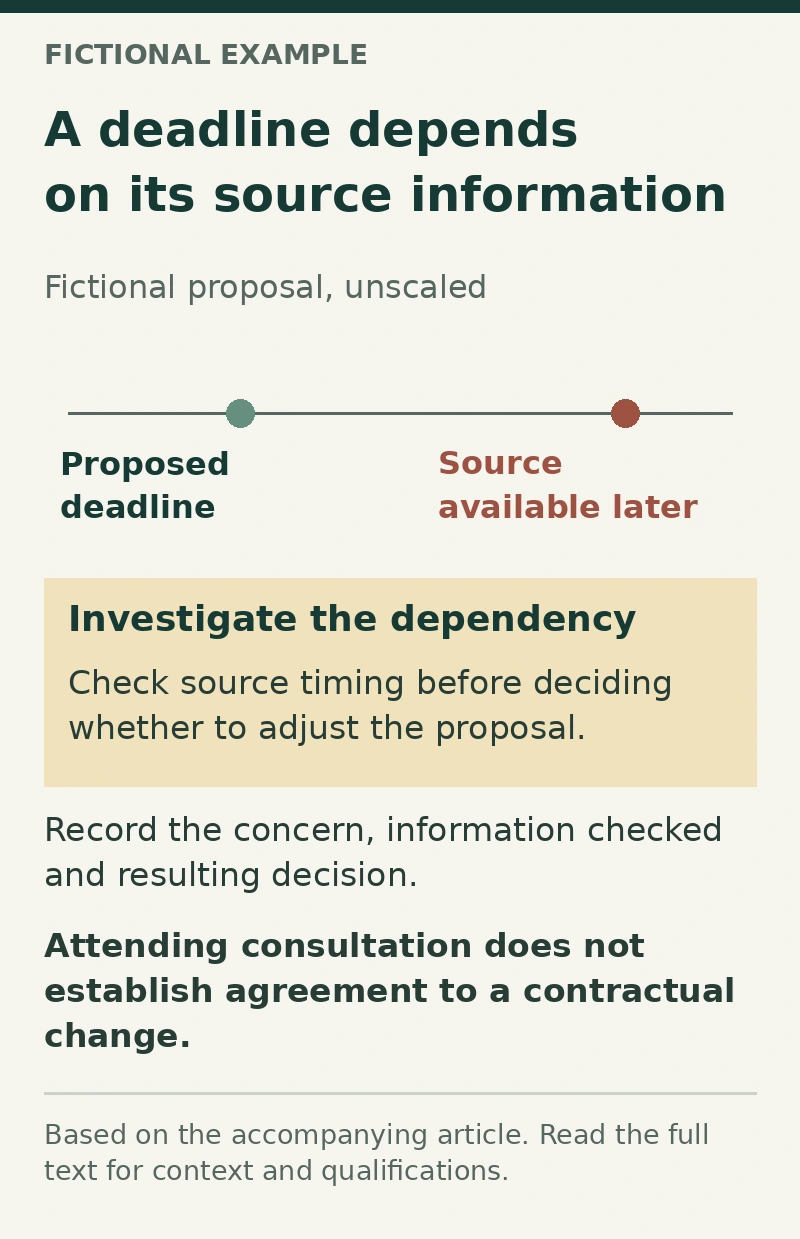
In this invented example, an office proposes moving a shared reporting deadline. Employees explain that one source of information is unavailable until later in the day. The manager investigates that dependency before deciding whether to adjust the proposal.
The consultation record shows the concern, information checked and resulting decision. It does not claim that attending the meeting meant every employee agreed to a contractual change.
Communicate the outcome and implementation
Explain what has been decided, how relevant views were considered and what happens next. Confirm any additional approval, agreement or notice required before implementation.
Review practical effects after the change, particularly issues identified during consultation. If the proposal changes materially, check whether further consultation or another process is needed.
A useful process leaves a clear account of information provided, views received and decisions made. It should help affected employees understand the change without substituting a signature sheet for the actual requirements that apply.