A work sample should let candidates demonstrate a capability relevant to the vacant role through a clearly scoped task. Design the exercise around evidence the employer needs, then check its instructions, assessment method and participation arrangements before use.
This guide concerns employer assessment design. Calling an activity a work sample does not determine whether unpaid participation is lawful, and an assessment should not become a way to obtain unapproved productive work from applicants.
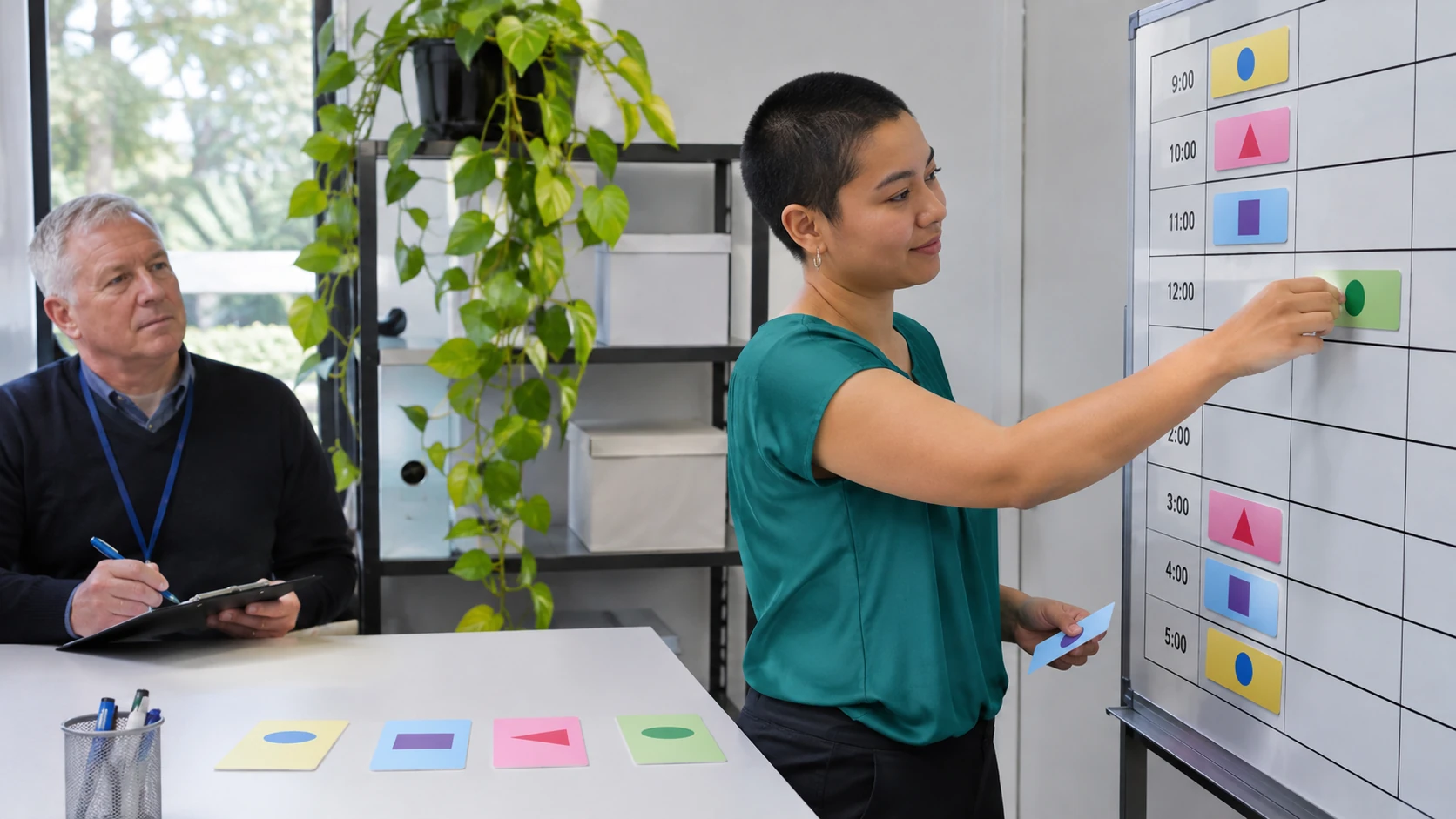
Choose a capability the task can actually show
Start with a responsibility from the approved role. For a fictional administration vacancy, the capability might be identifying inconsistent information and explaining what needs clarification.
Use invented documents that resemble the information structure of the work without containing real customer details or requiring candidates to solve a live commercial problem. Make sure the task can be completed with the information supplied.
Avoid testing unrelated software shortcuts or obscure background knowledge unless they are justified by the role and communicated appropriately. A difficult exercise is not automatically a useful assessment.
Prepare a practical assessment brief
Document:
- Purpose: the role capability being assessed.
- Task: the fictional situation and output requested.
- Materials: what candidates receive and may use.
- Conditions: timing, preparation, permitted assistance and technology arrangements, including whether AI tools may be used and how any use should be disclosed.
- Criteria: the evidence assessors will consider.
- Access contact: how candidates can discuss participation needs.
- Review: who approves the task and checks the assessment method.
Give assessors a consistent interpretation of the criteria before reviewing candidate work. Keep any subsequent changes controlled so one applicant is not assessed against an unexplained new standard.
A fictional office exercise
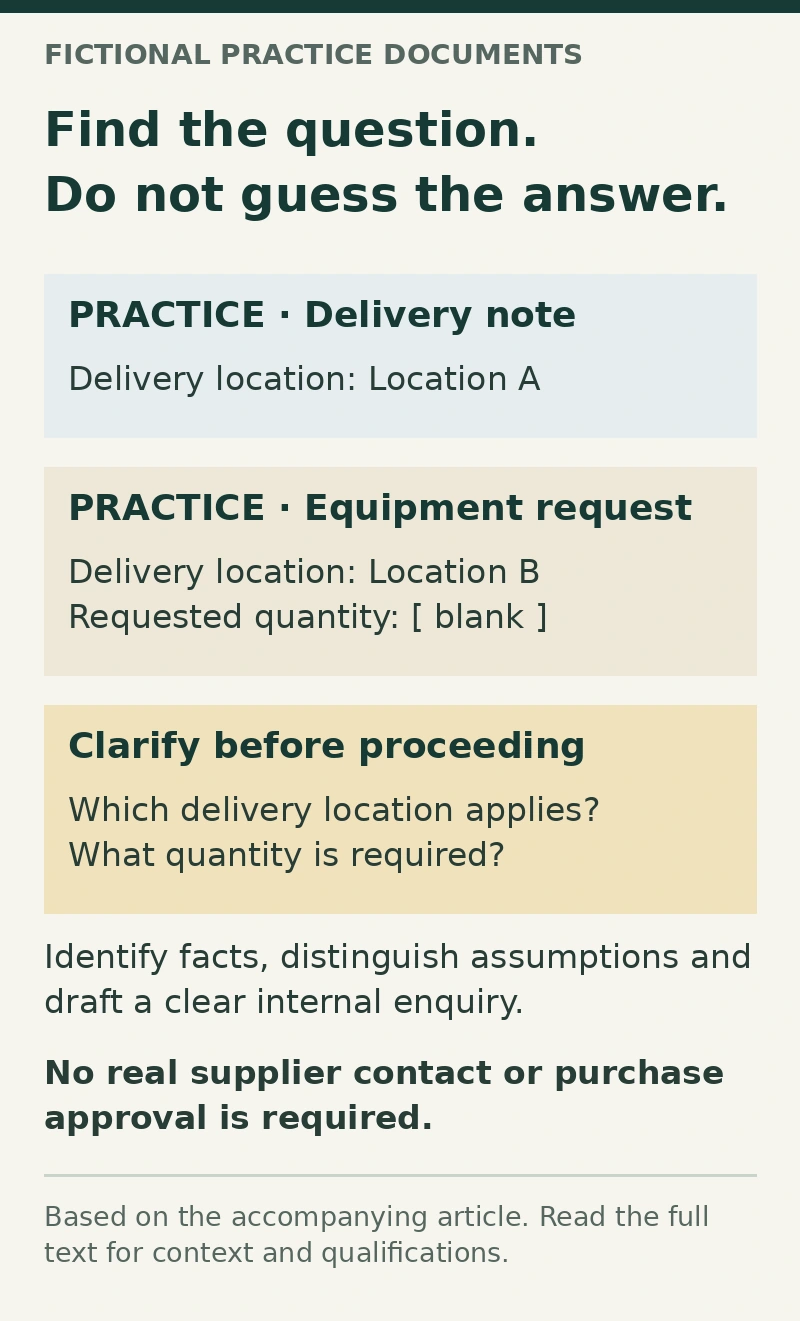
In this original example, candidates receive a fictional delivery note and equipment request. One document names a different delivery location and another omits a requested quantity. The task is to identify what requires clarification and draft a short internal enquiry.
Possible criteria are whether the candidate identifies the relevant discrepancies, distinguishes facts from assumptions and writes an understandable next-action message. The exercise does not require approving a purchase or contacting a real supplier.
Pilot it with someone who understands the role. Ask whether the instructions are sufficient, the time allowance is appropriate and the marking guide recognises more than one valid way of communicating the answer.
Check participation and payment questions
The Fair Work Ombudsman’s unpaid-trial guidance describes circumstances affecting whether a skills demonstration may be unpaid. Do not assume any take-home task, extended trial or useful work product falls within that position. Obtain appropriate advice for the actual arrangement.
Discuss adjustments needed for access and confirm how they will operate. JobAccess guidance covers recruitment adjustments. An inaccessible document format can prevent the exercise from measuring the intended capability.
Record evidence and review the exercise
Assess the output against the agreed criteria, recording relevant observations rather than impressions about personality. Follow the organisation’s approved process for overall selection decisions and recruitment records.
Afterwards, review confusing instructions, access difficulties and assessor disagreement. Improve the exercise before reusing it. A defensible work sample has a visible connection from role responsibility to task, evidence and assessment, with participation conditions that have been considered in advance.
Compare the assessment brief with the candidate interview-preparation guide to check that applicants can understand the preparation expected of them.