


A learning and development coordinator helps turn a training need into an organised learning activity with usable records and follow-up. The actual job may emphasise scheduling and provider liaison, learning design, facilitation or evaluation.
Read the vacancy carefully. Organising attendance is different from assessing competence, and a coordinator title does not establish authority to deliver every qualification or sign off every workplace task.

Read the training responsibilities closely
The ABS training and development profile describes planning and evaluating workplace learning. It distinguishes this occupation from vocational education teaching roles.
Check the required qualifications, experience and responsibilities in the actual advertisement. Identify whether the coordinator manages logistics, develops materials, facilitates learning or works with external providers under a defined arrangement.
The existing skills preparation guide provides wider career context. Select learning activities for the role and actual skill need rather than assuming any short course guarantees employment.
Connect the need, activity and evidence
Start with the work requirement: what should someone be able to do, and who decides whether the evidence is sufficient? Confirm the intended audience, prerequisites, delivery arrangements and access needs with the appropriate people.
Keep booking, attendance, assessment and authorisation records distinct. A person can attend a session while still needing an assessment or supervised practice before a separate work authorisation is considered.
Confirm responsibilities with the provider or workplace owner. Do not label an internal attendance record as an accredited qualification or issue a competence decision outside your actual authority.
A fictional learning exercise
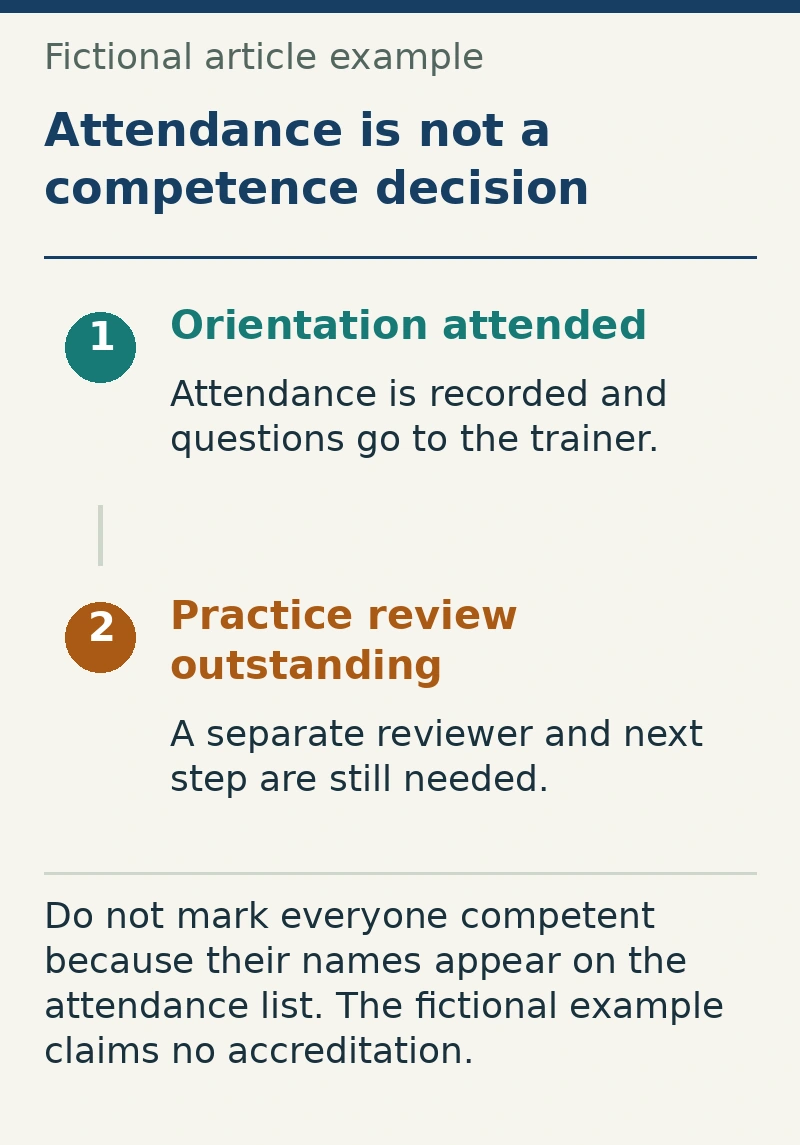
In this invented example, staff attend a system orientation. The coordinator records attendance and gathers questions for the trainer, but the separate practice review has not yet happened.
The completion report therefore distinguishes the delivered session from the outstanding review. It names the responsible reviewer and next step instead of marking everyone competent because their names appear on the attendance list.
No real training result, accreditation or permission to perform work is claimed by the exercise.
Build a coordination evidence brief
For an authorised or fictional example, describe:
- Learning need and intended audience.
- Your actual coordination or delivery responsibility.
- Provider, facilitator and reviewer roles.
- Scheduling, materials and access arrangements.
- Records of attendance and separate assessment where relevant.
- Feedback or unresolved question referred for review.
- Supported learning outcome and remaining limitations.
Protect participant information and use permitted samples. Explain what changed because of your contribution, supported by actual evidence rather than an invented completion rate.
Clarify how success is assessed
Ask how the organisation identifies learning needs and reviews whether the activity helped. Check who maintains the records, manages provider quality and approves changes to the program.
A strong application shows more than a tidy calendar. It explains how you coordinated the right people, made requirements clear and reported the actual status of learning evidence. That helps an employer assess your contribution while preserving the distinction between an organised activity and a supported competence decision.