A useful one-to-one meeting gives an employee and manager a regular place to clarify priorities, discuss support and make decisions about work. It should not become only a status interrogation or a surprise performance warning.
Agree the purpose and a practical rhythm for the role. A recurring meeting is helpful only if both people can raise relevant issues and someone follows through on the actions discussed.
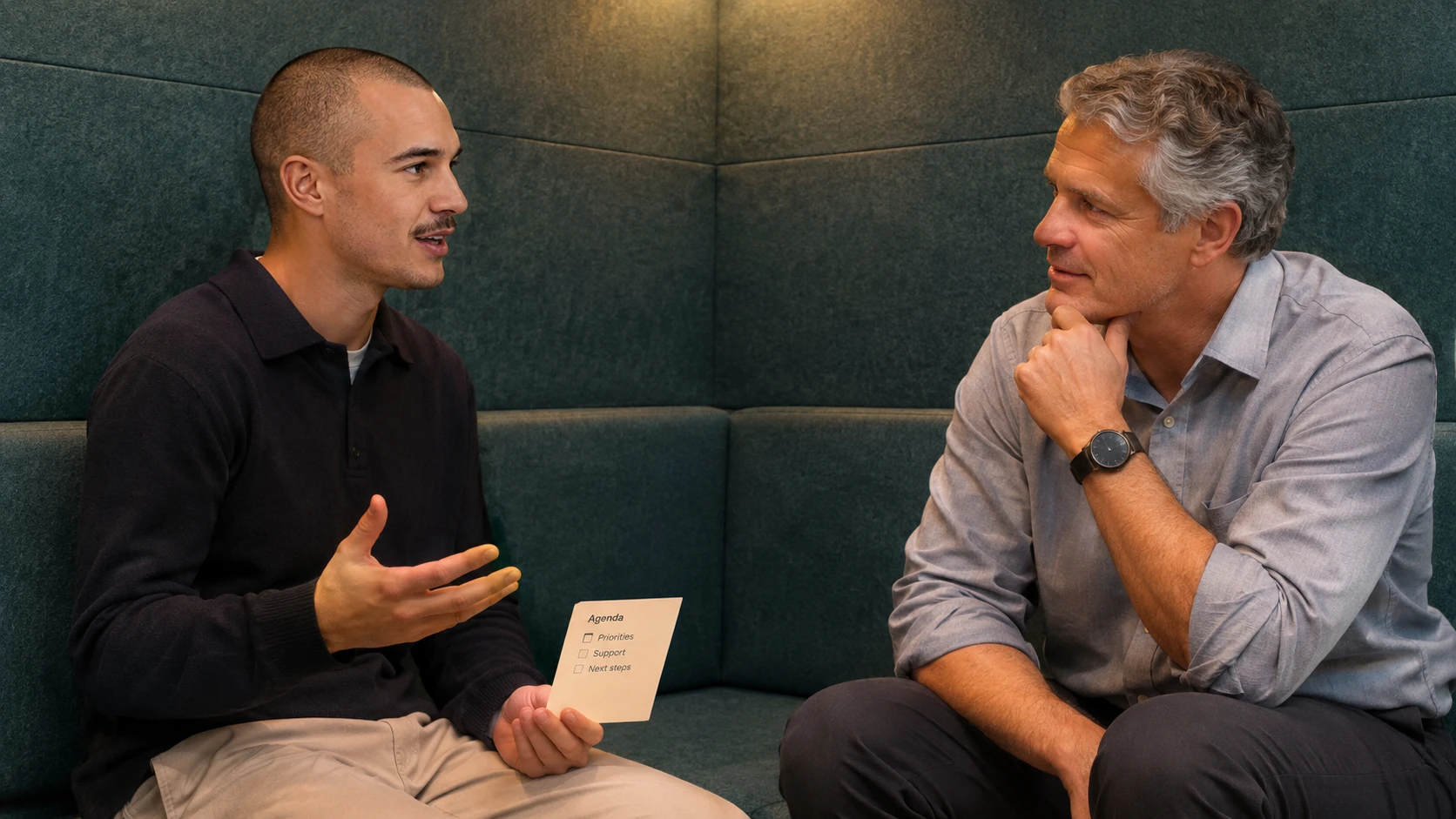
Agree what belongs in the meeting
Explain whether the conversation covers priorities, workload, development and routine feedback. Identify matters that need another process, such as an immediate safety concern, formal complaint or specific performance procedure.
Do not ask an employee to wait for the next one-to-one before reporting an urgent issue. Similarly, do not quietly convert an ordinary catch-up into a formal disciplinary meeting without the appropriate preparation and process.
Comcare’s effective communication guide discusses communication as a shared effort about the work and its delivery. Use the meeting to establish understanding in both directions.
Use a practical agenda
A simple structure is:
- Follow-up: what happened to actions from the previous meeting?
- Priorities: what matters most before the next meeting?
- Obstacles: what information, decisions or resources are missing?
- Workload: which commitments compete and need a decision?
- Development: what learning or responsibility should be discussed?
- Decisions: what is agreed, who owns it and when will it be reviewed?
Let the employee add an item before or during the meeting. If an issue needs investigation, record the next step rather than attempting to solve it through an unsupported immediate answer.
A fictional priority conflict
In this original invented example, an administration employee is preparing a recurring report when a new urgent request arrives. Both tasks appear to have the same deadline.
During the meeting, the employee explains the remaining work and the decision needed. The manager confirms the priority, checks the effect on the other request and takes responsibility for communicating the change to the relevant requester.
The outcome is not simply “manage your time better”. It is a clear decision about work the employee could not independently reprioritise.
Keep notes proportionate
Record decisions, commitments and information needed for follow-up. Distinguish an employee’s suggestion from an approved change. Avoid turning a routine agenda into an unnecessary record of private personal details.
Agree where notes are stored, who can access them and how either person can correct a misunderstanding. Do not promise that no information will ever be referred if an issue needs another authorised response.
If a formal matter arises, explain the transition to the appropriate process rather than relying on informal meeting notes alone.
Protect the follow-through
Finish by reading back the actions and asking whether anything important remains unresolved. Give each action an owner and a realistic review point. A manager’s promised decision is an action too.
If a meeting must move, confirm the replacement or another way to address time-sensitive items. Repeated cancellation without an alternative can leave work decisions unresolved.
Review the format occasionally. Keep the questions that lead to useful decisions and change those that produce only repetitive reporting. The meeting should help both people leave with a clearer view of the work and the support available.
For the development part of the agenda, a career-development plan can help turn a broad ambition into a learning action to discuss.