
Mapping a work process helps a team understand how a request moves from its starting point to an outcome. Begin with the process as it actually operates, including decisions, handovers and exceptions, before proposing an improved version.
A map is a description and analysis tool. It does not by itself approve a change, establish a safety procedure or show that every step is compliant.
Define the start, finish and record
Choose one process and identify the event that starts it. State what counts as the end, including the difference between an approved decision and its implementation.
Ask the people doing the work to explain the sequence using current records where appropriate. Compare the written procedure with actual practice without assuming either account is complete.
The Queensland Transport and Main Roads project-management framework provides context for structured processes and responsibilities. The mapping exercise here is an original low-risk office example, not a prescribed government method.
A fictional process sequence
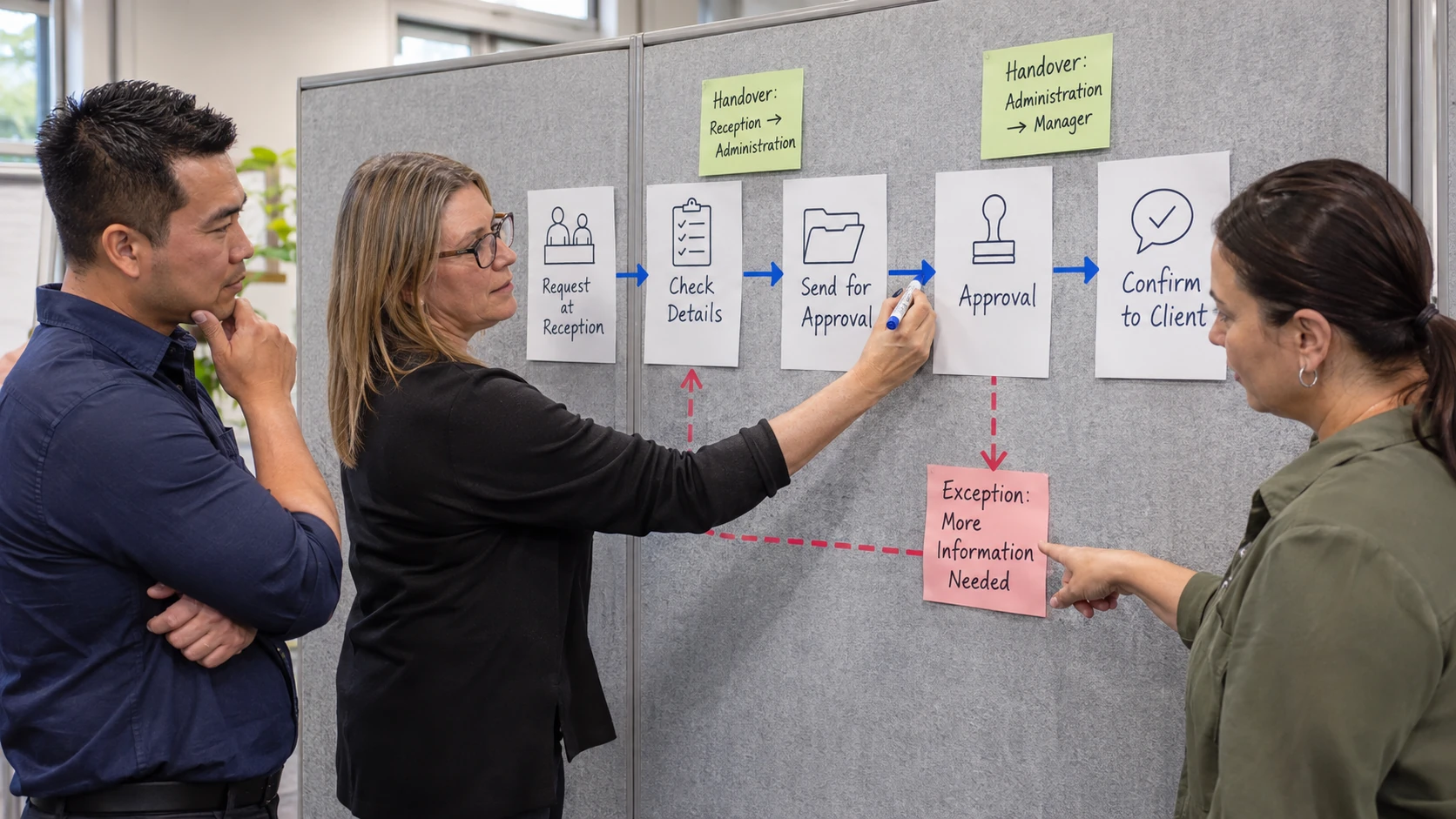
An invented room-booking request moves through:
- Request received: reception records the necessary information.
- Information check: missing details return to the requester for clarification.
- Availability check: coordinator checks the room and resources.
- Decision: the authorised person approves or declines the request.
- Communication: the confirmed outcome is sent through the approved channel.
- Record update: relevant calendars and operational information are aligned.
Check the sequence with the actual process owners. For example, the system may require a provisional hold before approval or another defined step. The map should describe that reality rather than force it into this example.
Make decisions and handovers explicit
For each step, identify the owner, required input, output and next recipient. Ask what happens when information is missing or the usual owner is unavailable. For logistics coordination, use our logistics coordinator roles guide as broader context for the handovers you may need to describe, then map the actual process rather than assuming every employer follows the same sequence.
Separate “review” from the question being decided. A box labelled review can conceal several responsibilities or an unresolved authority gap.
Record waiting points and loops. If requests repeatedly return for clarification, investigate what information is missing and why. Do not assume the person receiving the request is the cause of the delay.
Use a mapping-check record
Capture:
- Scope: the process and boundaries.
- Steps: actual activities in sequence.
- Decisions: questions, outcomes and authorised roles.
- Handoffs: input, recipient and acknowledgement needed.
- Exceptions: defined route for missing information or another problem.
- Evidence: records and people confirming the current process.
- Gap: unclear, duplicated or unsupported step to investigate.
- Improvement: proposal, owner and approval still required.
Keep confidential information out of a general map. Use appropriate references rather than real customer or staff case details.
Test the map before changing the work
Walk through an ordinary fictional request and an exception. Check whether someone unfamiliar with the process can identify the next step and decision owner.
Use the findings to prepare an improvement proposal through the actual change process. Maintain the current and proposed maps separately until the decision is made. A useful process map makes the work explainable and exposes questions the team can investigate, rather than presenting an attractive diagram as proof that the process has been fixed.