A fair performance conversation begins with specific work evidence and a genuine opportunity for the employee to respond. Prepare to discuss the gap between the required work and what occurred, including whether unclear expectations, resources or support contributed.
Do not decide the outcome before hearing the employee’s account. Check the applicable award or agreement, contract, policies and any other requirements before using a particular performance process.

Prepare facts and clear expectations
Identify the responsibility, expected standard and relevant examples. Distinguish a recorded event from an assumption about effort or attitude. Check that the employee has been told what the work requires.
The Fair Work Ombudsman’s performance and warnings guidance recommends considering applicable rules, discussing concerns privately and documenting outcomes. Obtain appropriate advice before disciplinary action; a general article cannot decide the correct action in an individual case.
Keep immediate safety concerns or allegations needing another process on the appropriate pathway. Do not quietly label every difficult issue as routine underperformance.
Give the employee a usable invitation
Explain the purpose of the meeting in advance and provide relevant material so the employee can prepare. Arrange a private setting and discuss a support person in line with the applicable process and guidance.
The Fair Work Ombudsman’s managing-underperformance guide discusses advance information, a support person, listening to the response and developing support and improvement actions.
If there are communication or access needs, consider appropriate arrangements rather than treating difficulty participating as evidence about performance.
A practical preparation record
Before the conversation, write:
- Expectation: the work result or behaviour required and its source.
- Evidence: relevant examples, dates and information still unconfirmed.
- Impact: the observable effect on the work.
- Questions: what the employee’s account could clarify.
- Support: resources, instruction or adjustments to investigate.
- Process: applicable requirements and advice needed.
- Next step: decisions that can be made now and those needing further review.
Use proportionate records and the organisation’s approved storage process. Do not gather unrelated personal information to make the file look more complete.
A fictional conversation opening
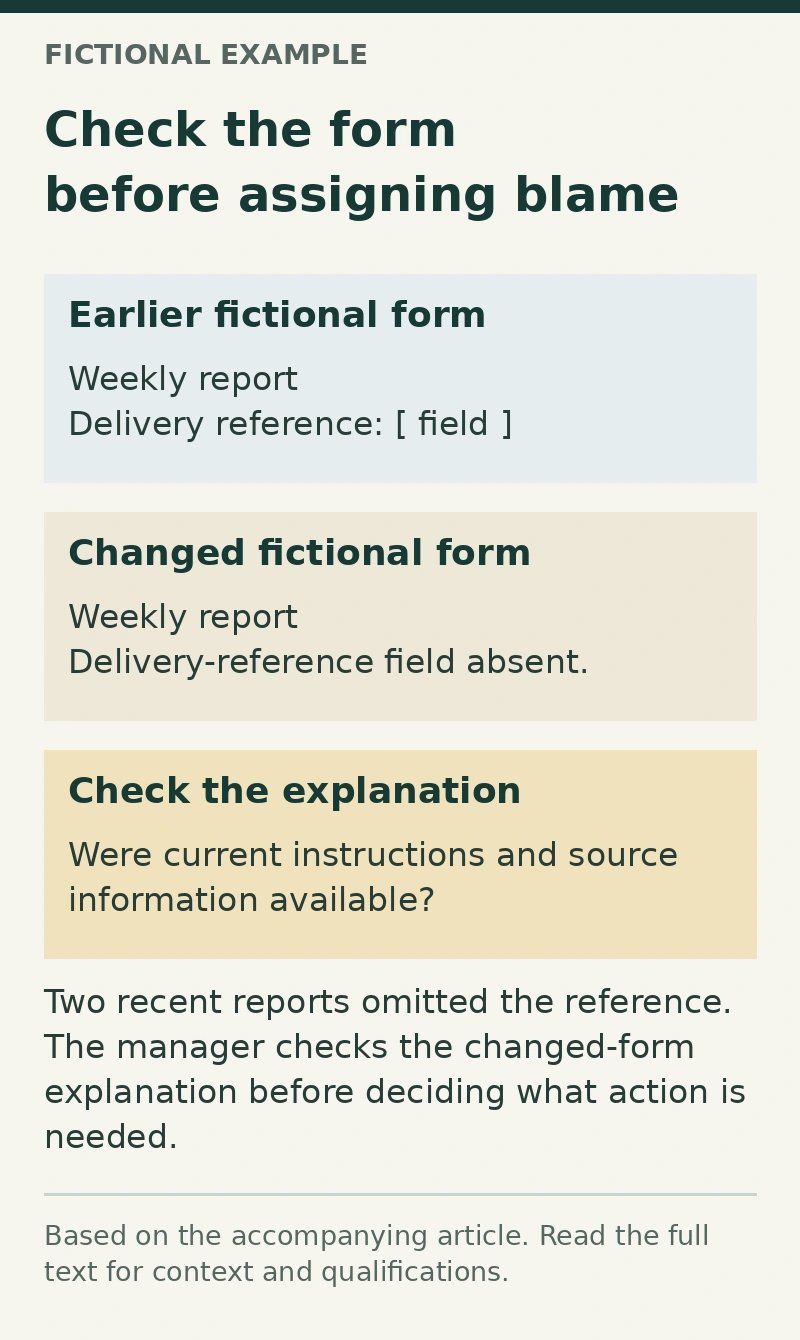
In this invented example, a manager says: “The weekly reports are required to include the delivery reference. Two recent reports did not include it. I would like to understand what happened and check whether the instructions and source information were available.”
The employee explains that a changed form no longer displayed the reference field. The manager checks the explanation before deciding what action is needed. The example illustrates why observable facts and questions are more useful than beginning with “you are careless”.
If a performance gap remains, discuss clear expectations, suitable support, responsibilities and a reasonable review arrangement for the circumstances.
Confirm and follow through
Record what was discussed, the employee’s response and the actions or decisions made. Give the employee an opportunity to identify inaccuracies in the record through the appropriate process.
Provide the support promised and review the relevant evidence at the agreed point. Avoid automatic rules about a set number of warnings or an assumed dismissal outcome. The conversation should produce an accurate understanding of the concern and a fair, documented next step under the process that actually applies.