


A project scheduler builds and maintains a model of how activities, dependencies and resources relate to the project’s timing. The work requires understanding what the dates represent and checking progress information, rather than only producing a chart.
When assessing a Brisbane vacancy, identify the project setting, required scheduling tools, reporting responsibilities and review process. A general career guide does not establish that a particular employer is hiring.

Understand the logic behind the schedule
A schedule connects defined work with sequence, duration, calendars and other relevant constraints. Changes to one dependency can affect later activities, while some tasks can proceed independently.
The Project Management Institute’s scheduling practice resource discusses schedule models and dependencies. Use the actual project’s methods, governance and approved baseline rather than treating a generic example as its delivery programme.
Check the distinction between a planned date, a forecast and an actual completion. A task owner’s expectation is useful input, but the scheduler needs an understandable basis and relevant evidence.
A fictional dependency exercise
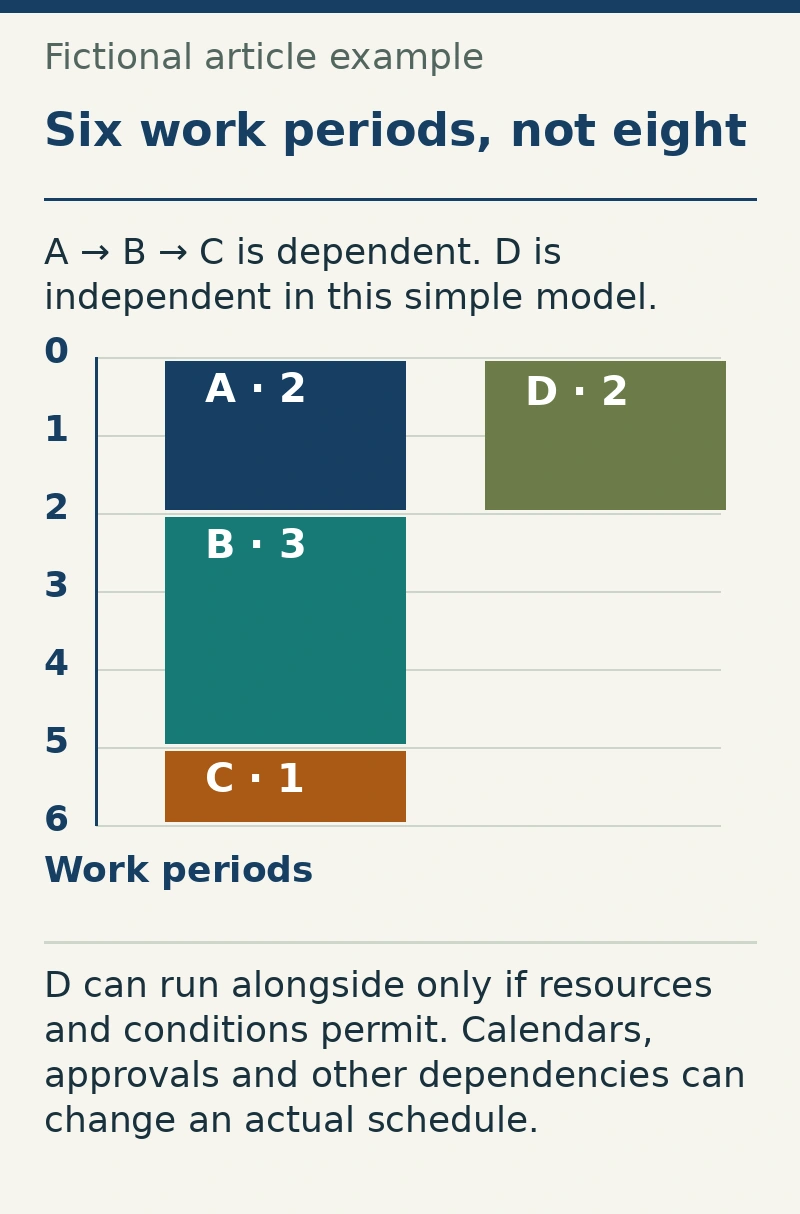
Suppose an invented project has three activities: A takes two work periods, B takes three and C takes one. B starts after A finishes, and C starts after B finishes. With no overlap or other constraints in this simplified exercise, the sequence takes six work periods.
An independent two-period activity D can run alongside that sequence if its actual resources and conditions permit. Adding every duration together to get eight would not correctly represent that stated parallel arrangement.
The exercise is a simple model, not a real construction plan. Resource limits, calendars, approvals and other dependencies could change an actual result.
Examine progress and assumptions
Ask how activities are defined, who provides updates and what establishes completion. Check whether a reported percentage reflects an agreed method or a rough impression.
When a date changes, identify the cause, effect and decision required. Do not silently alter the approved baseline to make a forecast appear on plan.
Schedulers may prepare analysis and recommendations while another person approves scope, resources or commitments. Clarify those responsibilities in the actual role.
Prepare a scheduling evidence brief
For an authorised or fictional example, record:
- Scope: work represented and level of detail.
- Logic: dependencies and why they apply.
- Inputs: duration, calendar and resource assumptions.
- Progress: source and date of updates.
- Check: inconsistency or missing dependency identified.
- Analysis: effect on forecast and options prepared.
- Decision: authorised review and actual outcome.
Protect project schedules and commercial information. Do not publish a real programme or invent a delivery improvement to strengthen an application.
Match your evidence to the vacancy
Check the required software, sector experience and balance between schedule preparation, analysis and reporting. Ask about access to task owners and support for resolving conflicting updates.
Practise explaining the model in plain language. A useful scheduler demonstrates how work logic and evidence support a forecast, including what remains uncertain, rather than presenting an attractive timeline as proof that the project will finish on a promised date.
For broader sector context, see the existing construction roles guide and compare its general information with the actual vacancy requirements.