


After a work injury, obtain appropriate immediate assistance and report what happened through the workplace’s injury-reporting process. Keep a factual record and check the insurer’s claim process separately. Reporting an injury to a supervisor is not necessarily the same as lodging a workers’ compensation claim.
This guide concerns organising the reporting steps in Queensland. It does not diagnose an injury, determine compensation eligibility or replace medical, insurer or emergency advice.

Separate care, workplace reporting and a claim
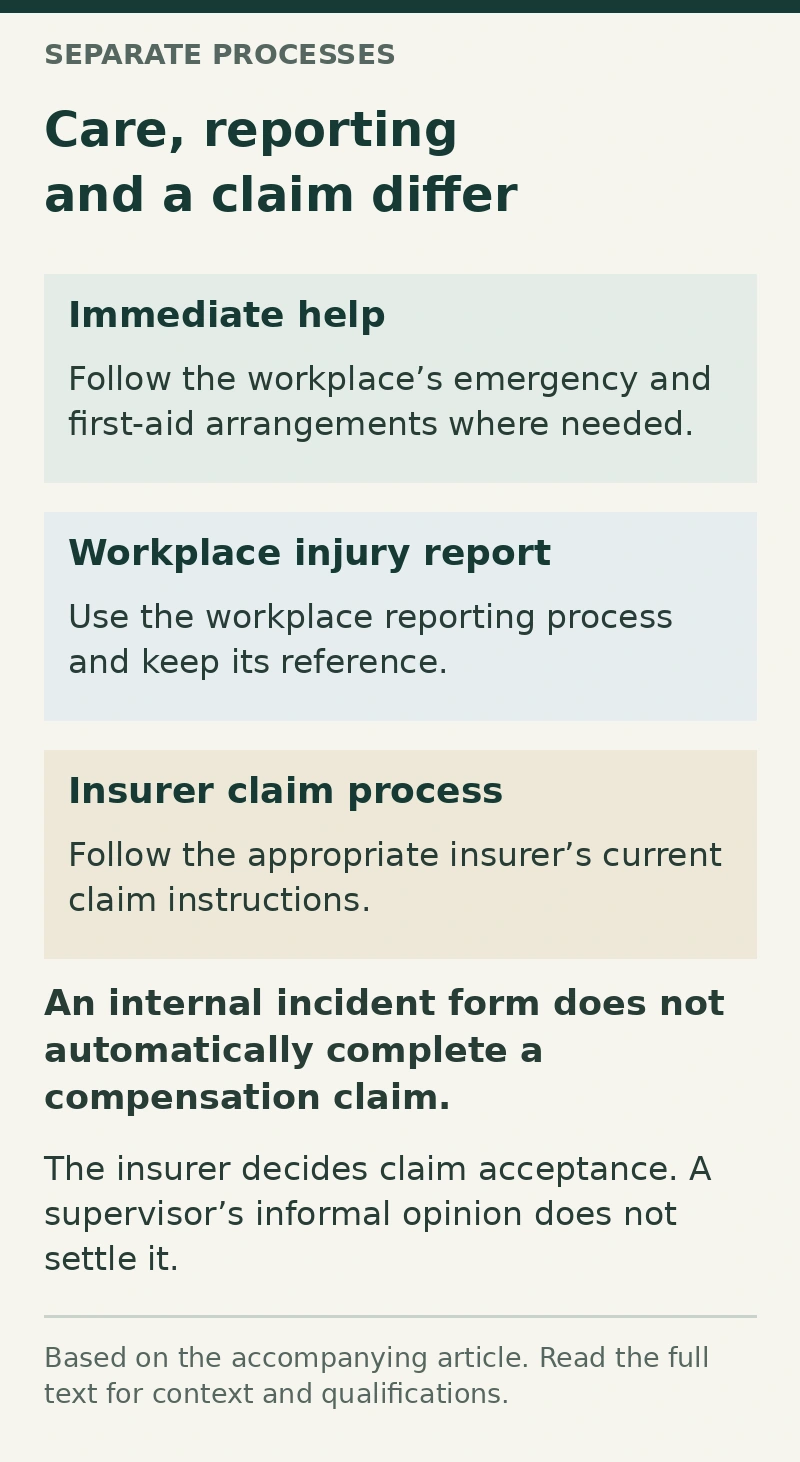
Follow the workplace’s emergency and first-aid arrangements where immediate help is needed. Tell the treating provider that the injury may be connected with work and describe the circumstances accurately.
WorkSafe Queensland’s reporting guidance explains that an employer’s injury report and a workers’ compensation claim are different processes. The insurer decides whether a claim is accepted; a supervisor’s informal opinion does not settle that decision.
Ask whether the employer is insured through WorkCover Queensland or is self-insured, and identify the appropriate contact. Use the insurer’s current instructions for any claim you intend to make rather than assuming an internal incident form completes it.
WorkSafe’s worker claim instructions identify a work capacity certificate and an application for compensation as requirements for a valid claim. Check the current instructions and provide accurate information through the appropriate insurer process.
Record the event while details are clear
Use this original information checklist:
- Event: date, time, location and task being performed.
- Description: what happened, stated in your own words.
- Immediate response: assistance obtained and people notified.
- Witnesses: people who may have observed relevant events.
- Documents: incident reference and relevant work records you legitimately hold.
- Medical or capacity record: the documents requested through the proper private process.
- Insurer contact: organisation, reference, date and next required step.
- Uncertainty: any detail you cannot yet confirm.
Do not speculate about a medical diagnosis or assign blame as if an investigation has already occurred. Keep later information distinguishable from what you knew at the time.
A fictional reporting example
This original example is invented and provides no claim outcome:
“I reported an injury during the afternoon shift after the identified task. The supervisor arranged assistance and gave me an incident reference. I have retained the date, location and the treating provider’s documents. My next question is which insurer and claim process applies, because the workplace report alone does not confirm a claim has been lodged.”
The example shows separate records and decisions. It does not suggest every injury requires the same form or that an incident reference proves compensation entitlement.
Ask who owns each next step
Confirm the workplace contact, insurer contact and documents required from you. Keep copies of forms you submit and record any reference or acknowledgement. If information is missing, ask for clarification rather than inventing an employment detail to complete a field.
WorkSafe’s guidance also explains employer reporting responsibilities. Do not interpret an employer’s reporting period as your own claim deadline; check the current worker claim requirements promptly with the insurer.
Keep capacity and work arrangements coordinated
If the injury affects duties or attendance, use the appropriate medical and workplace process to discuss capacity and any proposed arrangement. Do not decide independently that a task is suitable because it appears lighter than your normal work.
Keep health and claim documents private, and share operational information only with the appropriate people. A clear record helps the treating team, employer and insurer work from the same facts without promising acceptance, a payment amount or a recovery date.