A software tester investigates how software behaves against defined expectations and records evidence that helps a team make decisions. Assess the vacancy for the testing scope, methods, technical requirements and responsibilities for reporting defects.
A useful application explains what was tested and what the evidence supports. Passing selected tests does not prove a system has no defects or establish approval to release it.
Understand the testing role
The ABS ICT test-analyst description includes software testing, test cases and defect documentation. Actual positions vary in their use of manual investigation, automation and particular testing specialisations.
Check the advertised qualifications, experience, tools and collaboration expectations. Identify whether the role develops a testing approach, executes defined checks or supports a particular product or delivery team.
The existing IT roles guide provides broader career context. Choose evidence that demonstrates testing judgement rather than simply naming a tool or reproducing one acceptance-test template.
Establish a clear basis for the check
Identify the expected behaviour, relevant version, environment and test data. Record assumptions or unclear requirements before treating a result as a confirmed defect.
Use an authorised test environment and permitted information. Keep production credentials, private records and confidential product details out of a demonstration portfolio.
Explain actual and expected behaviour separately, with enough context for another person to understand or reproduce the observation. Avoid guessing the technical cause when the available evidence only establishes a symptom.
A fictional defect exercise
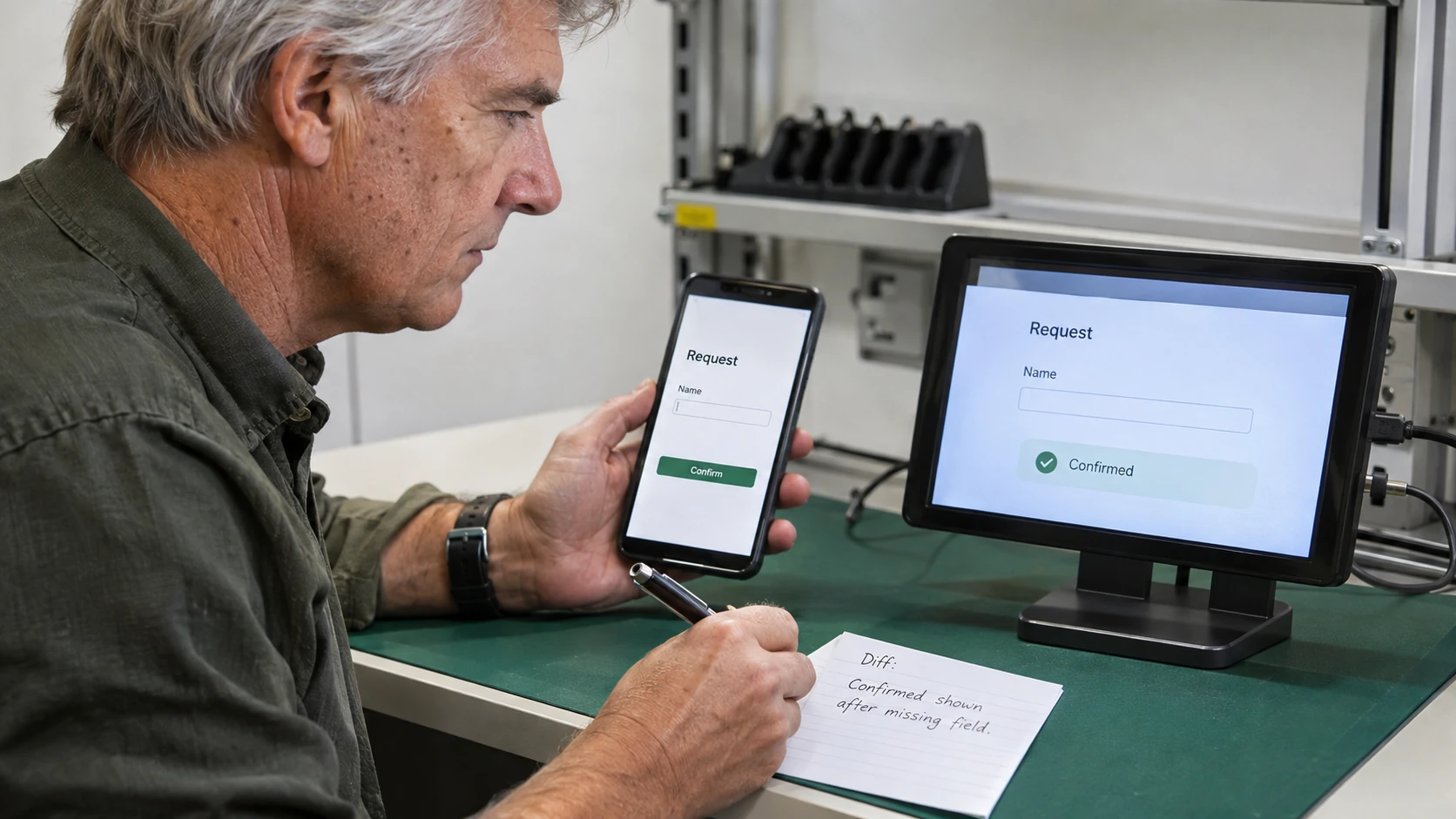
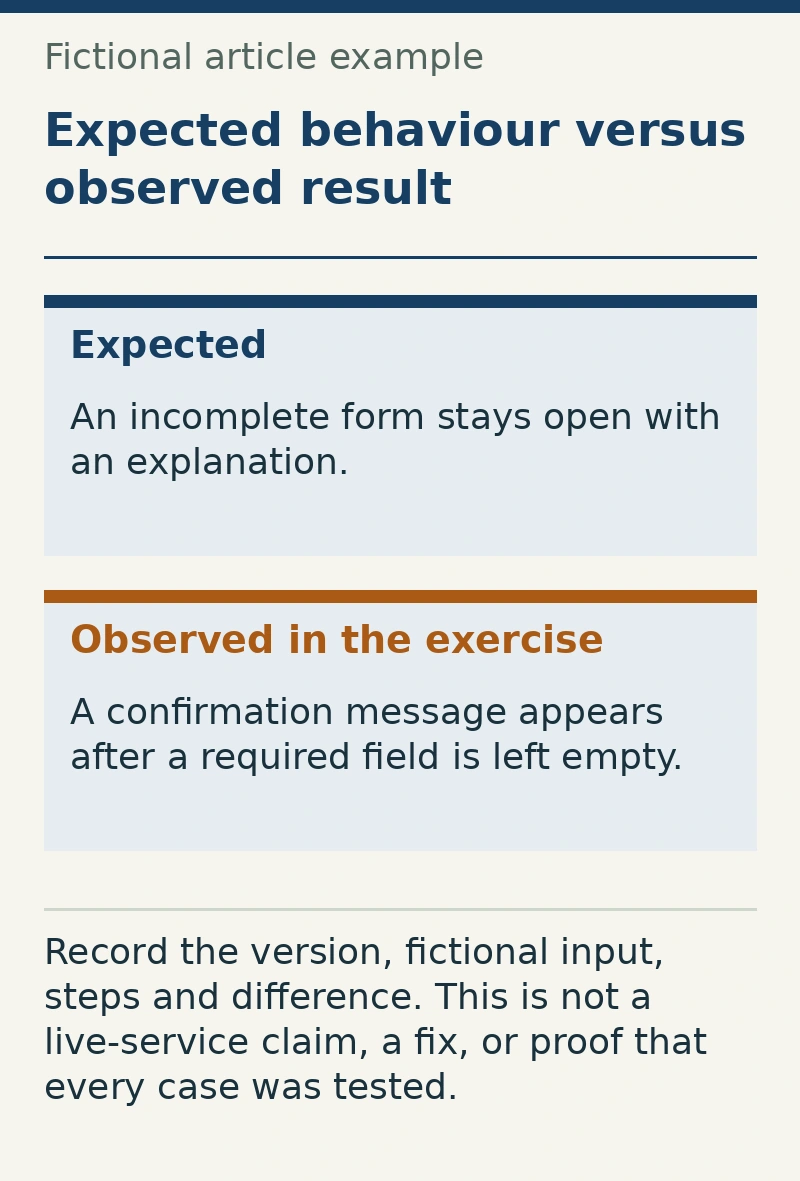
In this invented example, a practice form shows a confirmation message after a required field is left empty. The stated practice requirement says incomplete submissions should remain on the form with an explanation.
The tester records the version, fictional input, steps and observed result. They compare it with the stated expectation and provide a concise defect report for review.
They do not claim to have fixed the problem, tested every possible input or established that the same behaviour exists in a real production system.
Build a testing case study
For an authorised or fictional example, explain:
- Product behaviour and requirement being investigated.
- Your actual testing responsibility.
- Scope, environment, version and permitted data.
- Scenarios selected and why they mattered.
- Expected and observed results.
- Defect report, discussion and retest evidence where applicable.
- Coverage limits and the separate release decision.
Show how a check could reveal a meaningful problem, rather than adding large numbers of repetitive test cases just to inflate a portfolio. Clearly distinguish executed checks from a proposed plan.
Ask about quality and decision ownership
Clarify how requirements questions are resolved, defects are prioritised and test environments are maintained. Ask who makes release decisions and how unresolved findings are communicated.
A credible application makes the evidence easy to follow from requirement to observation and review. It helps an employer assess your curiosity, accuracy and communication without treating a clean report, an automated run or a small demonstration as proof of a defect-free service.