




Check employer super by comparing your employment and payslip records with contributions actually received by your super fund. A super amount printed on a payslip and a contribution received by the fund are different records; both are useful when checking a possible gap.
Use official guidance current for the pay period involved. Super payment rules changed from 1 July 2026, so an old quarterly-payment checklist should not be used for later periods without checking the new framework.

Start with the current timing rule
The ATO’s Payday Super guidance, checked on 5 November 2026, describes the requirement from 1 July 2026 to pay super guarantee with salary and wages. It identifies a seven-business-day receipt timeframe, with extended timeframes in specified circumstances, such as for new employees.
Check the applicable rule and exceptions before deciding a payment is late. Fund processing and allocation records can also matter. Do not treat an amount absent immediately after payday as automatic proof of a breach.
The ATO guidance describes the calculation using qualifying earnings. If the earnings base or eligibility is unclear, obtain current official information or advice instead of multiplying every payslip item by a rate without checking its treatment.
Assemble a contribution-check record
Use this original worksheet for each period you are checking:
- Employment: employer identity and the relevant pay period.
- Payday: the date wages were paid.
- Payslip: super amount and relevant earnings information shown.
- Fund: the nominated fund and account details confirmed through a secure channel.
- Receipt: contribution dates, descriptions and amounts visible in the fund’s transaction record.
- Matching: which contribution appears to relate to which pay period.
- Difference: missing, late or unclear items, with assumptions labelled.
- Enquiry: date raised, recipient, explanation and follow-up action.
Do not put passwords, identity documents or a complete membership number in a broadly shared spreadsheet. Use only the information needed to resolve the particular payment question.
A fictional contribution enquiry
The following original message is invented and does not establish a breach:
“My payslip for the stated period shows a super contribution, but I cannot yet match it to the fund transaction record. Could you confirm the amount, payment date, destination fund and relevant reference? Please also advise whether an extended receipt timeframe applies to this contribution.”
Ask the fund about an unclear transaction or allocation where appropriate. An amount may relate to more than one period, so do not assume the description alone proves the match.
Use the official unpaid-super pathway if needed
ASIC’s Moneysmart Payday Super guide explains checking fund receipts, asking the employer and using the ATO unpaid-super reporting pathway where the issue continues. Follow the current ATO process and retain the supporting employment and payment records.
This check is about contributions, not choosing investments or deciding which fund is best. A fund’s investment return does not explain whether a particular employer contribution was made.
Close the record when the issue is resolved
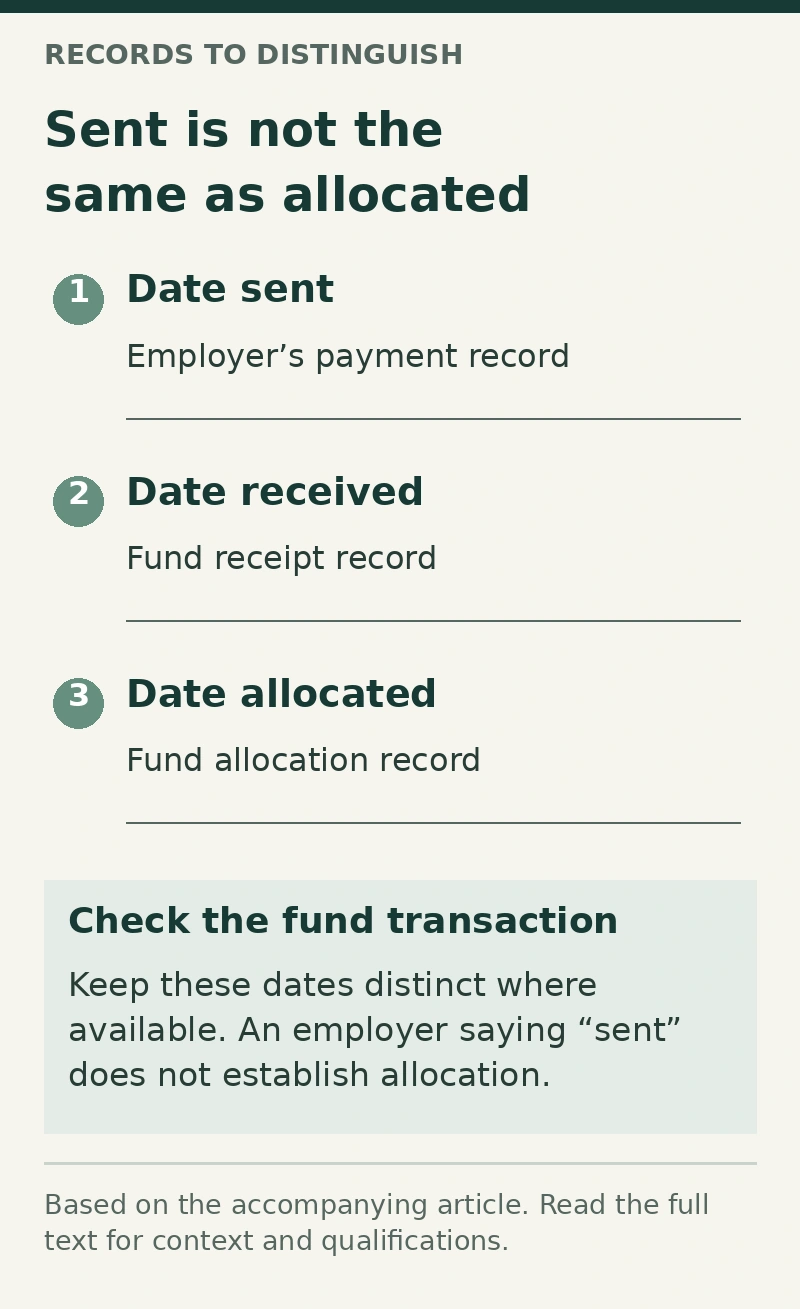
Record the explanation and any correction, then check the fund transaction rather than relying only on an employer’s statement that payment was sent. Keep a clear distinction between the date sent, date received and date allocated where those are available.
Review later periods using the same evidence structure and the rules applying at that time. Keep unresolved discrepancies visible until there is enough information to explain them.