A safe work method statement should help the people carrying out high-risk construction work understand the planned work, hazards and controls. Before relying on one, check that it applies to the actual activity and site and that the instructions are understood. Signing a document is not a substitute for that understanding.
This guide helps workers read and question a SWMS. It does not provide a generic SWMS to use for construction work or replace task-specific training and supervision.
Confirm the activity and current version
WorkSafe Queensland’s SWMS guidance explains the requirement for a SWMS for high-risk construction work and its role in identifying activities, hazards and controls. It also addresses implementation, availability and review. When preparing for a new site role, compare the duties in our Brisbane construction jobs guide with the actual work being assigned, then ask which task-specific documents and authorisations apply.
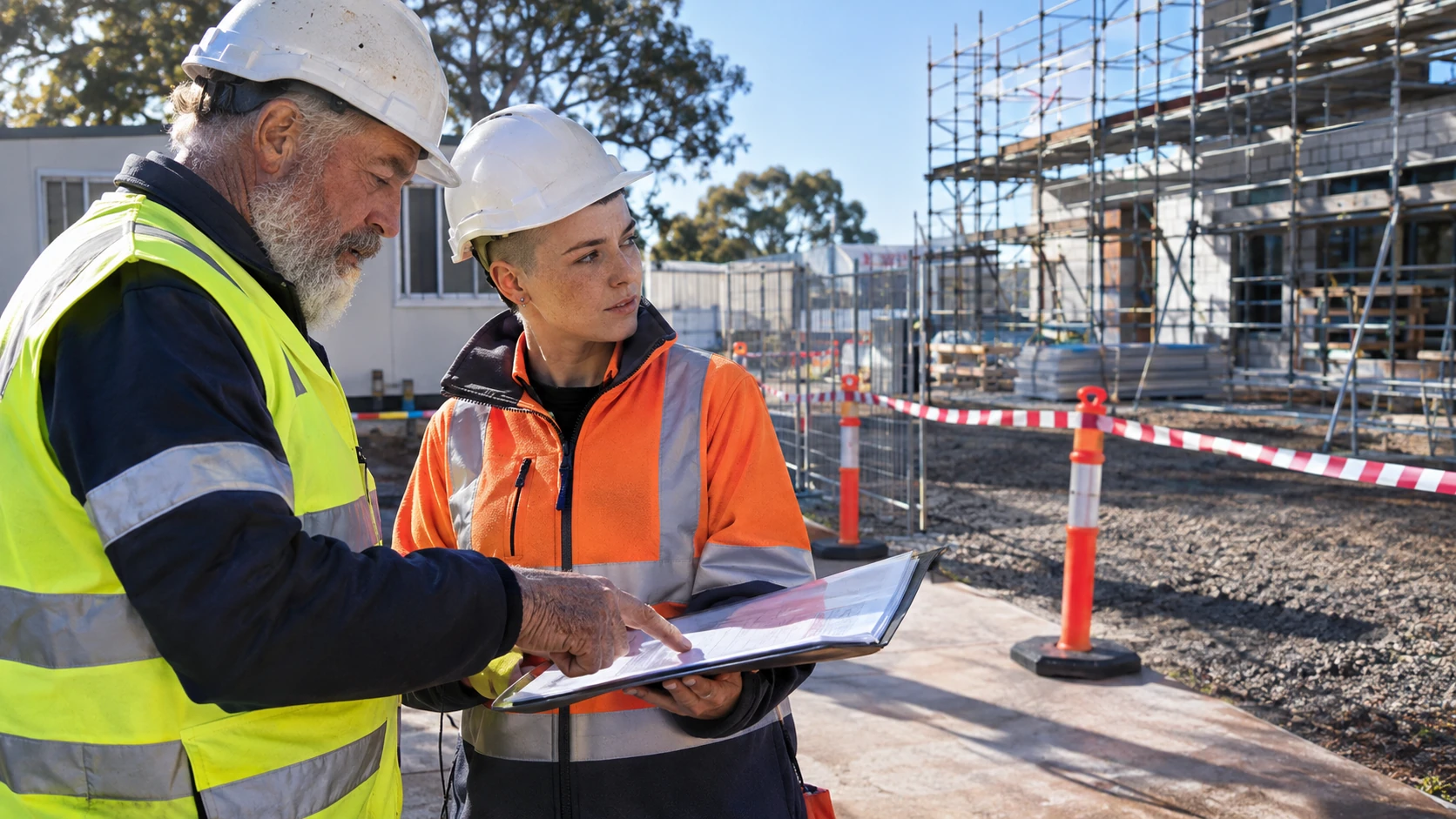
Check the activity description, location, responsible business and version. A document prepared for another site may not reflect the work, interfaces or conditions in front of you. Ask how the actual site circumstances have been considered.
Do not assume that every task called construction work has identical SWMS requirements. The responsible duty holder must establish the applicable requirements and safe system for the work.
Read for responsibilities and controls
Look for a logical sequence that connects the work steps with specific hazards and measures. Ask who implements, monitors and reviews those measures. A vague instruction such as “use appropriate equipment” leaves an important question unresolved if the equipment and method have not been identified.
WorkSafe’s guidance emphasises consultation and information that workers can understand. Ask for clarification, an explanation or an appropriate accessible format before treating an unclear instruction as understood.
An original reading checklist
Use this checklist to prepare questions about the actual SWMS:
- Scope: does the document describe the work being performed here?
- Conditions: have site-specific risks and interacting activities been considered?
- Controls: are the measures specific and available in practice?
- Responsibility: who checks that each relevant measure is implemented?
- Competence: what training, authorisation or supervision does the task require?
- Change: what happens if conditions, equipment or the work method change?
- Access: where is the current version and how are revisions communicated?
- Non-compliance: what process applies if work cannot be carried out as planned?
The checklist is not an assessment that the SWMS complies with the law. It identifies issues to resolve with the responsible people.
A fictional clarification example
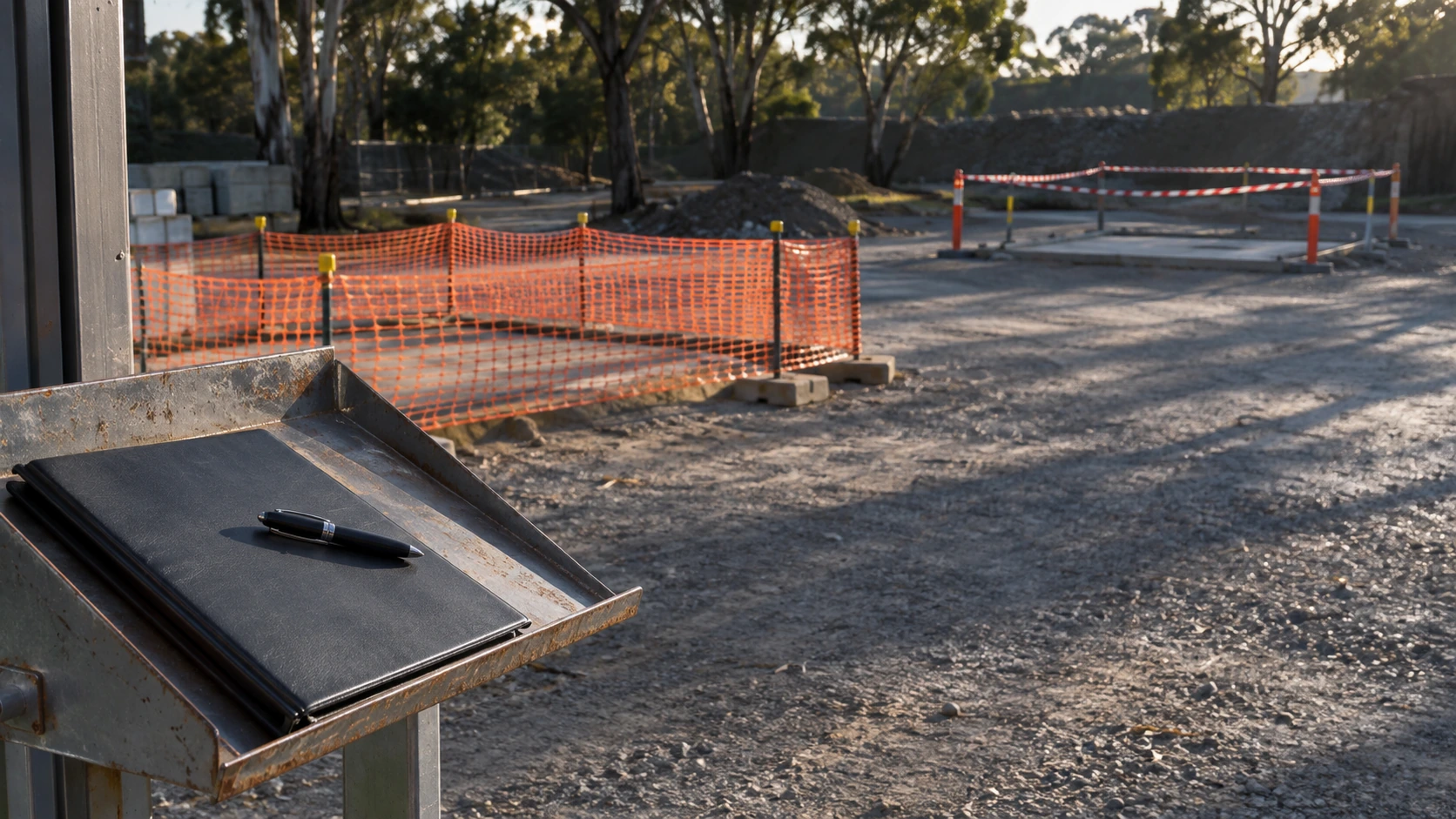
This original scenario is invented and gives no construction method.
A worker notices that the current work location differs from the location described in the document. Before relying on the earlier plan, the worker raises the mismatch and asks the supervisor to confirm the applicable document and review the changed circumstances with the relevant duty holders.
The useful action is identifying the mismatch. The worker should not independently edit a control measure and assume that change authorises the work.
Understand changes before resuming
The WorkSafe guidance explains that work not being carried out in accordance with the SWMS must stop immediately or as soon as safe, and resume only in accordance with the statement. Follow the actual workplace process and responsible directions for the circumstances.
When a revision is made, check that affected people receive the updated information and understand what changed. Keep the distinction between reading a current document, receiving training and being authorised for the task clear; one does not automatically complete the others.