

A goods-received record describes what arrived, when it arrived and any difference that needs follow-up. It should preserve delivery facts for the people responsible for stock, purchasing and payment decisions.
Use the workplace’s approved receiving process and stay within your role. Recording a delivery does not automatically confirm contractual acceptance, approve payment or authorise use of equipment or materials.
Match the delivery to the correct order
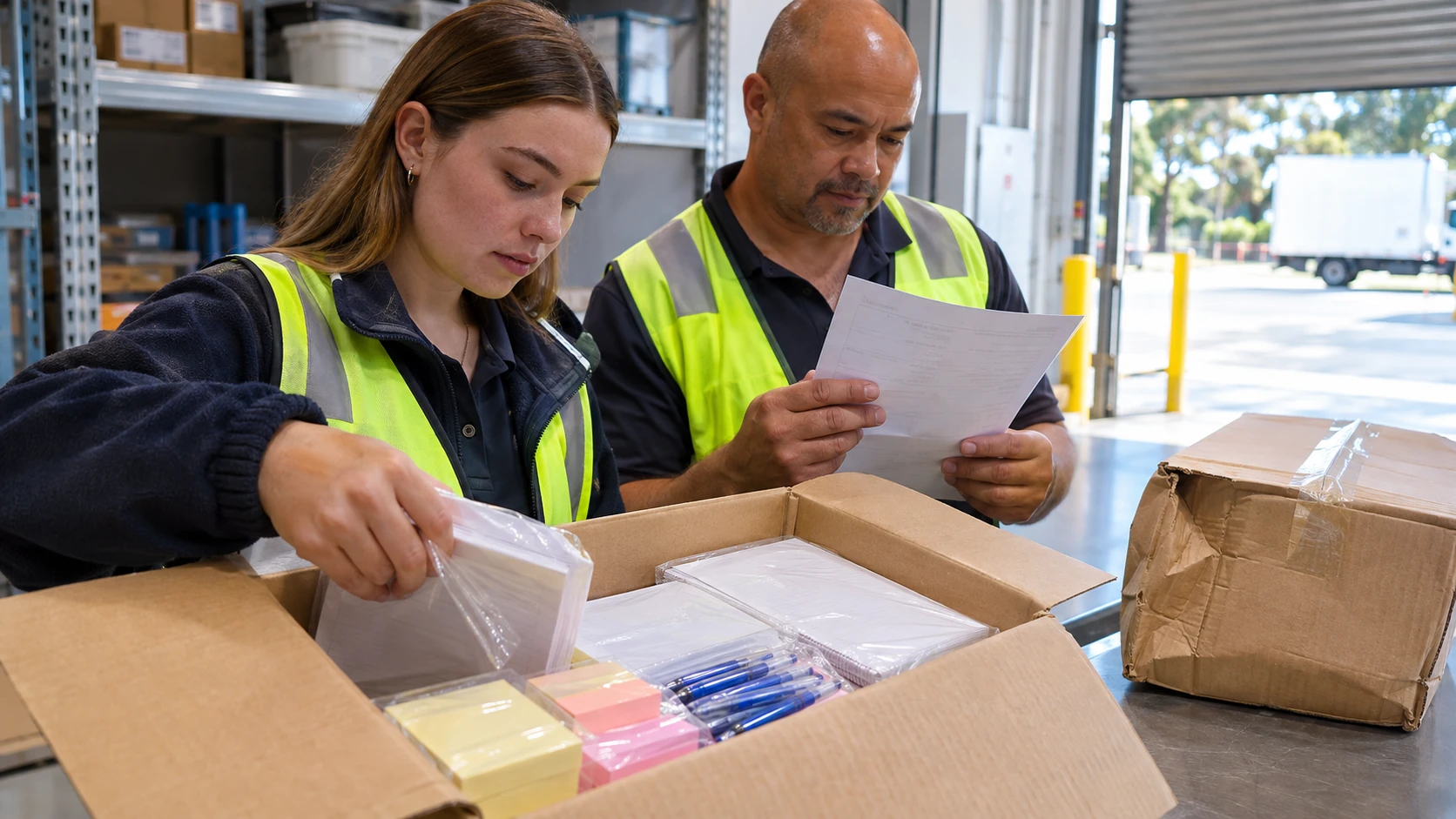
Check the delivery reference, supplier and relevant authorised order. Identify the item description, code and unit being counted. Ten boxes and ten individual items can represent very different quantities.
If the paperwork or goods cannot be matched confidently, record the uncertainty and refer it to the responsible person. Do not invent an order reference to complete a required field.
Business Queensland’s stock-control guidance provides broader context for recording stock movements. Apply the actual receiving controls and handling requirements for the goods involved.
Use a practical receiving record
Capture:
- Delivery: arrival date, time and relevant reference.
- Order: authorised purchase reference and supplier details to check.
- Items: descriptions, product codes and units of measure.
- Quantity: what was physically counted and what remains unchecked.
- Condition: relevant observable facts within the approved inspection process.
- Difference: shortage, extra item, mismatch or other issue to refer.
- Custody: approved storage or handover location and responsible person.
- Follow-up: owner, notification and resolution reference.
Use “unchecked” where a required check has not occurred. A signed receiving entry should not imply an inspection beyond what the person actually performed.
A fictional delivery example
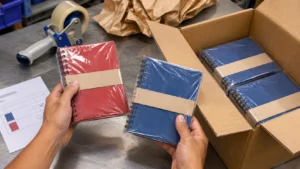
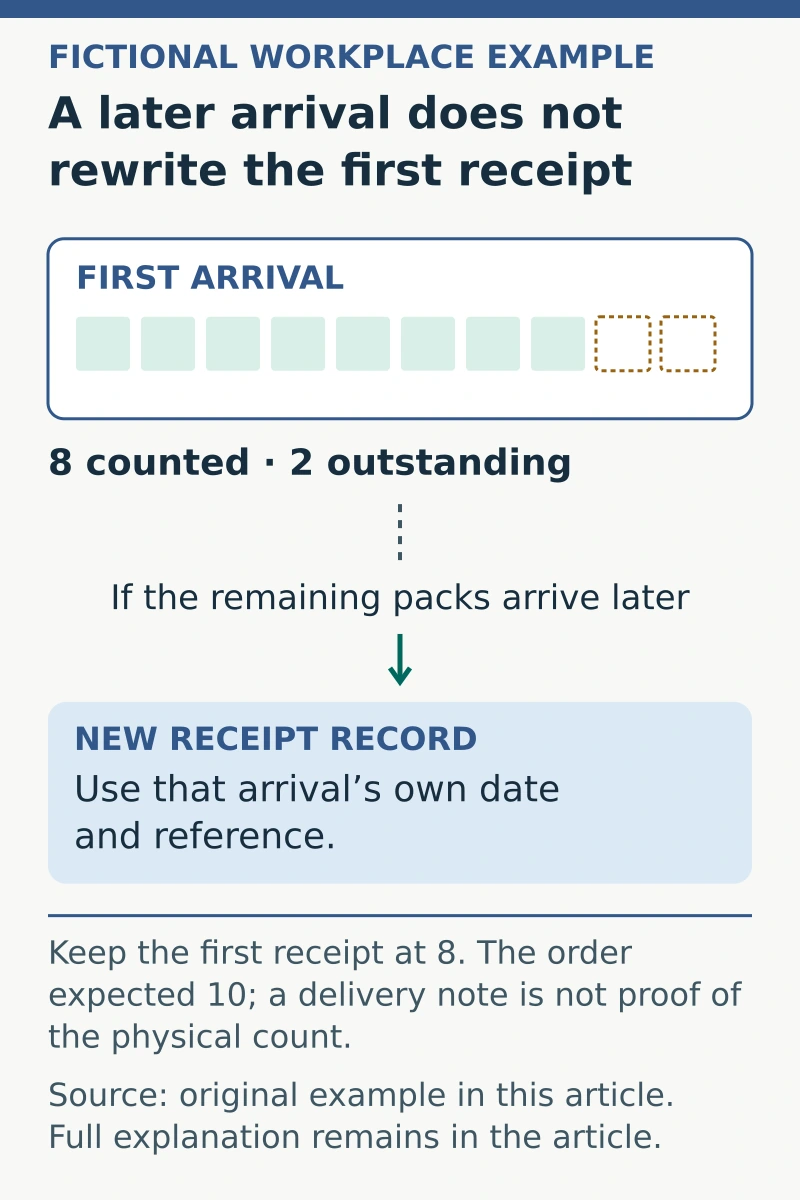
An invented office expects ten packs of notebooks under a purchase order. The receiving employee counts eight packs and records that quantity against the correct item and order reference.
They note the two-pack difference and notify the purchasing contact through the approved process. They do not record ten because the delivery note states ten or alter the count to make the invoice easier to match.
If a later delivery supplies the remaining packs, that arrival is recorded with its own date and reference. The history should show what happened rather than presenting the first delivery as complete from the start.
Keep handling and inspection within the proper process
Follow the actual instructions for unloading, storage, damaged goods and any restricted material. This record guide does not provide manual-handling, dangerous-goods or technical inspection instructions.
Report an unsafe condition through the appropriate procedure instead of treating a note on the receiving form as the whole response. Obtain the right person’s assessment where the condition of goods is uncertain.
Keep photographs or documents only where permitted and necessary, using approved storage. Avoid capturing unrelated people or personal information while documenting a delivery.
Close the record with a traceable outcome
Update the relevant stock process only within your authority. Refer shortages or mismatches for the appropriate supplier and purchasing decision, keeping the receiving facts distinct from the eventual resolution.
Link the record to any later receipt, return or authorised adjustment. A useful goods-received record allows another person to understand what actually arrived and what still needs checking, without assuming that an invoice or expected quantity proves physical receipt.
For career context, see warehouse duties and preparation and compare the receiving responsibilities stated in an actual vacancy.