

When a product recall notice reaches a workplace, identify the responsible person promptly and check the notice against the actual product records. Use verified official or supplier information and follow the recall-specific instructions through the organisation’s authorised process.
This guide concerns receiving and coordinating a notice. It does not determine a supplier’s legal obligations, decide the technical risk or replace instructions for a particular recalled product.
Verify the notice and product identity
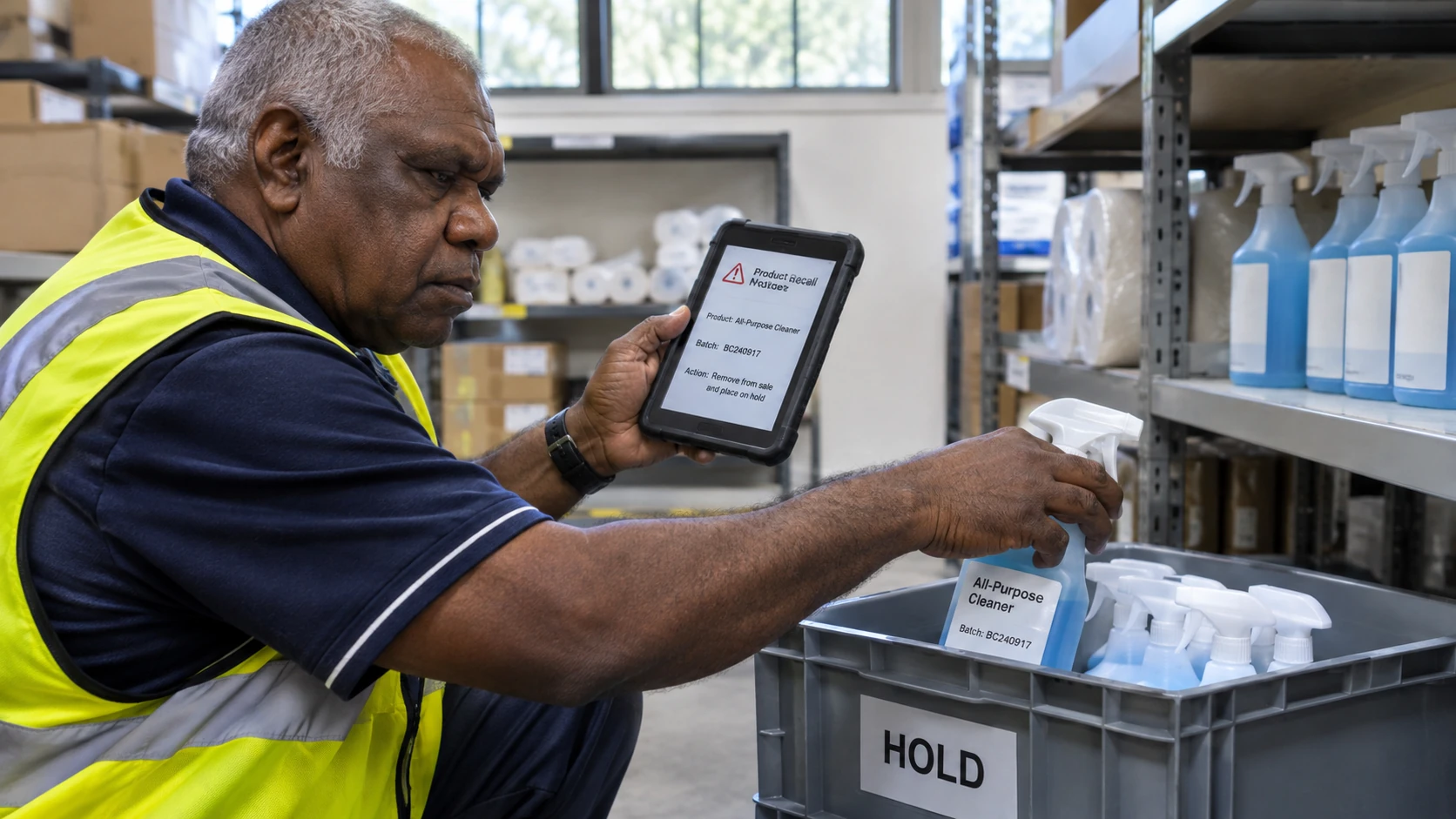
Check the source, product name, model, batch, serial or other identifiers relevant to the recall. A similar-looking product or shared brand name may not establish whether a particular item is affected. For warehouse staff, connect the product and batch check to the actual stock duties discussed in our warehouse jobs guide; any hold, return or disposal must follow the specific notice and authorised workplace instructions.
The ACCC’s product-safety information points to recall information and the instructions provided in notices. Use the relevant regulator for the product category; do not assume every type of product is handled through the same system.
If the message is unexpected or includes a link or payment request, verify it through an independently obtained official contact or website. Avoid forwarding an unverified notice as an established recall.
Refer the matter through the workplace process
Notify the person responsible for product safety, stock or the relevant equipment. Follow the approved immediate instructions to prevent affected goods being used or supplied, including any required hold or segregation arrangements.
Do not test, repair, dismantle, transport or dispose of a potentially unsafe item based on this general guide. Obtain and follow the actual authorised instructions. An immediate hazard or injury needs the relevant emergency or incident response as well.
The ACCC’s recall-preparation guidance provides broader context for business recall planning and traceability. The designated responsible person should check the applicable duties and reporting requirements promptly.
Use a practical notice-handling record
Capture:
- Notice: verified source, reference and date received.
- Identity: product and affected identifiers stated in the notice.
- Match: records checked and uncertainty still to resolve.
- Location: affected stock or equipment and relevant movement records.
- Immediate action: authorised steps taken, time and responsible person.
- Instructions: current recall-specific guidance and contact.
- Follow-up: return, communication or other actions assigned through the approved process.
- Closure: evidence required before the response is treated as complete.
Keep personal and commercial details appropriately restricted. A broad operational update can identify a hold without reproducing customer information.
A fictional batch-check example
In this invented scenario, a workplace receives a verified notice affecting one model and specified batch range. The stock coordinator compares the identifiers with the receiving and storage records and finds one possible match.
The coordinator refers the uncertainty to the responsible person and follows the approved hold instructions while the match is checked. They do not mark every product from the brand as recalled or release the possible match because its appearance seems normal.
No actual product or recall is described in this example.
Keep the response traceable
Record movements and authorised decisions so the team can identify what was held, returned or otherwise handled. Check whether related locations or recipients need action through the responsible process.
Close the record only against the required evidence and instructions. A recall response should show a verified notice, product-specific checks and accountable actions, with uncertainty referred rather than hidden in an apparently complete spreadsheet.