

Bricklaying roles can involve different materials, structures and specialisations. Read the actual vacancy for the work category, required trade evidence and site responsibilities before treating all masonry experience as interchangeable.
An application should identify the work you personally completed and the approved requirements supporting it. It should not imply independent structural design authority or a technical acceptance you did not make.
Understand the advertised masonry work
The ABS bricklayer description covers brick, block and related work, with specialisations. Actual roles can differ in their project stage, material and setting.
Check qualifications, relevant practical experience, site requirements and supervision. Use QBCC licensing guidance to check the actual employment, contracting or supervisory arrangement rather than assuming one licensing rule covers every applicant.
The existing trades roles guide provides wider career context.
Read requirements and material identity carefully
Identify the current plan, specification and work area. Check who can answer a discrepancy and approve a change affecting the required work.
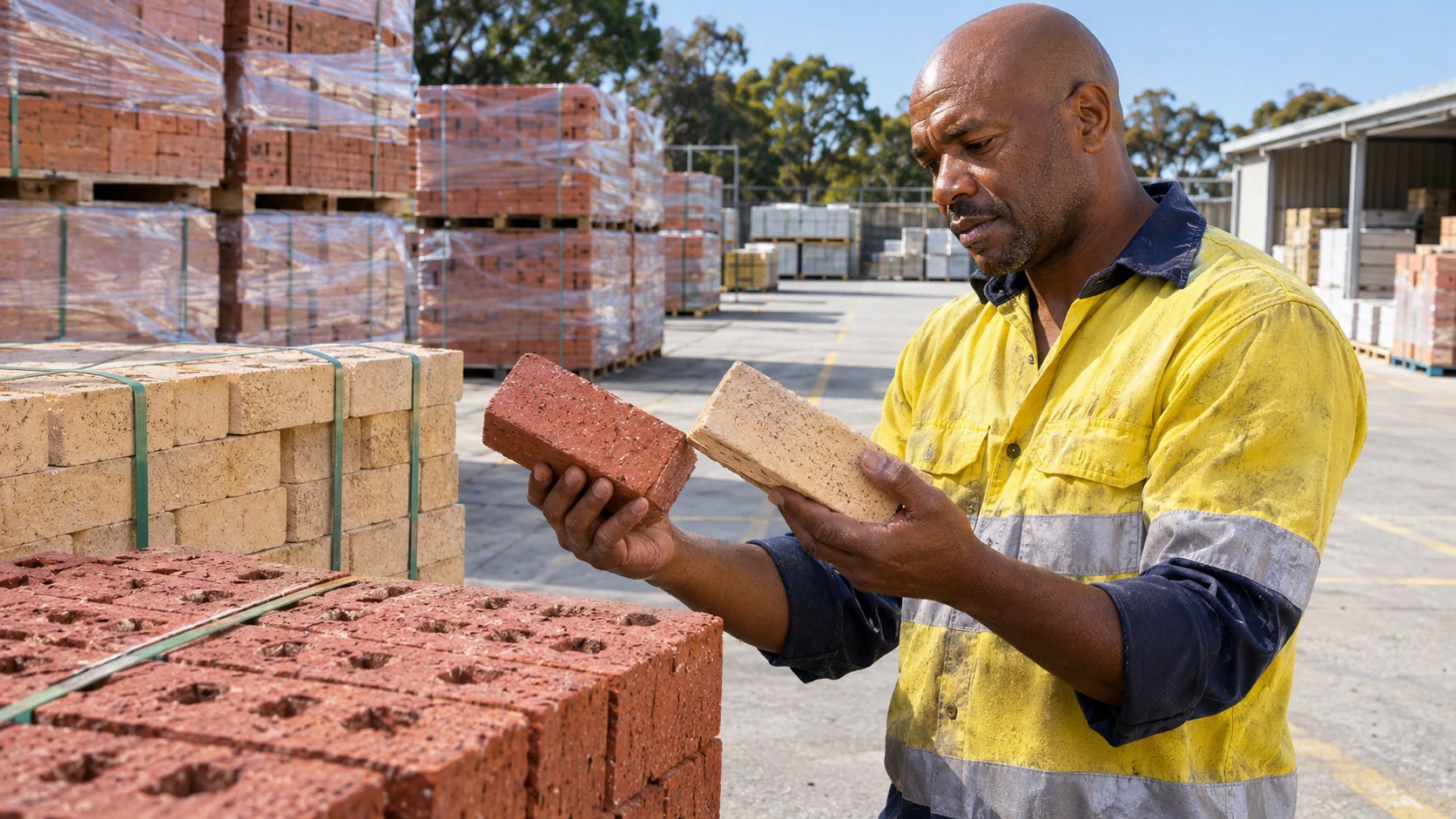
Keep the product description and actual material record connected. A visually similar brick or block should not be treated as an authorised substitute without the appropriate review.
This guide does not provide structural design, mortar, cutting, scaffolding or installation instructions. The actual task needs competent work and the relevant technical and safety processes.
A fictional material-check exercise
In this invented example, a work-area specification and a delivery record use different product references. The candidate records the documents, affected area and question for the authorised supervisor.
The response does not infer equivalence from colour or dimensions, and it does not change the specification to match what arrived. It preserves the uncertainty until the responsible person provides the required decision.
No real structure, material approval or building-quality finding is claimed by the exercise.
Build an evidence record for your contribution
For an authorised or fictional example, explain:
- Context: masonry work category and your actual responsibility.
- Requirements: approved plans, specifications or instructions used.
- Work: contribution you performed within competence.
- Coordination: team, supervisor or other trade interaction.
- Quality: relevant checks and review under the actual process.
- Exception: material, plan or scope question raised.
- Result: supported outcome and limits of the example.
Obtain permission before sharing site photographs or documents. Protect client information and identify your part accurately rather than claiming a whole building as your work.
Ask how the role is supported
Clarify task allocation, site travel, tools, work patterns and training for unfamiliar activities. Ask how drawings and changes are issued and how the team confirms the current instruction.
Match the example to the advertised specialisation and responsibilities. A strong bricklaying application shows dependable trade evidence, accurate use of requirements and appropriate escalation, giving the employer a practical basis for assessing the work you can substantiate.