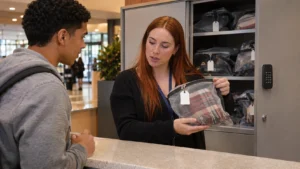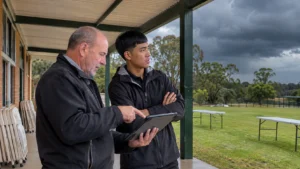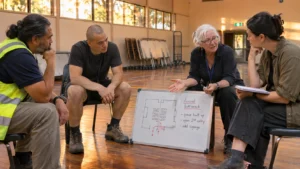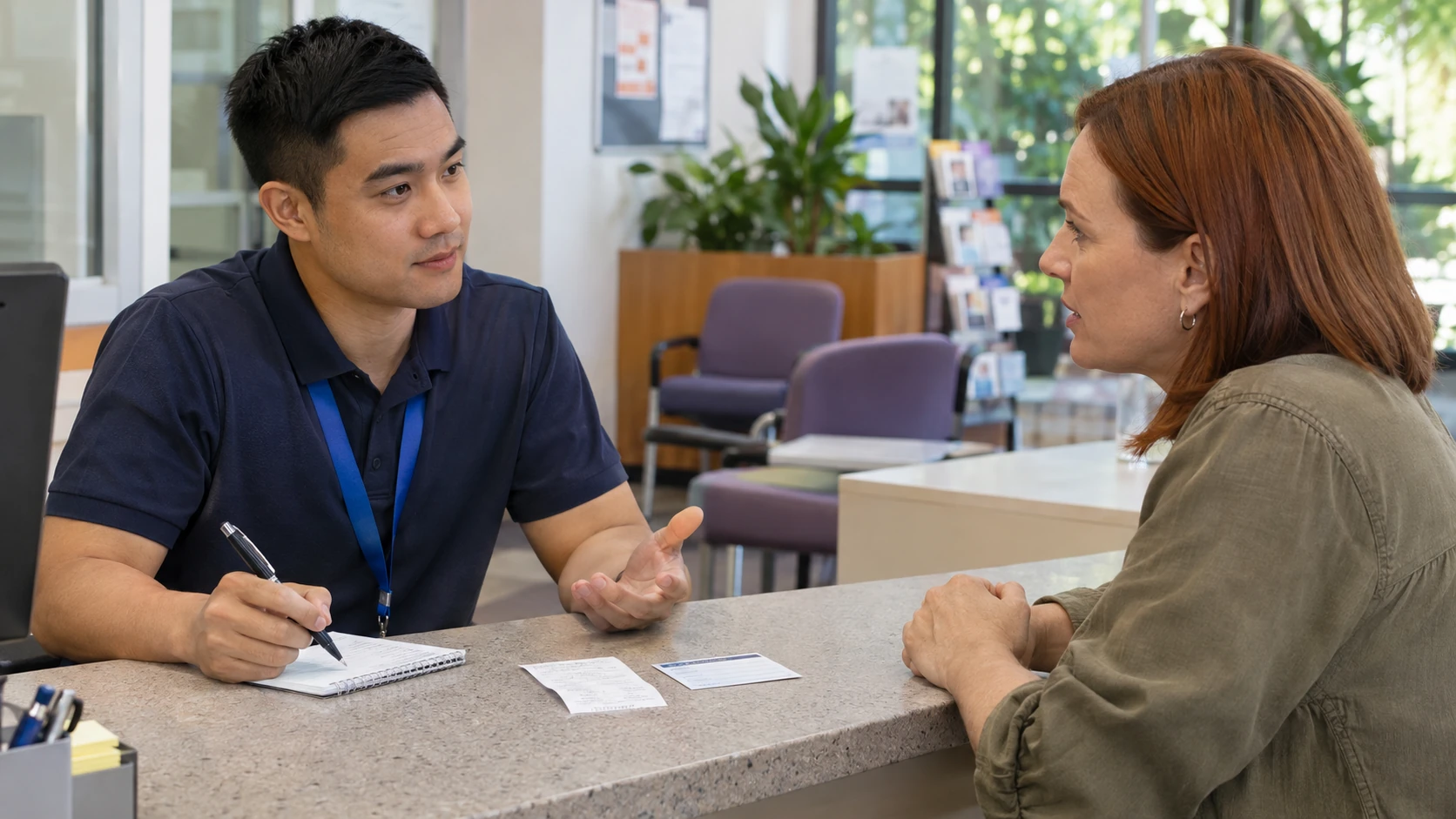
Event access information should describe verified arrangements that guests can use when planning their visit. Check the actual arrival route, facilities and contact process before publishing a general claim that an event is accessible.
A checklist supports investigation and communication. It does not establish compliance or guarantee that every guest’s needs are met by the same arrangement.
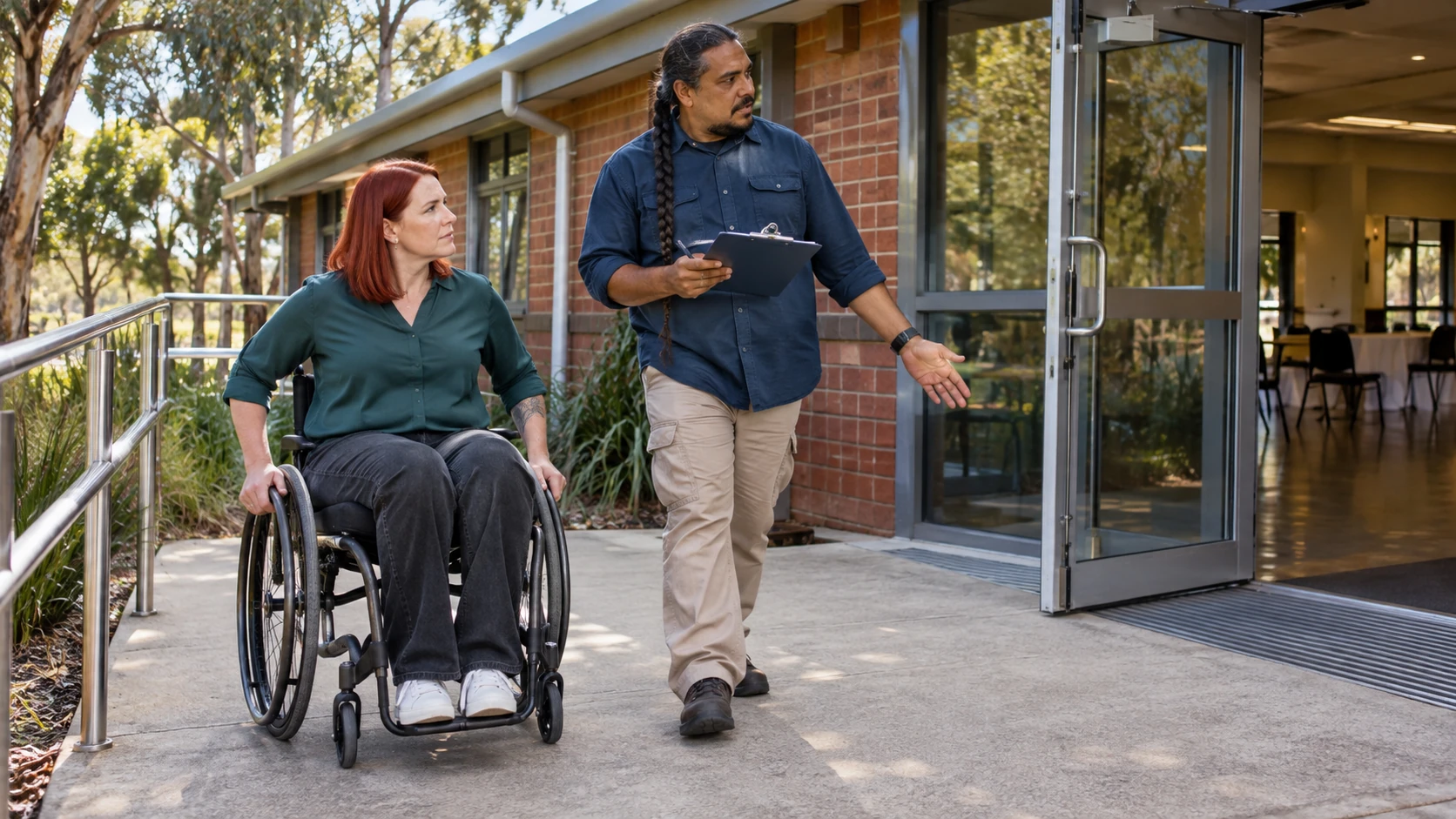
Verify the journey described to guests
Review the route from the published arrival point to the event space, including the entrance actually in use. Check any relevant parking, drop-off, paths, lifts, seating, toilets and assistance arrangements with the responsible venue or event contact.
The NSW Government’s event-accessibility guidance discusses planning for access and sharing useful information such as accessibility maps. Use it alongside the requirements and specialist input appropriate to the actual event.
Do not rely only on an old venue brochure. Temporary works, room allocation or event layout can affect the route described in guest information.
Use a practical access-information check
For each published feature, record:
- Detail: the arrangement or route guests are being told about.
- Source: the person, approved plan or inspection confirming it.
- Status: confirmed, conditional or still requiring verification.
- Information: how it will be explained in a usable format.
- Contact: who handles questions or individual requests.
- Operation: staff or service provider responsible on the day.
- Change: method for updating information if conditions alter.
Use precise descriptions where possible instead of a broad label without supporting detail. State relevant limitations accurately and provide a way to discuss an unresolved need.
A fictional entrance check
In this invented small-event example, the venue’s usual accessible entrance is not the entrance shown in the first guest email. The coordinator confirms the correct route with the venue and checks the information with the responsible access contact.
The event team updates the guest instructions and briefs arrival staff. The record shows the verified entrance, source and current message, rather than leaving staff to explain the discrepancy after guests arrive.
No real venue or access feature is claimed in this example.
Check communication as well as the physical route
Consider how guests can obtain information, ask questions and request support. Check that essential materials are available in suitable formats and that the enquiry contact is monitored.
Ask about the arrangement that would help rather than requesting unrelated medical information. Confirm any individual support through the appropriate process, with necessary details shared only with the people implementing it.
Brief staff on what has been confirmed and what needs referral. They should not promise equipment, interpreters, spaces or other assistance that has not been arranged.

Review changes before arrival begins
Check the current layout and guest information after final operational changes. If an access arrangement is affected, refer it promptly and communicate the verified update through appropriate channels.
After the event, review reported barriers and the response, using proportionate records and appropriate expertise. Good access information gives guests an accurate basis for planning and a clear contact for questions. Its reliability depends on verification and follow-through, not the presence of an accessibility symbol alone.
For staff preparing for this work, explore event roles and responsibilities and confirm which access enquiries belong to their role and which need referral.