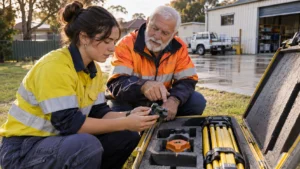
Crane-operator vacancies need a match between the actual plant, required licence class and relevant operating experience. Establish those details before treating a broad crane ticket or a previous operator title as sufficient for the role.
This guide supports career and evidence preparation. It does not provide lift planning, load-chart interpretation, setup or operating instructions.
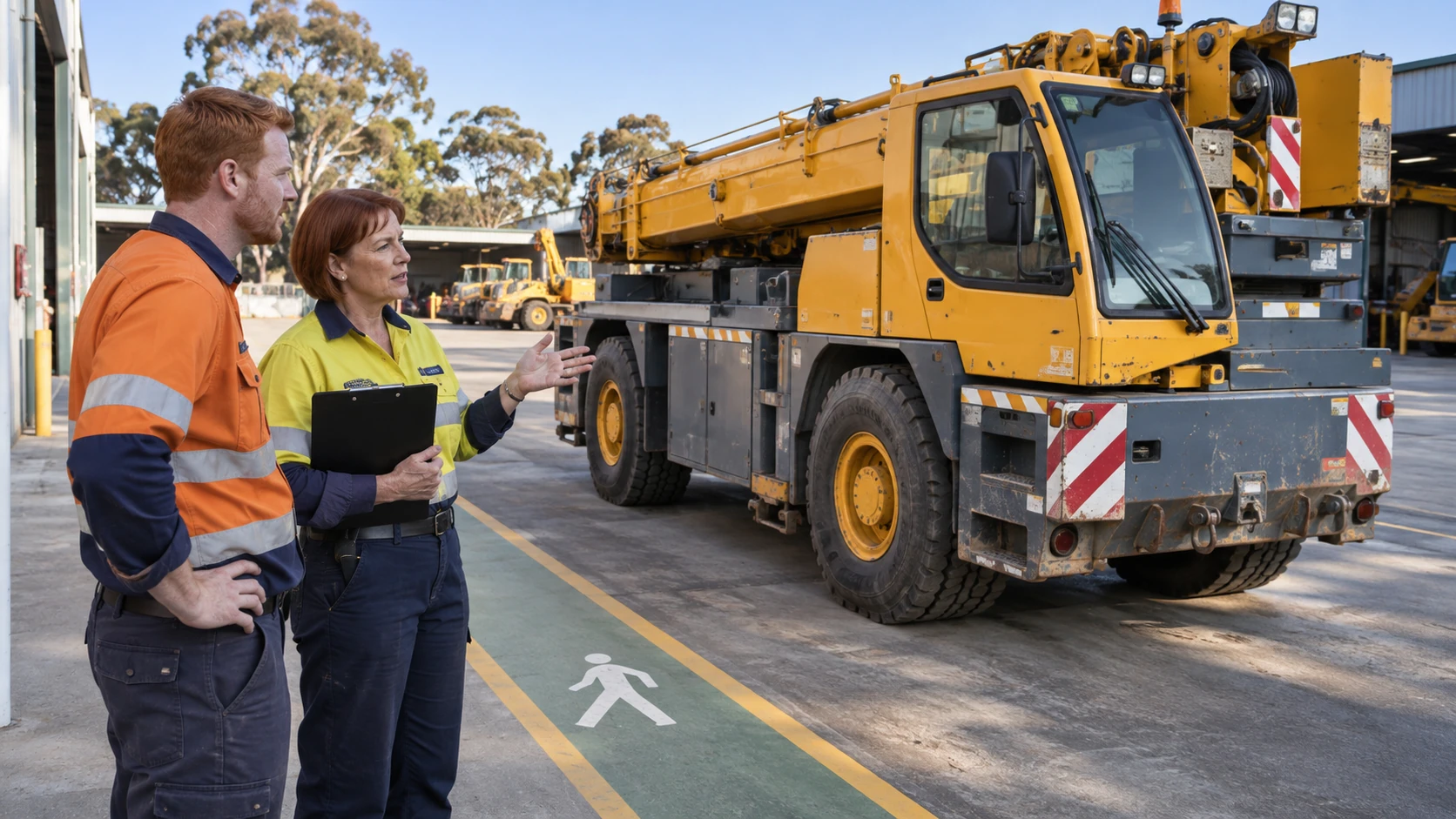
Identify the plant and role
The ABS crane, hoist or lift operator description provides broad occupational context. Actual jobs can concern different equipment and responsibilities that must be checked individually.
Read the advertisement for plant type, licence requirements, site experience and the expected relationship with other lifting roles. Ask about unfamiliar equipment rather than inferring competence from superficial similarity.
The existing trades roles guide provides wider preparation context without establishing the conditions of a particular operator position.
Check the official licensing scope
WorkSafe Queensland’s high-risk work guidance identifies licensing for relevant work, including cranes and hoists. Use the actual class and equipment requirements through the official process.
Check licence currency and conditions separately from task-specific competence and site authorisation. Do not assume a credential for one plant class covers every crane or related activity.
If a vacancy’s wording is unclear, obtain the precise plant and duty information and ask the appropriate authority or employer contact. A general occupation profile cannot settle that question.
A fictional evidence exercise
In this invented example, a candidate has documented experience with one equipment category, while a vacancy names another. They prepare an honest comparison of the requested plant, their actual class and experience and any learning or verification still needed.
The practice note distinguishes previous supervised exposure from independent experience. It does not offer an operating method or claim the two categories are interchangeable.
No real equipment, load, lift plan or safe operating determination is described by the exercise.
Prepare an operator evidence brief
For an authorised example, explain:
- Plant context and work setting.
- Relevant current licence class and conditions.
- Experience and training applicable to the actual scope.
- Approved planning, supervision and communication arrangement.
- Records and handovers you maintained within your role.
- Unfamiliar task or change referred through the proper process.
- Supported contribution and its limits.
Protect sensitive site and technical information. Do not publish load plans, operational instructions or another person’s credentials in a portfolio.
Clarify the work arrangement
Ask about competence verification, equipment familiarisation, site induction and access to technical support. Establish how task changes and unclear instructions are handled and who makes the relevant planning decisions.
Verify any proposed training or recognition pathway with the actual provider and regulator. A credible application connects specific equipment experience with the correct authority and work context, giving the employer a clear basis for assessment without turning a broad licence label into a claim of unrestricted operating competence.