Light-vehicle mechanic roles involve different diagnostic, service and repair responsibilities depending on the employer and vehicles. Assess the vacancy by its actual work mix, qualifications, equipment and review expectations.
An application should distinguish a customer’s reported symptom, your observations and a verified finding. Attending a job or using a diagnostic tool does not itself establish responsibility for the final technical decision.
Understand the automotive scope
The ABS automotive-technician description includes light-vehicle mechanic among related titles and describes mechanical work in its defined scope.
Read the actual requirements for qualifications, vehicle experience, diagnostic systems and task-specific competence. If unfamiliar vehicle technologies or specialist duties are included, clarify the training and authorisations relevant to them.
The existing trades roles guide offers wider career context without establishing a particular workshop vacancy.
Keep the work request and findings separate
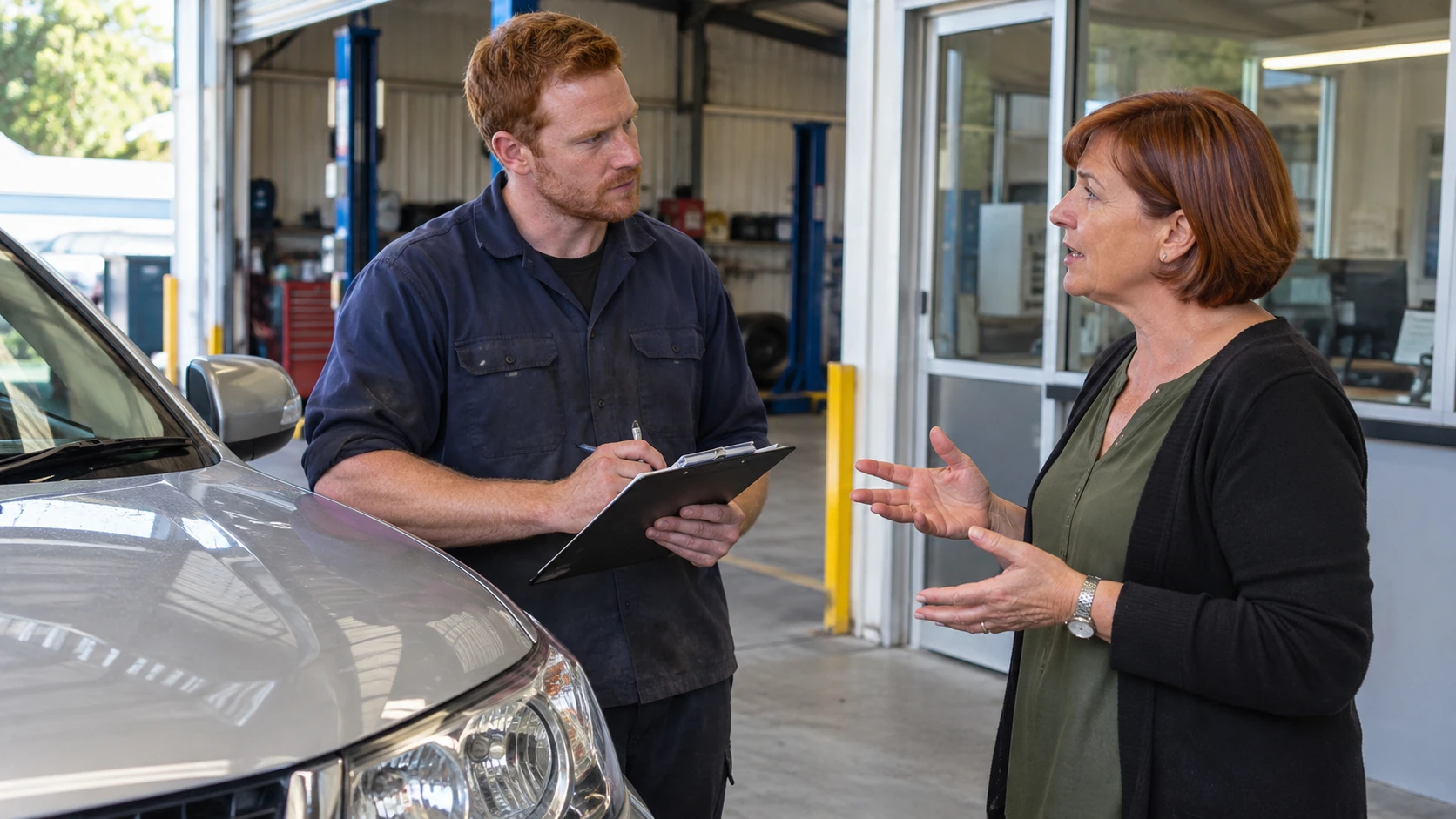
Identify the correct vehicle or job reference, reported concern and authorised work scope. Record what was observed and what still requires assessment through the actual technical process.
Check who approves additional work and who verifies or signs off the relevant result. A service record should not imply a certification or approval that its author was not authorised to provide.
This guide does not provide diagnosis, repair, lifting, road-testing or safety procedures. Practical work needs the employer’s approved methods, competent supervision and any applicable requirements.
A fictional job-record exercise
In this invented example, a customer report describes an intermittent concern, but the candidate’s authorised observation has not reproduced it. The record states the reported symptom, conditions checked and result actually observed.
The candidate identifies the next question for the responsible technical reviewer rather than claiming the concern is fixed or inventing a cause. Any further work follows the actual authorisation process.
No real vehicle, fault, repair or roadworthiness outcome is claimed by the exercise.
Prepare an automotive evidence brief
For a permitted example, explain:
- Vehicle category and work setting.
- Qualifications and competence relevant to your contribution.
- Authorised job scope and technical information used.
- Observations and records you personally prepared.
- Supervision, review and additional-work approval involved.
- Uncertainty or unfamiliar task referred appropriately.
- Supported result and limits of responsibility.
Protect customer details, vehicle identifiers and proprietary service information. Use fictional material where a real record cannot be disclosed and avoid claiming another person’s diagnosis as your own work.
Clarify training and technical support
Ask about task allocation, tools, supervision, unfamiliar systems and the process for technical questions. Check any role-specific inspection or other authority through the appropriate official source rather than assuming a general qualification settles it.
A credible application gives the employer a clear account of your work and checks. It connects relevant vehicle experience with accurate records and appropriate review, preserving the difference between a reported concern, an observation and a supported technical outcome.