Fire-protection technician roles need a precise match between the system, work activity and relevant competence or licence. Read the vacancy carefully before treating portable equipment, water-based systems, alarms and passive protection as one interchangeable scope.
This guide supports career and evidence preparation. It does not provide inspection, testing, isolation, servicing or disabling instructions for any fire-protection system.
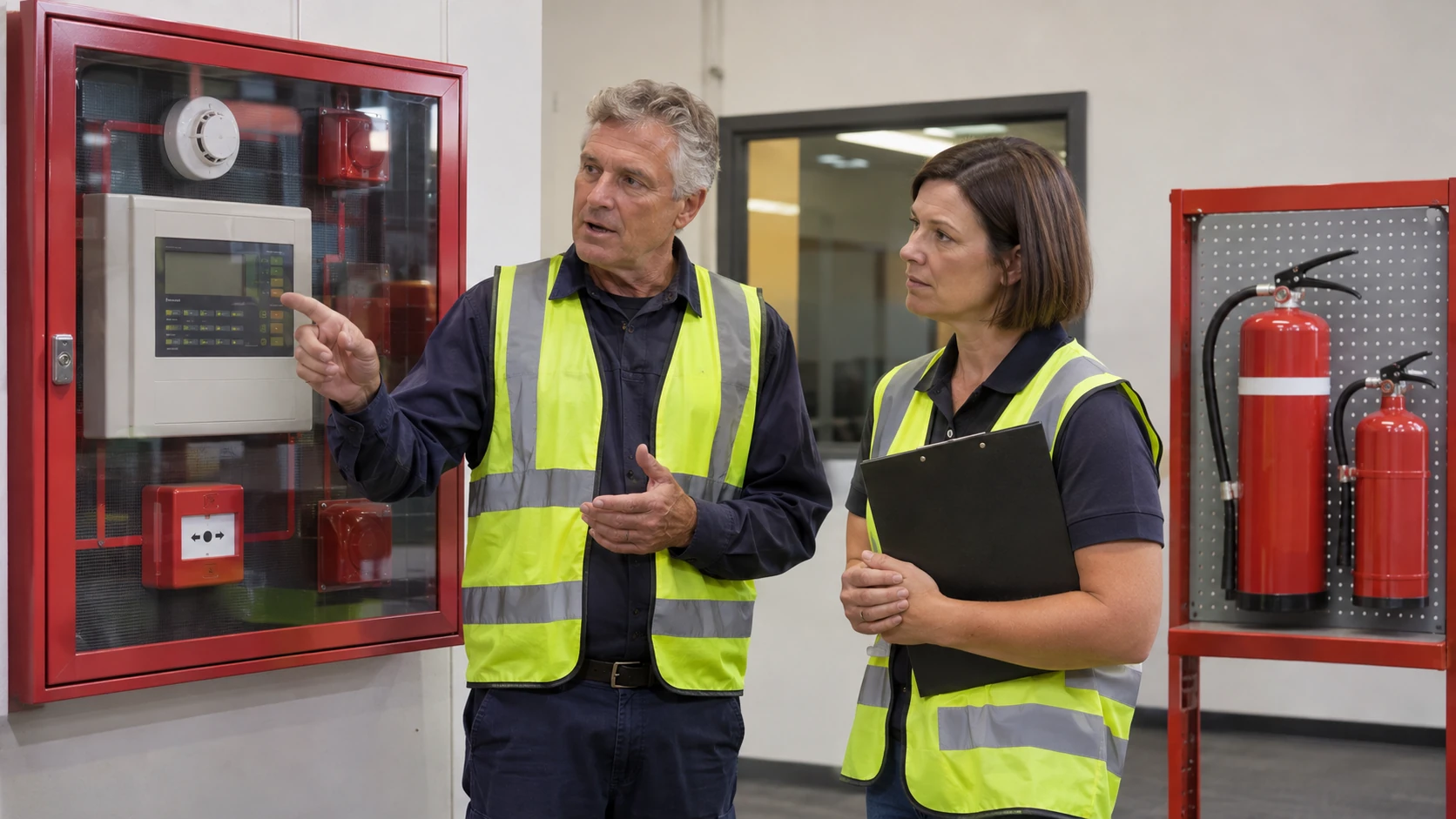
Understand the role’s system focus
The ABS fire-protection equipment technician description describes a range of equipment work and distinguishes related occupations. Its fire-protection plumber description covers another related scope.
Check which system and activities the employer actually assigns, such as installation, maintenance, inspection or another defined responsibility. Qualifications and authorisations must be considered against that actual work.
Do not assume experience with one equipment category establishes competence to assess every building system or issue every type of certification.
Check the Queensland licence class
The QBCC fire-protection licensing page separates streams and activities and identifies current information relevant to applicants and existing licensees.
Check the specific class, conditions and any current upskilling requirements, with the appropriate authority where needed. Distinguish occupational work, contracting, supervision and certification responsibilities under the actual arrangement.
If a role includes electrical or another specialist activity, establish its separate requirements rather than treating a broad fire-protection title as blanket authority.
A fictional scope-review exercise
In this invented example, a candidate has evidence for one service scope, while the vacancy includes a different system and activity. They prepare a factual comparison of the duty, current credentials, experience and unresolved requirement.
They ask the authorised contact to clarify the assignment and competence-verification process. They do not offer a technical judgment about an unfamiliar system or claim the extra activity is covered by a general certificate.
No real building, fire-system condition or certification outcome is claimed by the exercise.
Build a specialist evidence sheet
For a permitted example, explain:
- System category and actual work activity.
- Relevant current qualifications, licences and conditions.
- Responsibility and supervision you held.
- Approved technical information and records used.
- Coordination with the responsible site or technical contact.
- Scope question or discrepancy referred appropriately.
- Supported outcome and authorised review.
Protect building-security details, system layouts and confidential reports. Do not publish sensitive instructions or present another professional’s certification as your work.
Ask about support and verification
Clarify task allocation, training, technical backup and how current requirements reach staff. Check who may issue reports, accept work and resolve an uncertain system condition.
The existing trades roles guide provides broader career context. A credible application connects a defined scope with evidence and current authority, helping the employer assess your contribution without implying unrestricted competence across every fire-protection stream.