

Telecommunications cabling roles need a clear match between the actual customer-cabling work, registration category and any additional competencies required. Read the vacancy before assuming a broad telecommunications qualification covers every proposed duty.
This guide focuses on role and registration questions. It does not provide cable installation, testing, network configuration or electrical-safety instructions.
Identify the actual cabling scope
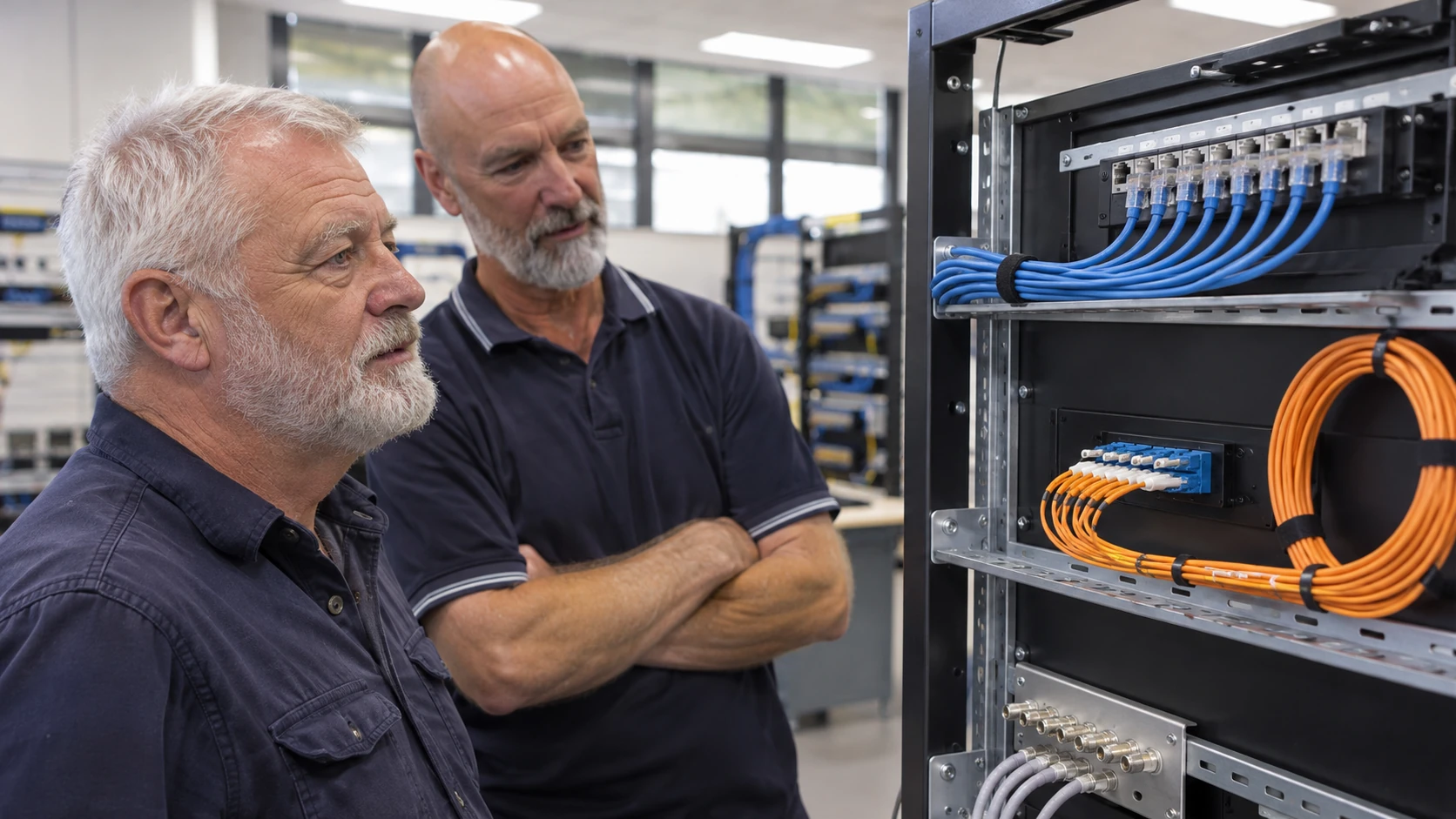
The ABS data-and-telecommunications cabler description provides customer-cabling context. The broader telecommunications-technician description covers related equipment responsibilities.
Actual roles may include different cabling, equipment or network tasks. Check which are assigned and what evidence of qualifications, experience and authorisation the employer requests.
Do not assume every telecommunications job is governed by the same cabling scope or that a title establishes the required permission.
Check registration and competencies
The ACMA’s registration-category guidance distinguishes open, restricted and lift registration and relevant additional competencies. Its Cabling Provider Rules guidance explains the applicable customer-cabling framework.
Check the actual category, conditions and work requirements with the relevant registrar or authority. Where unregistered work is proposed, the ACMA sets out specific supervision requirements; an informal colleague check should not be assumed sufficient.
A course certificate and current registration are different records. Verify the actual pathway and recognition process instead of assuming training completion automatically grants every entitlement.
A fictional registration check
In this invented example, an applicant has a documented registration category, but a vacancy includes specialised cabling outside their confirmed evidence. They identify the duty, current category and competencies and ask the relevant contact what further requirement applies.
The candidate does not claim the duty because it uses similar tools or a familiar technical label. Their practice record keeps confirmed scope separate from learning or recognition still needed.
No actual cabling installation or registration decision is claimed by the exercise.
Prepare a cabling evidence brief
For an authorised example, describe:
- Work setting and actual cabling or equipment scope.
- Current registration category and relevant competencies.
- Experience and supervision applicable to the task.
- Approved technical information and records used.
- Communication with the responsible customer or technical contact.
- Unfamiliar scope or discrepancy referred appropriately.
- Supported outcome and information you may disclose.
Protect customer layouts, network-security information and credentials. Use permitted or fictional material rather than publishing sensitive installation records.
Clarify role boundaries and support
Ask how the employer checks current registration and competence, allocates tasks and supports unfamiliar work. Identify any additional electrical, security or other duties needing separate requirements.
The existing IT roles guide provides wider digital-career context. A credible application links the actual work with precise evidence and appropriate authority, preserving the difference between technical familiarity and the registration or competence the assigned task requires.