

Welder roles require a match between the work specification, relevant process experience and the competence the employer needs. Read the vacancy for material, fabrication setting, quality requirements and any particular qualification or authorisation.
Experience with one welding process or job does not automatically establish suitability for every material, position or specification. Use precise evidence rather than a general claim that you can weld anything.
Understand the fabrication responsibilities
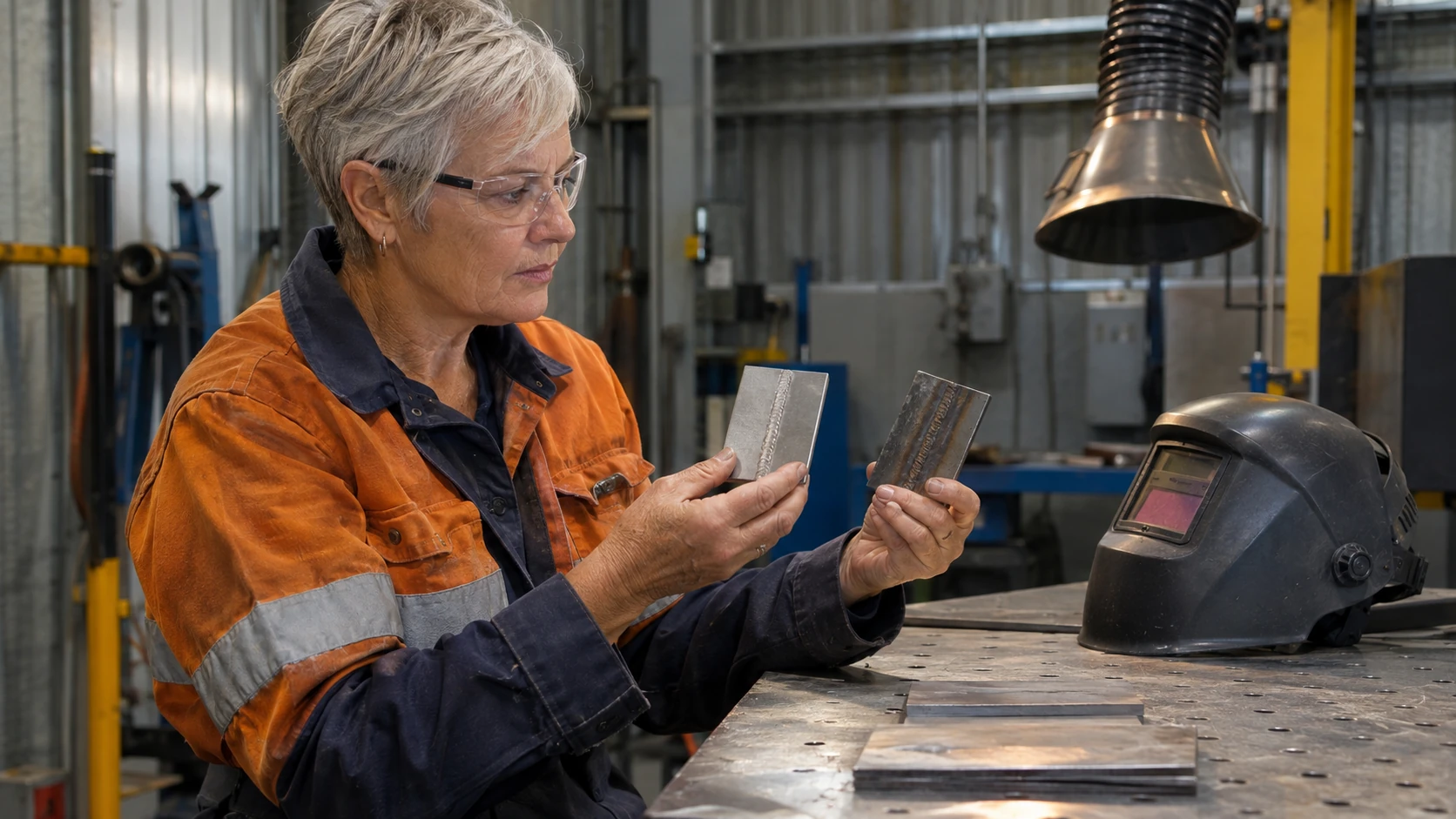
The ABS first-class welder description covers metal fabrication and repair using welding techniques. Actual jobs allocate preparation, welding, inspection support and records differently.
Check the qualifications, relevant experience, procedures and testing or qualification evidence the employer requests. Ask how competence is verified for the actual scope rather than assuming a course or past position covers every requirement.
The existing trades roles guide provides wider context without establishing a particular vacancy or technical approval.
Follow the specification and authority
Identify the current work instructions, relevant material information and authorised process. Refer unclear or conflicting requirements before making an unsupported choice.
Keep the person performing work, the person inspecting and the person accepting the output distinct under the actual quality process. A visual observation does not replace a required competent assessment.
This article does not provide welding settings, hot-work instructions, exposure limits or equipment procedures. Use the actual approved safe-work and technical arrangements.
A fictional specification exercise
In this invented example, a fabrication request uses a material description that does not match the accompanying work record. The candidate identifies the discrepancy and prepares a factual question for the authorised supervisor or technical reviewer.
They do not choose a familiar process and proceed to demonstrate confidence. The practice record shows the required clarification and the point before which the affected work cannot be treated as ready under the actual process.
No real weld, test result or technical acceptance is claimed by the exercise.
Prepare a welding evidence brief
For a permitted example, explain:
- Scope: fabrication work and your actual responsibility.
- Competence: relevant qualifications, experience and process-specific evidence.
- Inputs: current instructions and material information used.
- Records: traceability or quality information maintained within your role.
- Review: supervision, inspection and acceptance arrangements.
- Referral: unfamiliar scope or inconsistency raised.
- Result: outcome supported by records you may disclose.
Do not publish client drawings, proprietary procedures or confidential inspection information. Use fictional material where a real example is restricted and accurately describe the status of any practice work.
Clarify the work and verification process
Ask about workshop or site duties, task allocation, training, supervision and how the employer verifies competence for a new assignment. Confirm what evidence is required before attempting any practical assessment under the actual arrangement.
A credible application connects specific process experience with accurate requirements and quality records. It helps the employer assess what you can substantiate while preserving the technical decisions and authorisations required for the work.