


Three-way matching compares an invoice with the relevant purchase order and receiving record before the organisation makes an authorised payment decision. It helps identify differences in what was ordered, received and billed.
Completing a match does not itself grant payment authority or establish that every contractual, tax or procurement requirement has been met. Follow the organisation’s actual financial controls and refer exceptions to the responsible person.
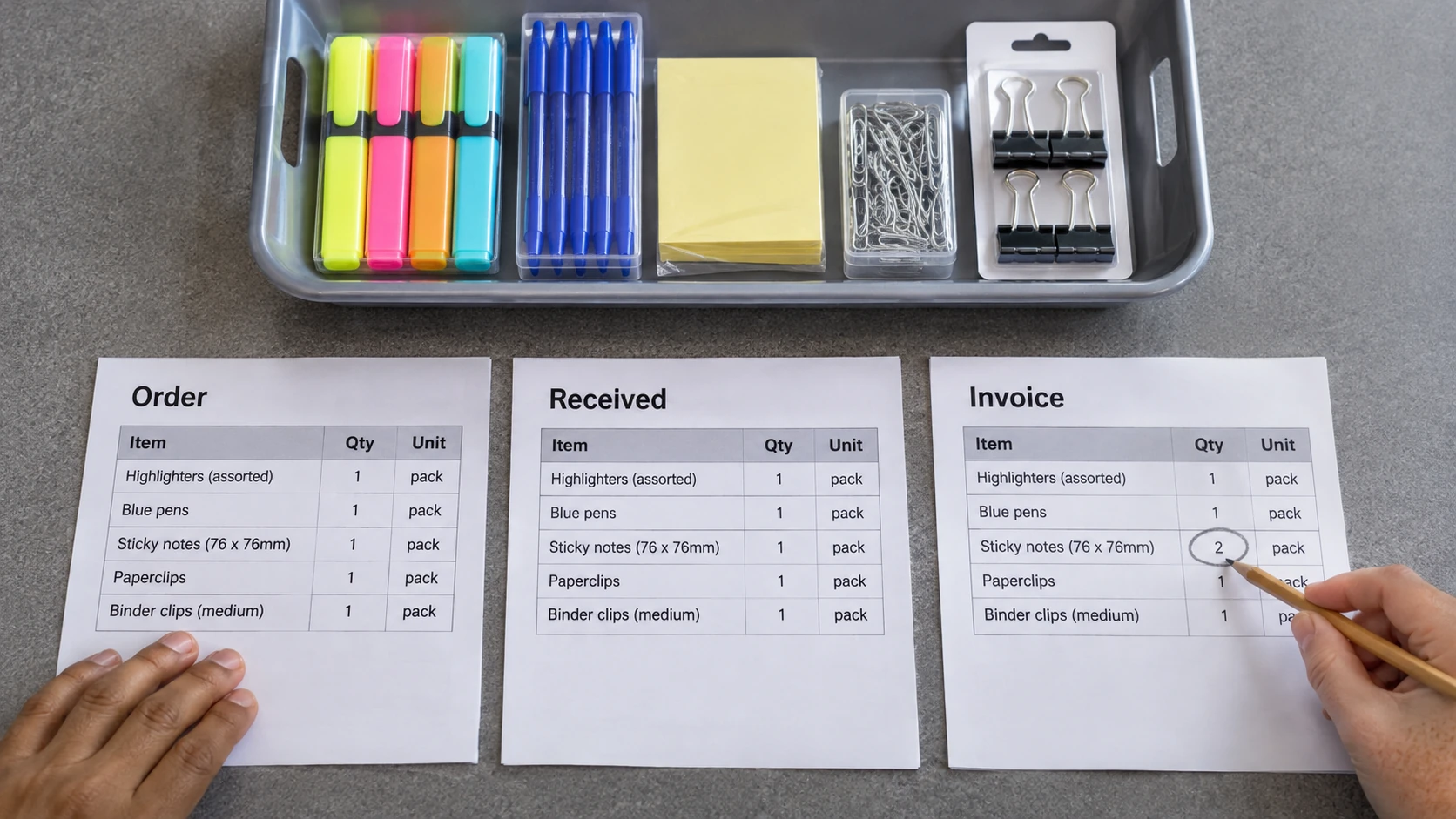
Understand the three records
The purchase order describes the authorised order under the applicable process. The receiving record describes what was actually received or accepted. The invoice states what the supplier is seeking payment for.
Check that the records belong to the same transaction and supplier. A matching reference is useful, but it does not replace reviewing quantities, descriptions, agreed charges and any relevant conditions.
The Australian Government’s invoicing and payments guidance provides broader context for invoice information and payment arrangements. This article’s exercise is original fictional arithmetic, not accounting or tax advice.
A fictional matching exercise
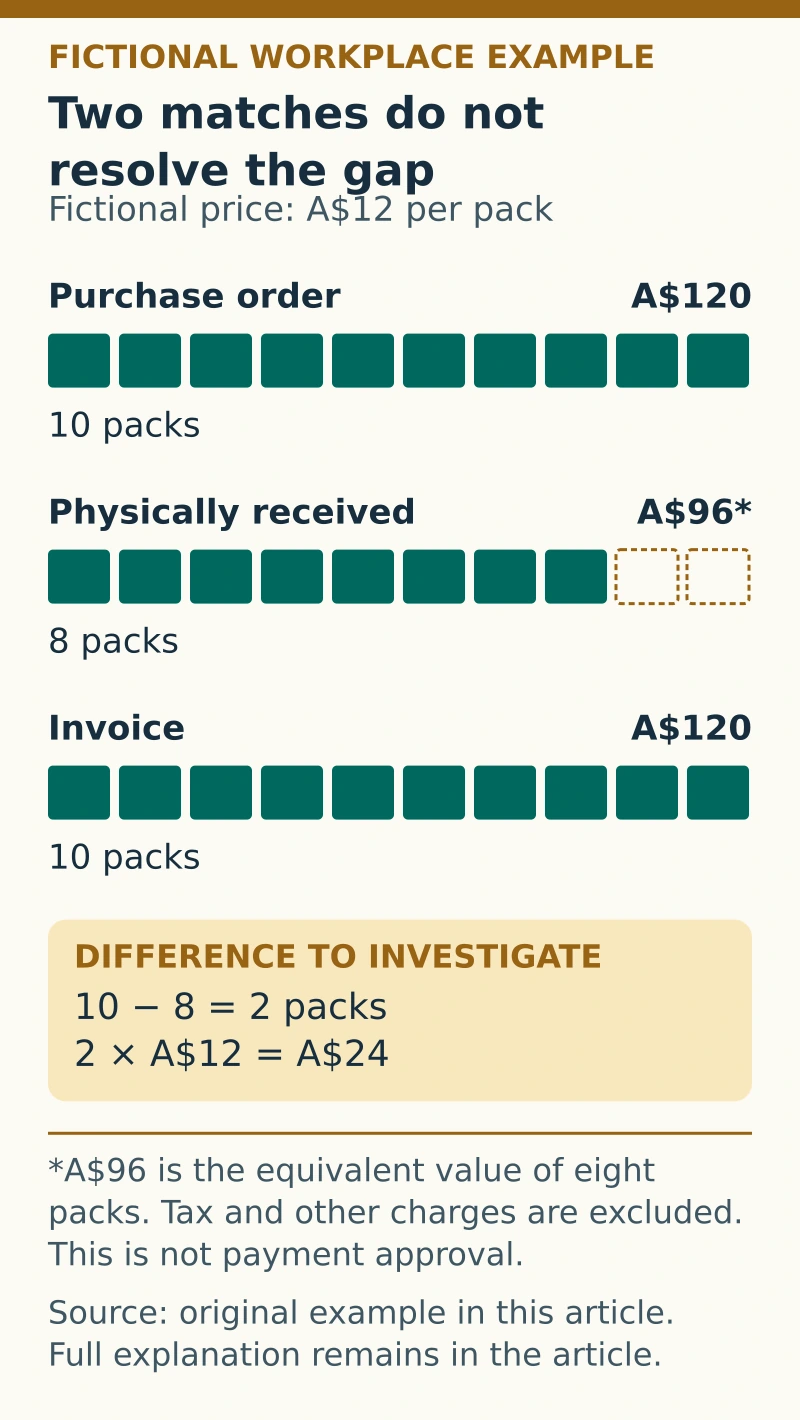
An invented office orders ten packs of notebooks at an illustrative A$12 per pack. The purchase order line totals A$120. The receiving record shows eight packs received, while the invoice bills all ten packs at A$120.
The ordered and invoiced quantities agree, but the received quantity differs by two packs. At the fictional unit price, the eight received packs correspond to A$96 and the two-pack difference to A$24.
These figures are invented and exclude any tax or other charges for simplicity. The calculation identifies a difference to investigate. It does not decide whether the supplier may invoice in advance, whether a partial payment is permitted or what the contract requires.
Record an exception clearly
Use a practical check record:
- Transaction: correct supplier and order references.
- Order: authorised descriptions, quantities and terms to check.
- Receipt: actual receiving or acceptance evidence.
- Invoice: billed items, quantities and charges.
- Difference: the specific mismatch and supporting facts.
- Enquiry: information needed from the relevant owner or supplier.
- Decision: authorised resolution and approval reference.
- Processing: next payment or records action under the actual controls.
Do not alter the receiving record to match the invoice. If the receiving entry is wrong, correct it through the proper process with supporting evidence.
Check more than the arithmetic
Review whether a duplicate invoice, wrong supplier, changed order or missing receipt explains the discrepancy. Verify payment-detail changes through the organisation’s approved independent process rather than relying on an invoice email alone.
Where a tolerance is permitted, use the actual approved rule. Do not invent a universal percentage below which differences can be ignored.
Close the exception with an authorised outcome
In the fictional example, the receiving owner may confirm whether two packs are outstanding or whether the record needs correction. The responsible approver then determines the appropriate next step using the actual terms and controls.
Retain the resolution and relevant documents through the approved records process. A useful three-way match leaves a clear explanation of any difference and evidence that the right person decided how it should be handled.
To understand the wider flow of order and receiving information, explore logistics coordinator duties, while keeping payment approval with the authorised finance role.