A shift-swap process should make the request, checks and approval visible before employees rely on a changed arrangement. Agree who can authorise the change and how the confirmed roster reaches everyone who needs it.
A private agreement between two employees may not be enough. The employer still needs to check the applicable employment rules, coverage, capability and safety considerations for the actual shifts.

Define a request rather than an automatic exchange
Ask employees to identify the original shifts, proposed replacement arrangement and people involved. Keep unnecessary personal explanations out of a broadly shared request log.
Explain that a request remains pending until the authorised person confirms it. Avoid a policy that says every swap is automatically acceptable if two employees agree, regardless of hours, required skills or applicable rules.
The Fair Work Ombudsman’s roster guidance explains consultation for changes to regular rosters or ordinary hours and notes that awards and agreements can contain extra rules. Check the requirements relevant to the proposed change, including any separate agreement needed.
Use a practical approval checklist
Review:
- Details: the correct dates, start and finish times and work locations.
- Availability: confirmation from the employees involved.
- Coverage: the roles and capabilities needed for the work.
- Hours: applicable limits, breaks, overtime or other pay questions.
- Safety: fatigue and other risks arising from the changed pattern.
- Requirements: relevant award, agreement, contract and workplace process.
- Decision: authorised approval, refusal or information still needed.
- Communication: roster update and notification to relevant staff.
Do not use the checklist to make an unsupported payroll decision. Refer uncertainty to the person responsible for interpreting the applicable requirements.
A fictional swap request
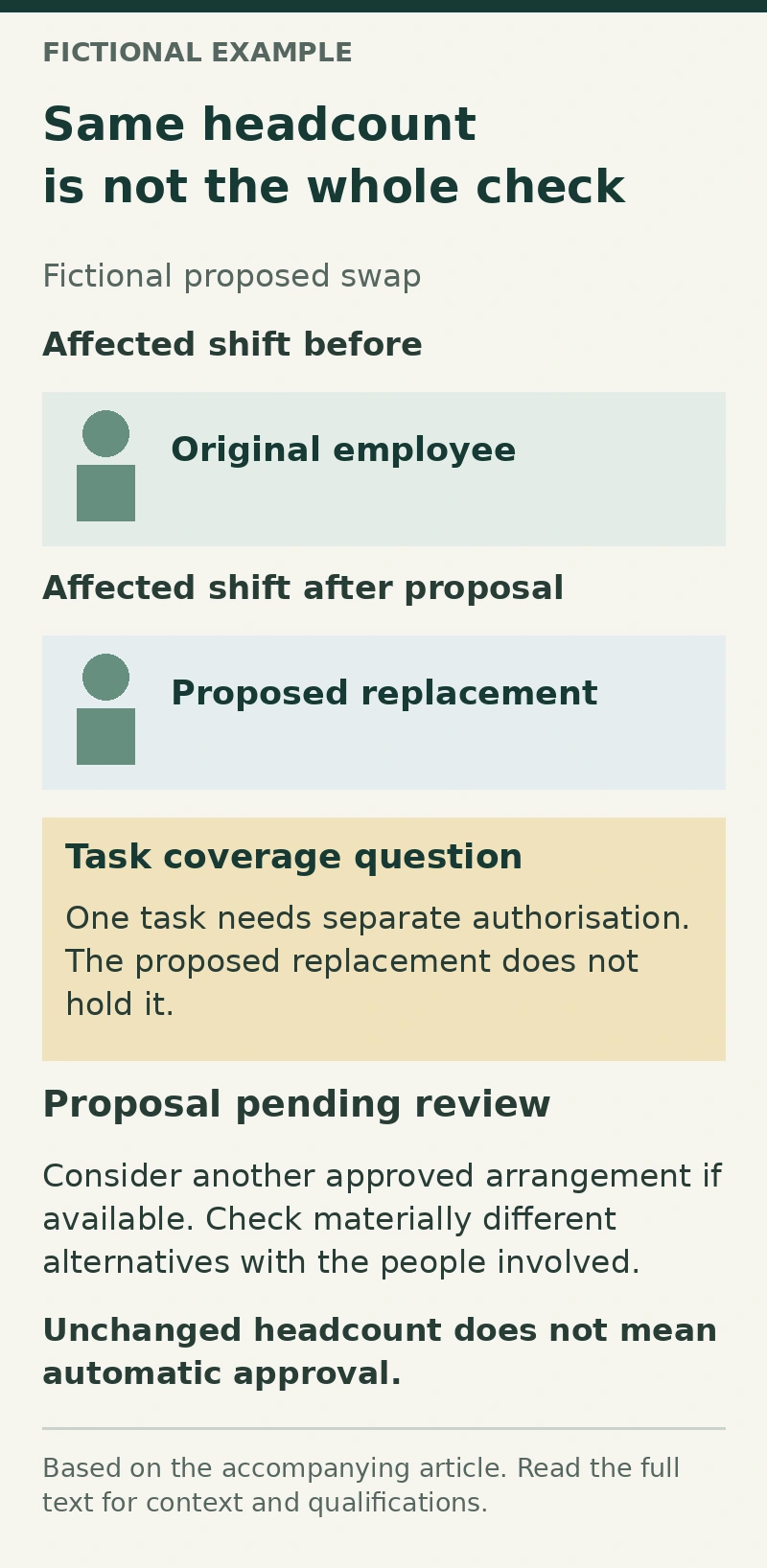
In this invented example, two employees request to exchange administrative shifts. The coordinator checks the proposed pattern and finds that one shift includes a task requiring a separate authorisation that the proposed replacement does not hold.
The coordinator explains the work coverage issue and considers whether another approved arrangement is available. They do not mark the swap approved merely because the total number of people on the roster remains unchanged.
If an alternative is proposed, the relevant employees receive the actual details and the process checks it again. Agreement to the first request should not be assumed to cover a materially different one.
Communicate a clear decision
Confirm which arrangement applies and from when. Update the approved roster and any relevant operational or payroll systems, with the appropriate record of the change.
If a request cannot be approved, give an appropriate work-related explanation and identify whether another option can be considered. Apply the process consistently while allowing the actual circumstances to be assessed.
Provide a clear escalation route for urgent changes. Do not assume a pending request silently becomes approved because the shift is approaching.
Review actual hours afterwards
Check that the time record reflects the work performed and that payroll applies the relevant treatment. An approved roster change does not remove the need to record actual time accurately.
Review recurring difficulties, such as requests reaching the wrong approver or missing skill information. Improve the process where possible. A fair shift-swap system makes the decision understandable and ensures employees know which shift they are actually expected to work.
If a proposed swap introduces night work, review the practical questions about night shifts, travel and rest as well as the applicable roster and pay rules.