Before relying on personal protective equipment, confirm that it is the right equipment for the assessed task, fits properly, works with other required items and is in serviceable condition. Ask about training, maintenance and replacement arrangements rather than assuming that owning a similar item makes you ready for the work.
This guide concerns the questions to resolve with the responsible workplace contact. It does not select a respirator, certify equipment or provide operating instructions for a hazardous task.
Start with the risk controls
WorkSafe Queensland’s PPE guidance places PPE below more effective controls in the hierarchy. Equipment worn by a worker does not remove the need to consider eliminating or controlling the hazard at its source.
Ask which controls apply to the work and what role the PPE plays within them. Do not assume an extra protective item makes an otherwise uncontrolled task acceptable.
The business directing the work must ensure required PPE is provided, subject to the applicable WHS rules, and cannot charge workers for measures taken to meet its WHS duties. Ask who supplies the specified equipment and how fit, maintenance and replacement will be managed. Do not make an expensive purchase solely because a generic job guide lists an item commonly associated with the occupation.
Check fit and compatibility through the proper process
The WorkSafe guidance addresses suitability, fit, compatibility and instruction. Items used together can affect each other, so a helmet, eye protection, hearing protection or other equipment should not be considered in isolation. If you are preparing to enter construction work, our construction roles and preparation guide can help frame questions about the tasks you will perform; the responsible workplace contact must determine the PPE requirements for those tasks.
Raise a fit difficulty before treating the equipment as suitable. Where a specific fitting, testing or competency process is required, use that process with the appropriate person. An online checklist or a colleague’s opinion does not complete it.
Do not modify protective equipment to make it more comfortable or combine components without the appropriate authorised guidance.
An original readiness checklist
Use this record to identify unresolved questions:
- Task: the assessed work and hazard the equipment addresses.
- Selection: who specified the equipment and which instructions apply.
- Fit: the fitting or other checks required for this worker and item.
- Compatibility: other equipment worn or used at the same time.
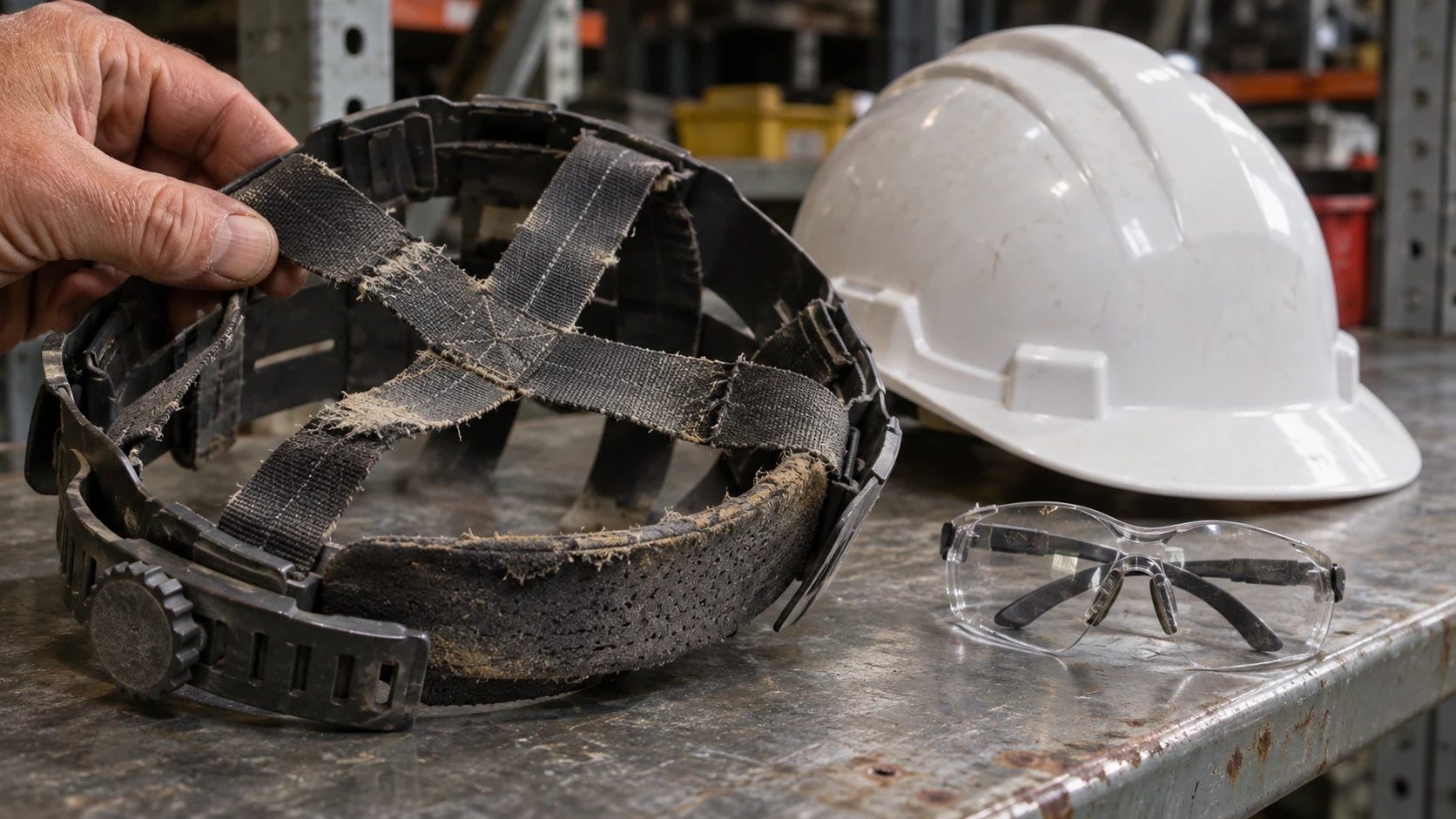
- Condition: damage, contamination or another issue to report.
- Currency: manufacturer instructions and any applicable service-life or replacement requirement.
- Care: authorised cleaning, storage and maintenance arrangements.
- Training: information and instruction still needed before use.
- Replacement: contact and process when an item cannot be used safely.
The checklist is not a certification of safety or permission to perform the task.
A fictional fit-concern conversation
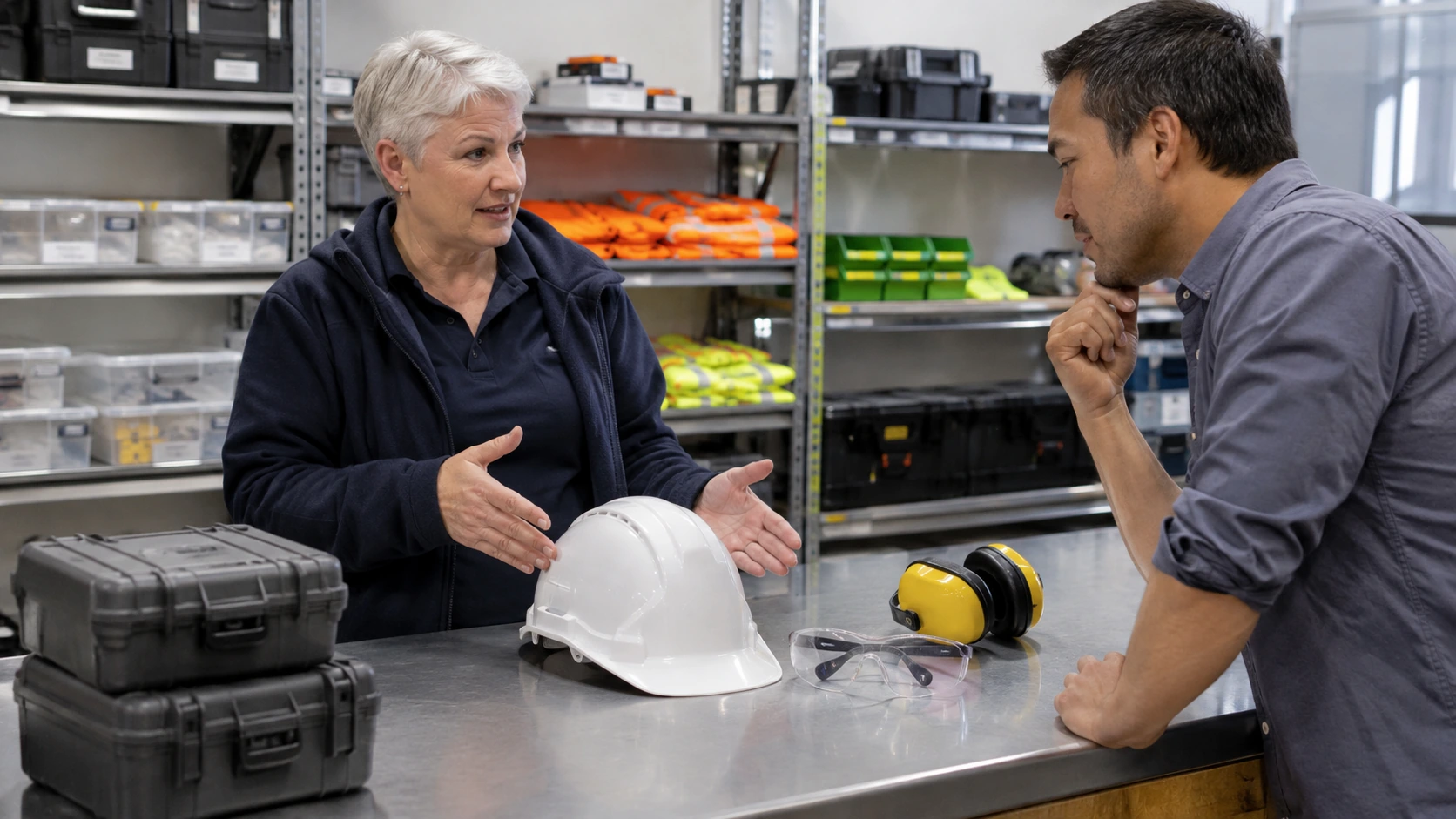
This original scenario is invented. A worker finds that two required protective items interfere with each other. The worker reports the problem and asks the supervisor to arrange an appropriate compatibility review before the task begins.
The worker does not remove one item, improvise a modification or assume the problem is solved by using a colleague’s equipment. The appropriate person must resolve the actual requirements and fit.
Keep defects and replacements traceable
Report damaged, expired, contaminated or unsuitable equipment through the workplace process and follow the relevant instructions about taking it out of use. Record the issue and the authorised replacement or repair decision where required.
Do not attempt a repair you are not trained or authorised to perform. Check that replacement equipment receives the necessary fitting and instruction rather than treating it as automatically interchangeable.
If the work, environment or required combination of equipment changes, ask for the PPE arrangement to be reviewed. A successful earlier check does not answer every later task or condition.