Find the safety data sheet for the exact chemical product, check its identity and review date, and use it with the workplace’s task-specific instructions. An SDS provides important product information; it does not by itself assess every risk of the way your workplace intends to use the chemical.
This guide helps workers locate information and prepare questions. It does not provide chemical-handling, mixing, spill-response or first-aid instructions for an actual product.
Match the sheet to the container
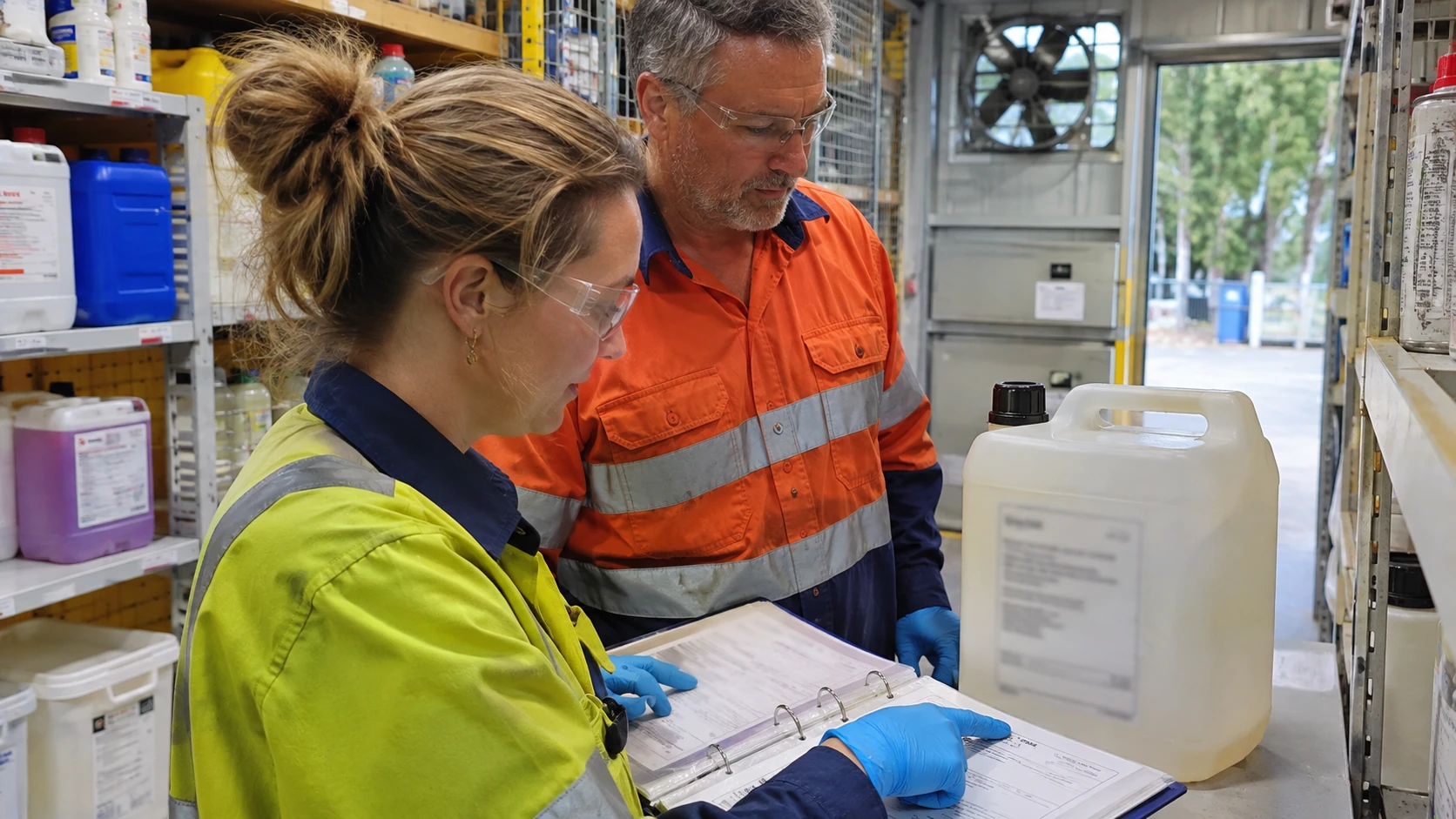
WorkSafe Queensland’s SDS guidance explains the role of safety data sheets in managing hazardous chemicals. Check the product name, manufacturer or importer and relevant product identifiers against the actual container. For groundskeeping work, relate the product enquiry to the actual assigned duties rather than assuming every outdoor role uses the same substances; our groundskeeper duties guide offers broader role context.
A familiar brand name may cover several formulations. Do not assume a sheet found through a general search applies because the packaging looks similar. Ask the responsible contact to resolve a missing label or uncertain product identity before use.
Check that the workplace can access the current sheet when needed. A file saved in one person’s private account may not provide a workable information system for the team.
Read the relevant information without guessing
An SDS includes information about hazards, first aid, accidental release, handling and storage, exposure controls and protection, among other subjects. Locate the sections relevant to the task and ask how they connect with the actual workplace procedure.
Do not interpret unfamiliar exposure terms or PPE specifications as a complete equipment-selection decision. Ask an appropriately competent person about the requirements and the work conditions.
In an incident, use the workplace’s emergency arrangements and obtain the appropriate assistance. Do not improvise a response from a general article or a sheet for a different product.
An original SDS information check
Record these questions without copying the full document into an informal checklist:
- Product: exact name and identifiers matched to the container.
- Source: manufacturer, importer or approved workplace information channel.
- Version: preparation or review date and how currency was checked.
- Access: where the current SDS can be found by the relevant people.
- Task: what use is proposed and which procedure applies.
- Controls: who confirms the task-specific requirements.
- Uncertainty: any missing information, mismatch or unclear instruction.
- Action: person responsible for resolving the question before work proceeds.
The record supports information management. It is not a chemical risk assessment or permission to use the product.
A fictional product-mismatch example
This original scenario is invented. A cleaner finds a stored SDS bearing a similar product name but a different formulation identifier from the container. The worker raises the mismatch with the supervisor, who obtains the appropriate information and confirms the authorised next step.
The worker does not assume the two products are equivalent or transfer the old sheet’s instructions to the new container. The issue is resolved through the workplace’s chemical-management process.
Keep updates connected to the work
If the product, supplier or procedure changes, ask whether the chemical register, SDS access and relevant instructions need updating. Identify superseded information so it is not mistaken for the current version.
Report a missing or inaccessible sheet and ask for the issue to be resolved. Knowing that an SDS exists somewhere is different from being able to identify and use the correct information for the actual task when it is needed.