When people watch a major sporting event, their attention naturally goes to the athletes and what is happening on the field. However, the work of a groundskeeper is one of the important tasks that often goes unnoticed before the competition begins.
A playing surface has to be prepared. Grass needs to be maintained, field markings need to be clear, irrigation systems need to work and the areas around a venue need to be kept safe and presentable. Much of this work happens quietly, often before spectators arrive.
This is where groundskeepers play an important role.
As Queensland prepares for the Brisbane 2032 Olympic and Paralympic Games, a large number of sporting facilities are being built or upgraded. The Games Independent Infrastructure and Coordination Authority (GIICA) is delivering 17 new and upgraded venues, with more than 50 fields of play, courts and pools planned across the venue program.
While the Games themselves are still several years away, the development of these facilities highlights the range of practical work needed to keep sporting venues operating properly.
What Does a Groundskeeper Do at a Sports Venue?
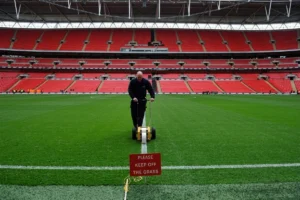
Groundskeeping is more specialised than simply cutting grass. At a sports facility, the condition of the playing surface can affect how a venue is used, so regular maintenance and careful preparation are important.
A groundskeeper may be involved in tasks such as:
- Maintaining turf and playing surfaces: Mowing, edging, aerating and caring for grass used for sporting activities.
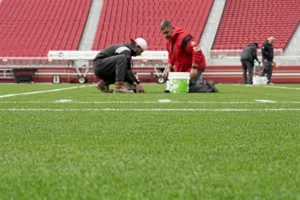
- Preparing fields: Marking boundaries and lines and making sure playing areas are ready for training, matches or competitions.
- Looking after irrigation: Checking watering systems and identifying problems that could affect turf or landscaped areas.
- Maintaining surrounding grounds: Caring for grass, gardens, paths and other outdoor areas around a stadium or sporting facility.
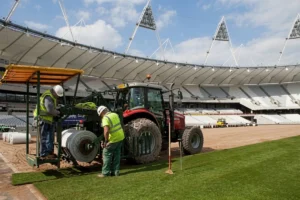
- Operating equipment: Using mowers, turf equipment and other machinery needed for routine grounds work.
- Checking venue conditions: Identifying damaged turf, drainage issues, irrigation problems or hazards that need attention.
- Supporting event preparation: Helping prepare outdoor areas before an event and maintaining them while the venue is in use.
The work can also involve working with other specialists, including turf managers, horticulture workers, arborists, irrigation technicians and venue operations teams.
For large sporting facilities, timing matters as well. Some maintenance tasks may need to be completed when fields are not being used, which can mean early mornings, evenings or weekends depending on the venue’s schedule.
How Brisbane 2032 Could Create More Interest in Groundskeeping
The Brisbane 2032 venue program is considerably broader than the Games themselves. GIICA says its new and upgraded venues are intended to serve Queensland communities before, during and after the 2032 Games, with the facilities designed for ongoing community and high-performance use.
That longer-term use is important when considering groundskeeper work.
A sports field does not stop needing maintenance once an event is over. Turf, gardens, outdoor areas, irrigation systems and playing surfaces require regular care whether a venue is hosting an Olympic competition, a local sporting event or ordinary community activities.
The venue program includes facilities such as the new Brisbane Stadium, the National Aquatic Centre, upgraded sporting facilities at Chandler and the Queensland Tennis Centre, as well as venues in Logan, Moreton Bay, Redlands Coast, the Sunshine Coast and regional Queensland.
This means groundskeeping skills can potentially be relevant across different types of sporting facilities rather than being limited to one Olympic venue.
It is also worth remembering that not every groundskeeper working around Brisbane’s sporting facilities will be an Olympic employee. Some may work for venue operators, sporting organisations, councils, contractors or maintenance companies. The connection to Brisbane 2032 is therefore broader: the Games are contributing to the development and upgrading of sporting infrastructure that will continue to operate beyond 2032.
Groundskeeping is also connected to the wider development of sporting facilities, from site preparation to landscaping and finishing work. Our guide to construction jobs supporting Brisbane 2032 projects explains how different types of workers contribute as projects progress.
Skills That Can Help You Become a Groundskeeper
People interested in groundskeeper work can build experience through landscaping, turf maintenance, horticulture, parks and gardens or sports-field maintenance.
Useful skills can include:
- Turf and grass maintenance
- Sports-field preparation
- Basic horticulture
- Irrigation and watering systems
- Safe use of groundskeeping equipment
- Landscaping and outdoor maintenance
- Basic understanding of soil and plant care
- Workplace health and safety
- Ability to work outdoors in different weather conditions
- Attention to detail and reliability
Some jobs may also require specific licences, tickets or qualifications depending on the equipment being used and the nature of the work. Applicants should always check the requirements of individual employers before applying.
For someone starting out, experience in general grounds maintenance can provide a pathway into more specialised areas such as sports turf, venue groundskeeping or grounds supervision.
Looking Beyond the Games
The most interesting part of groundskeeping may be that the work does not end when the final competition does.
The venues being developed for Brisbane 2032 are intended to provide long-term benefits and remain part of Queensland’s sporting infrastructure after the Games.
The same long-term perspective applies to other support services that keep venues and public spaces operating. For another example, see our guide to Brisbane Olympics waste management jobs, roles and pay to learn about a different area of work connected with venue operations.
That means the skills involved in maintaining fields, turf and outdoor venue areas can have applications well beyond the 2032 event itself.
For people interested in practical work around sporting venues, groundskeeping is one of several career paths worth considering. You can also read our guide to how to build work experience before the Brisbane Olympics for ideas on preparing for future job opportunities.
Frequently Asked Questions
What does a groundskeeper do at a sports venue?
A groundskeeper helps maintain playing surfaces and outdoor areas. Tasks can include mowing, turf care, field marking, irrigation maintenance, equipment operation and preparing the venue grounds for sporting activities.
Do groundskeepers work at Olympic venues?
Groundskeepers can be part of the teams responsible for maintaining sporting facilities, although not every groundskeeper working at a Brisbane venue would necessarily be employed directly by Brisbane 2032. Venue operators, sporting organisations, contractors and maintenance companies can also employ grounds staff.
Will Brisbane 2032 create groundskeeper jobs?
The development and ongoing operation of sporting venues may create demand for different types of maintenance and grounds-related work. However, specific Brisbane 2032 groundskeeper vacancies should be confirmed through individual employers and official recruitment channels rather than assumed in advance.
What skills do I need to become a groundskeeper?
Useful skills include turf maintenance, sports-field preparation, landscaping, irrigation, safe equipment operation and general outdoor maintenance. Experience in horticulture, landscaping or grounds maintenance can also be useful.
Do groundskeepers need a licence or qualification?
Requirements depend on the job. Some positions may require specific licences, tickets or qualifications for particular equipment or duties. Applicants should check the requirements listed by each employer.
Can groundskeeping lead to other careers?
Yes. Experience in grounds maintenance can provide a foundation for roles such as sports turf technician, turf manager, grounds supervisor, horticulture worker or other venue and facility maintenance positions.
Are groundskeeper jobs only available during the Olympics?
No. Sports grounds, stadiums, parks, schools, recreation facilities and other outdoor spaces require ongoing maintenance. Skills gained through groundskeeping can therefore be useful beyond the Brisbane 2032 Games.
To check advertised roles in this field, browse the Cleaning & Maintenance job category. Read each listing for its location, requirements and application instructions; availability changes.