Scaffolder roles need a clear match between the work, relevant licence class and demonstrated competence. Read the actual duties and Queensland guidance before assuming that a general scaffolding ticket covers every proposed structure or task.
This guide helps prepare career evidence and questions. It does not provide erection, alteration, dismantling, inspection or design instructions.
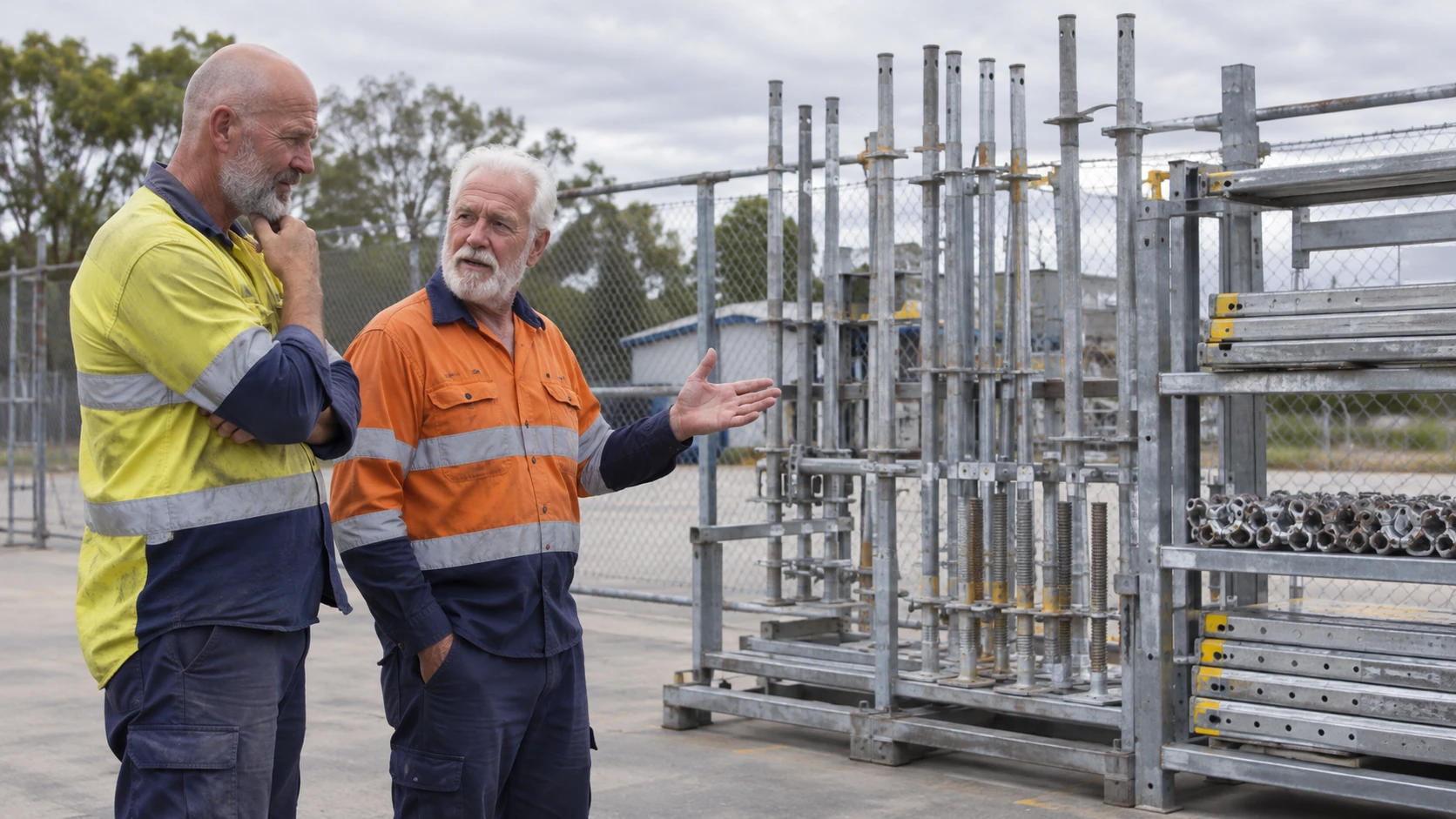
Understand the role and work scope
The ABS scaffolder description provides occupational context for work platforms and temporary structures. Actual vacancies differ in setting, systems and responsibilities.
Check the required experience, site arrangements, supervision and evidence requested. A role involving a particular system or specialist task may need more than experience with another scaffold type.
The existing trades roles guide gives wider preparation context without establishing the credential for a specific job.
Check the actual licence class
WorkSafe Queensland’s scaffolding guidance distinguishes basic, intermediate and advanced classes and explains the work covered. Its high-risk scaffolding definition includes the specified potential fall of more than four metres.
Read the complete scope and actual circumstances. Work outside that licensing definition can still involve safety duties and competence requirements; the threshold should not be treated as a declaration that lower work is safe.
Verify class, currency and conditions through the official process where required. A training record or job title alone does not establish the current licence needed for an assigned task.
A fictional scope exercise
In this invented example, a vacancy refers to a specialist scaffold arrangement unfamiliar to the applicant. They identify the duty and compare it with their actual class, experience and evidence, then seek clarification through the employer and regulator where needed.
The candidate does not claim the scope is covered because the advertisement uses the same broad word scaffolding. The practice note records the requirement still to be confirmed and the appropriate decision contact.
No real structure, design or technical approval is claimed by the exercise.
Prepare a scaffolding evidence brief
For an authorised example, explain:
- Setting and the actual work category.
- Relevant current licence class and conditions.
- System experience and task-specific competence.
- Approved instructions and supervision supporting your contribution.
- Records or handovers maintained within your responsibility.
- Unfamiliar scope or discrepancy referred appropriately.
- Supported outcome you may disclose.
Protect site-security information, designs and confidential records. Do not publish operational instructions or another person’s licence details to demonstrate experience.
Clarify supervision and work allocation
Ask how the employer verifies competence, assigns duties and provides technical support. Check the site induction, communication and process for raising an unclear or unsafe instruction.
If additional training or licensing is proposed, verify the actual pathway and requirements with the appropriate provider and authority. A credible application connects specific experience and current authority with the proposed scope, preserving the point where a further decision or qualification is still required.