

A sustainability coordinator helps organise initiatives, collect defined information and communicate progress against an agreed purpose. The title can cover different responsibilities, so identify the actual environmental, social, reporting or operational work in the vacancy.
Reliable coordination starts with a clear boundary and evidence. A positive story or an activity completed does not automatically establish a measured sustainability outcome.

Read the role’s actual scope
Check which topics the employer expects the coordinator to support, who owns the technical methods and how reports are reviewed. Some roles emphasise data and administration; others require specialist qualifications and experience.
The ABS environmental-consultant description includes advice on sustainability performance as related professional work. It does not establish one universal sustainability-coordinator job or grant authority to make specialist claims.
Clarify whether the position collects information, analyses it, recommends changes or approves public statements. Those responsibilities need different evidence and review.
Define what a measure includes
Identify the activity, period, location and data source. Record relevant exclusions and changes in how the information is collected.
Do not compare two totals as though they represent the same activity if the site, workload or coverage changed. Ask the responsible specialist how a valid comparison should be made.
Keep proposed initiatives separate from implemented actions and verified outcomes. Avoid claims of carbon reduction, certification or compliance unless the appropriate basis and authority exist.
A fictional boundary check
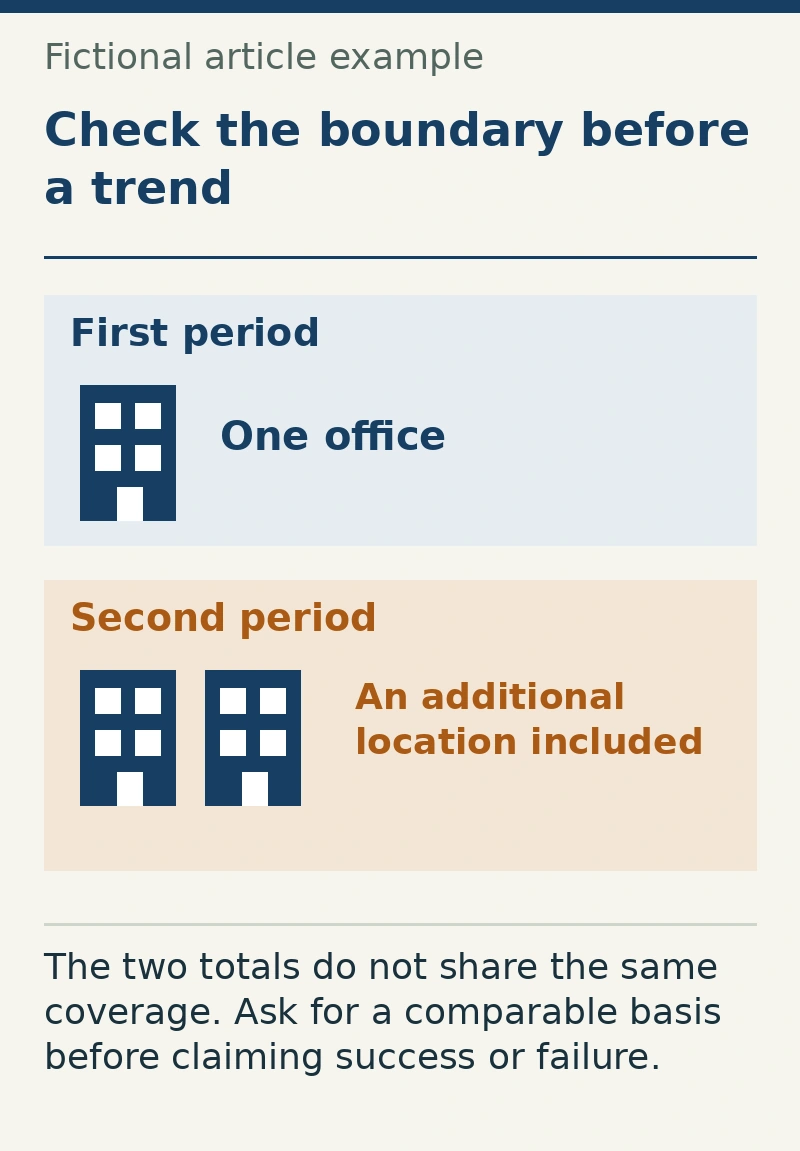
In this invented office example, a coordinator is asked to compare paper use across two periods. The first record covers one office, while the second includes an additional location.
The coordinator identifies the changed boundary and asks the data owner for a comparable basis before presenting a trend. They do not claim the initiative failed or succeeded from the two unmatched totals.
No actual consumption, saving, emissions result or environmental accreditation is claimed in this exercise.
Build a sustainability evidence sheet
Use a permitted or fictional example to describe:
- Purpose: initiative or reporting question.
- Boundary: activities, locations and periods covered.
- Source: approved information and responsible owner.
- Quality: completeness, consistency and uncertainty checks.
- Coordination: actions and people whose input was needed.
- Review: specialist method or claim approval obtained.
- Result: supported output and remaining limitations.
Protect confidential data and avoid using a client’s environmental claims or logos without authority. Describe your contribution separately from a whole organisation’s outcome.
Ask about methods and accountability
Clarify the standards or frameworks actually used, required learning, data systems and approval arrangements for reporting. Do not assume a short course automatically qualifies someone for every sustainability role.
Ask how the organisation handles incomplete data or a proposed claim that lacks evidence. A credible coordinator needs a practical route to raise those questions.
A strong application shows careful data boundaries, accurate communication and follow-through on agreed actions. It helps an employer understand how you support reliable decisions while keeping specialist judgments and public claims within the appropriate review process.
For a sustainability role on a construction project, the construction roles guide offers broader sector context; the actual vacancy still determines the technical and reporting requirements.