
Before taking a second job, check whether the combined commitments are workable and whether either employer has relevant disclosure, conflict or availability requirements. Compare actual hours, travel, rest and responsibilities rather than assuming that two separate rosters will fit together automatically.
A second job does not itself resolve questions about contractual obligations, work restrictions or tax withholding. Keep those checks separate and obtain advice where your own circumstances need an individual decision.

Read the existing commitments
Review the contract, applicable policies and agreed availability for both roles. Look for provisions about outside employment, conflicts of interest, confidentiality and use of business information. Ask about unclear terms before promising availability you may be unable to provide.
Fair Work’s employment-contract guidance explains why contractual terms and applicable minimum employment conditions need to be considered together. A broad policy label should not be treated as a complete legal assessment of an individual restriction.
Keep employer information separate. Do not use one workplace’s customer contacts, pricing, equipment or paid work time for the other role without an appropriate basis and permission.
Make a combined availability map
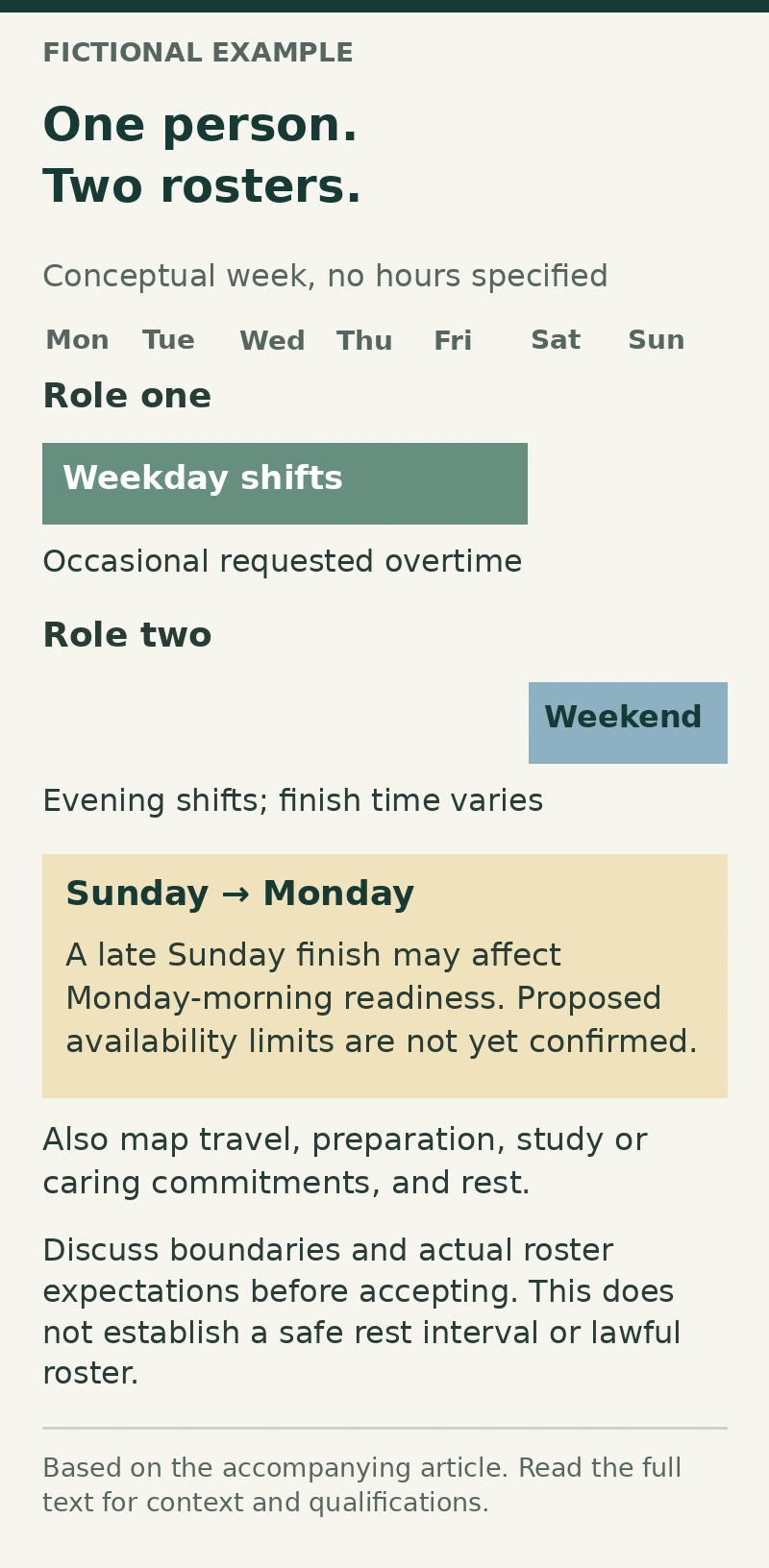
Put both roles on one private planning calendar. Include travel, required preparation, study or caring commitments and the time needed to rest. Count a late finish followed by an early start as one combined scheduling problem, even if different employers control the shifts. If either role involves overnight shifts, include the travel and rest questions in our guide to night work in Brisbane when checking whether the combined schedule is workable.
This original fictional example shows the questions to identify:
- Role one: fixed weekday shifts, with occasional requested overtime.
- Role two: proposed weekend evening shifts, with a variable finish time.
- Conflict to resolve: a late Sunday finish may affect readiness for Monday morning.
- Availability question: neither employer has confirmed the applicant’s proposed limits.
- Next action: discuss workable boundaries and obtain the actual roster expectations before accepting.
The example does not establish a safe rest interval or a lawful roster. Those require the relevant rules and a task-specific assessment.
Discuss the practical overlap
Ask about overtime expectations, shift changes and how far ahead rosters are confirmed. Avoid promising one employer “any time” while already committing the same hours elsewhere.
A fictional question might say: “I have another employment commitment outside the proposed hours. Could you confirm the expected availability, overtime requests and any outside-employment disclosure process? I want to establish an arrangement I can reliably meet.”
You do not need to disclose another employer’s confidential terms to explain an availability limit. If a specific disclosure is required, ask what information is relevant and who will receive it.
Keep payroll and restrictions separate
Complete each employer’s onboarding information accurately. The myGov financial-details guide explains the role of TFN declarations and other payroll details. Seek ATO or appropriate tax advice about choices affected by multiple incomes rather than copying another employee’s selections.
Check any occupational, registration or work-permission restriction through the relevant authority. Do not assume that permission for one job automatically settles every condition of another.
Review the arrangement after it starts
Compare the actual rosters with the plan. Raise fatigue, missed commitments or conflicts promptly using the appropriate workplace process. Do not wait for an incident to reveal that the combined schedule is unrealistic.
Keep a record of agreed availability and changes. The useful outcome is a sustainable, honest arrangement, with unresolved conditions identified before they become competing promises.