


A scope of work describes the deliverables, boundaries and completion requirements for an engagement. Prepare it so the people commissioning, performing and accepting the work can understand the same expected result.
Check how the document relates to the actual contract and approval process. This guide is an original drafting method, not advice about whether a particular document is binding or sufficient for an individual agreement.

Describe the outcome and deliverables
Start with the business need and the concrete outputs. Replace vague wording such as “provide administration support” with a description of the work, period and deliverables relevant to the engagement.
Distinguish a deliverable from an activity. Attending a meeting may be an activity; producing an agreed summary or reviewed document may be an output. Both may matter, but they answer different questions.
The Australian Government’s supplier guidance discusses agreeing the terms of a supply relationship. Obtain appropriate advice on the actual contract rather than relying on a scope worksheet to settle every commercial or legal question.
Use a practical scope structure
Record:
- Purpose: the business result the work supports.
- Deliverables: outputs, format and relevant quantity or coverage.
- Boundaries: included work and clear exclusions.
- Inputs: information, access and decisions each party must provide.
- Timing: milestones, dependencies and applicable dates.
- Acceptance: criteria, reviewer and approval process.
- Change: how proposed differences are assessed and authorised.
- References: related contract and approved documents, with current versions.
Keep assumptions visible. A deadline depending on information from the client should not be presented as unconditional if the arrangement has not addressed that dependency.
A fictional small-business example
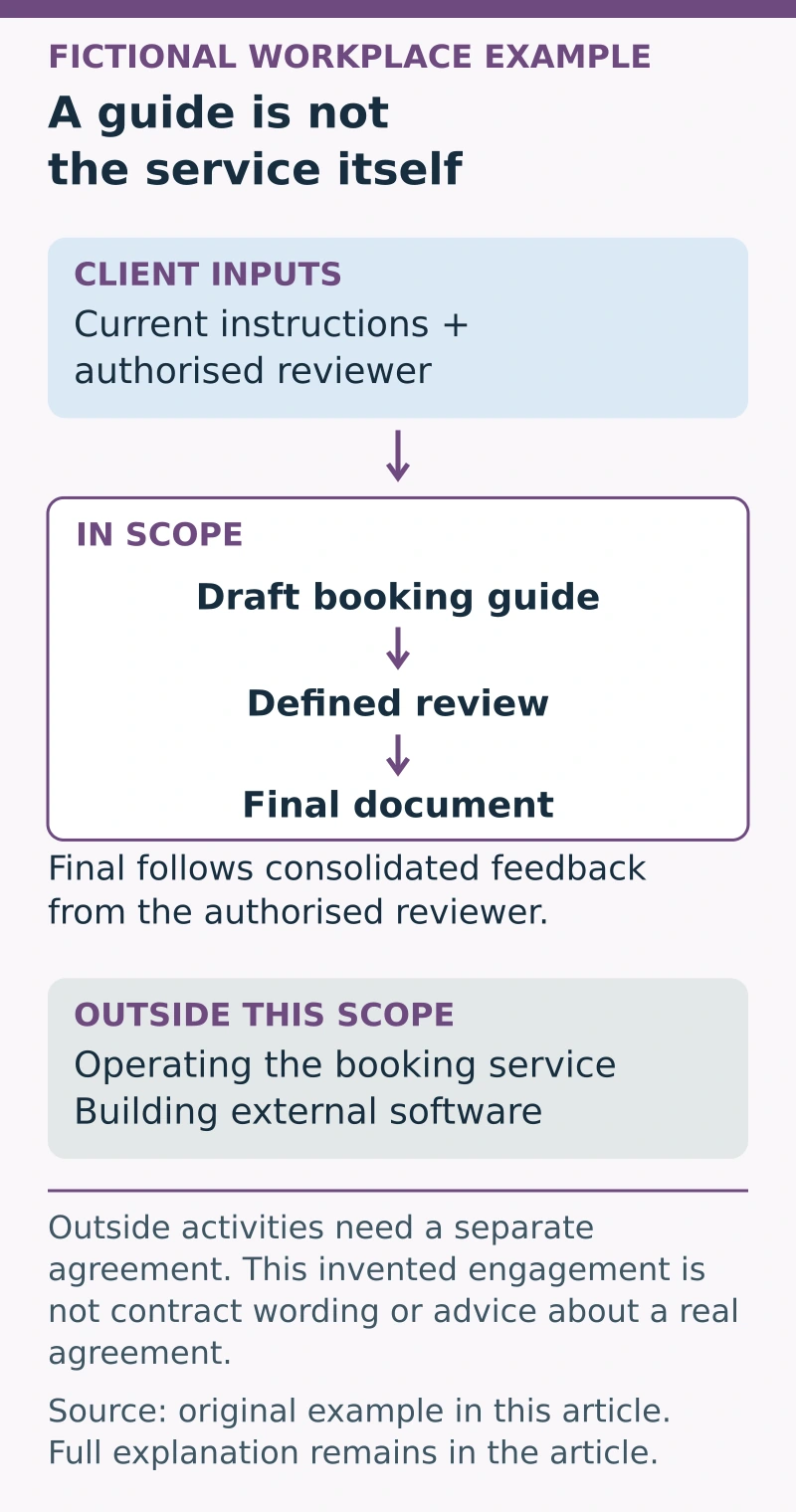
In this invented engagement, a service provider will prepare an internal booking guide from approved source material. The scope identifies a draft guide, one defined review process and a final document after the authorised reviewer provides consolidated feedback.
It states the required sections and file format. It also identifies the client’s responsibility to supply current instructions and the person authorised to approve the final content.
The example does not include operating the booking service or creating an external software system unless those activities are separately agreed. No real business, fee or employment arrangement is claimed.
Make completion checkable
Define how the reviewer will assess whether the output meets the agreed requirement. A general statement that the client must be happy leaves too much uncertainty about the expected result.
Identify how feedback, corrections and acceptance are recorded through the actual agreement. Do not assume an email saying “looks good” settles every contractual condition if the required review is incomplete.
Where specialist or regulated work is involved, confirm the necessary competence, approvals and standards through the relevant responsible people.
Manage changes against the agreed scope
If another output is requested, describe the change and investigate its effect on timing, effort, cost and other commitments. Obtain the required decision before treating it as included work.
Keep the approved scope and revisions traceable. A useful scope document lets both sides explain what will be delivered, what each must contribute and how completion or change will be decided, reducing reliance on assumptions that were never discussed.
For the wider business preparation, see contractor opportunities and readiness, keeping any actual engagement subject to its own verified scope and terms.