

A stocktake needs a defined counting scope, clear units and a way to deal with stock movements during the count. Prepare those arrangements before asking people to walk through the shelves with a list.
This guide concerns an original ordinary-stock counting exercise. Check any accounting, tax, safety or product-specific requirements separately with the appropriate person.

Define what and where to count
Identify the locations, items and stock categories included. Decide how the process will identify goods awaiting receipt, returns, items held for another party or material whose status needs review.
Confirm the unit of measure for each item. A sealed carton, an opened pack and an individual item should not all be entered as one without a defined conversion and check.
The Australian Government’s stocktake preparation guidance and Business Queensland’s stock-control guide provide general context. Use the actual business’s counting and reconciliation requirements.
Plan movement control and responsibility
Agree whether stock movements will pause or how permitted movements will be recorded during the count. Specify the cutoff or reference time used for comparison.
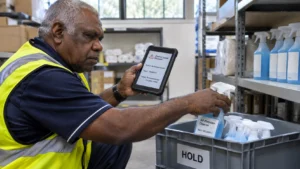
Assign counting areas, a coordinator and a process for questions. Give counters current item identifiers and enough instruction to record uncertainty instead of guessing.
Check access and safety arrangements for the locations involved. Do not climb shelving, move plant or open restricted goods merely to complete a count. Refer inaccessible stock through the approved process.
A practical preparation checklist
Before counting, confirm:
- Scope: locations, categories and excluded items.
- Identification: current codes, descriptions and units.
- Movement: pause or transaction-recording arrangement.
- People: counting roles, support and review responsibilities.
- Records: approved count sheets or system and version.
- Exceptions: method for unknown items, mixed units or uncertain condition.
- Recount: how differences will be independently checked.
- Adjustment: authorised reconciliation and approval process.
Keep blank or unchecked entries distinguishable from a verified zero quantity. They represent different findings.
A fictional discrepancy review
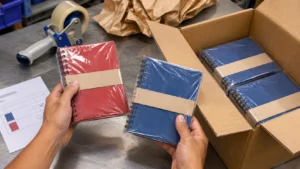
In this invented example, the system shows forty notebooks in one location. The first count finds thirty-two individual notebooks and one unopened pack. The pack contains eight notebooks, confirmed from the appropriate item information.
The total is forty individual notebooks, so the apparent difference arose from mixed counting units. The reviewer records the check rather than altering the stock balance based on the first incomplete interpretation.
If a real difference remains after recount and relevant movement checks, refer it to the authorised person. A count discrepancy does not by itself establish theft, waste or responsibility.

Reconcile and learn from the count
Retain the original count evidence and record any correction or adjustment through the approved process. Separate physical findings from the financial or system decision that follows.
Review recurring problems such as unclear pack sizes, duplicated locations or movements not captured during counting. Assign a specific improvement and owner before the next stocktake.
A well-prepared count gives the business evidence it can reconcile. Its quality depends on the definition, method and follow-up, not simply whether every line on a spreadsheet contains a number.
If you are building stock-control experience, explore warehouse roles in Brisbane and describe the counting and reconciliation tasks you actually performed.