


A lost-property enquiry needs a careful record, secure handling and the correct route for checking ownership. Follow the actual venue or workplace process alongside applicable legal requirements, with a clear person responsible for decisions about transfer or release.
Do not assume a finder may keep an item, that every venue uses the same holding period or that an informal description is enough to authorise handing property over.
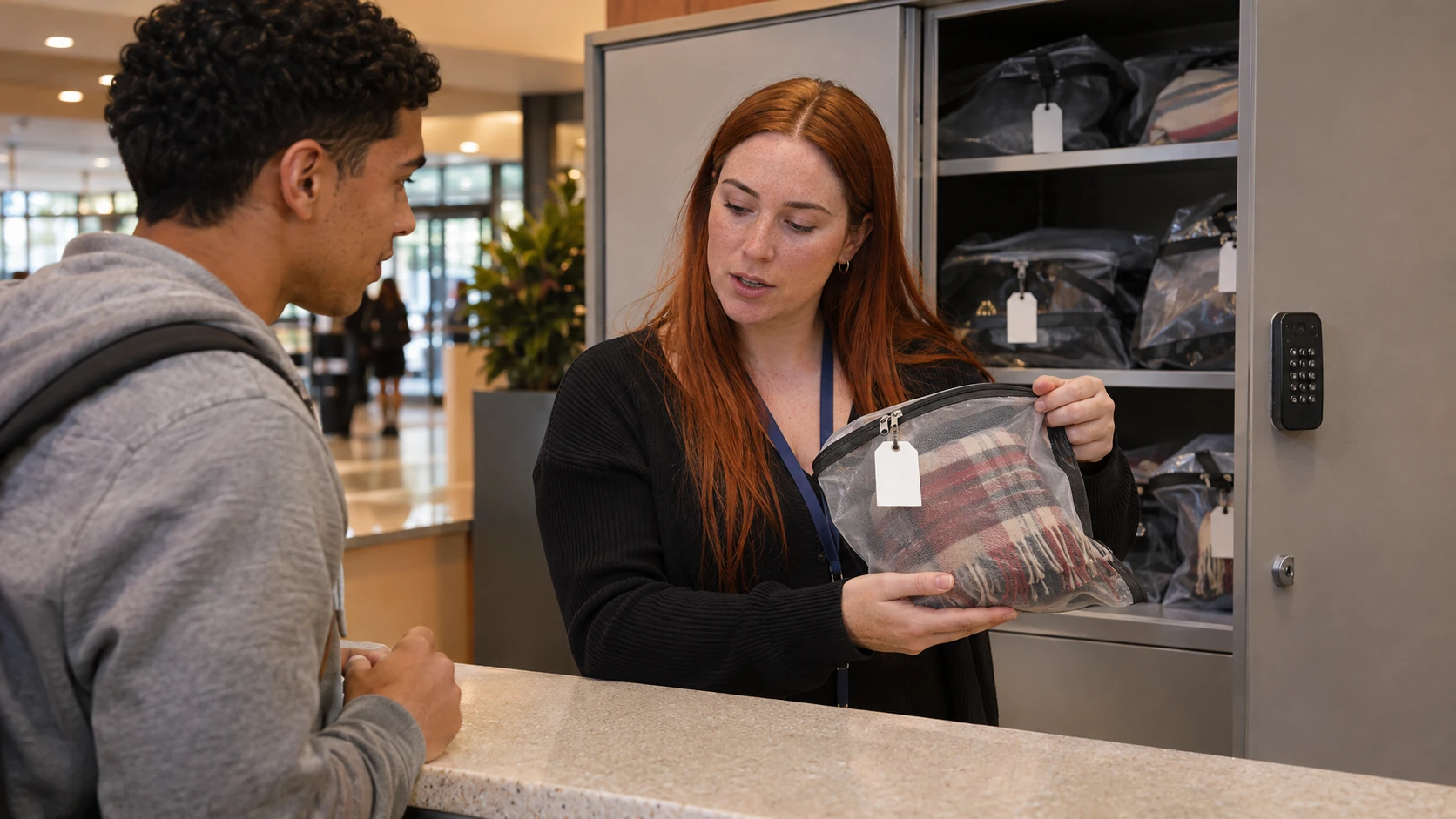
Separate an enquiry from a found-item record
For an enquiry, record what the person says they lost, where and approximately when. For a found item, record the discovery and custody details through the approved process. Lost-property enquiries can arise in guest-facing work; our hotel staff roles guide provides useful role context, while the venue’s own procedure determines custody, verification and release.
Keep identifying information proportionate and restricted. A general public log should not reveal every detail that could help someone make a false claim.
Legal Aid Queensland’s found-property guidance advises taking found goods or money to the local police station and explains that a finder is not automatically entitled to keep it. Refer the workplace arrangement to the responsible person and appropriate police or legal guidance; a local policy should not be assumed to replace applicable obligations.
Use a practical enquiry and custody record
Include:
- Reference: the approved enquiry or item identifier.
- Report: lost or found, date received and relevant location.
- Description: sufficient detail for checking, with restricted identifiers protected.
- Custody: person receiving the item and authorised storage or transfer.
- Enquiry contact: necessary information through the approved channel.
- Decision: ownership or transfer check required and authorised person.
- Movement: actual handover, recipient and supporting record.
- Follow-up: outstanding action and responsible contact.
Do not browse a found device, access accounts or photograph private contents simply to improve the record. Use the authorised process for sensitive items and obtain appropriate advice where necessary.
A fictional enquiry response
In this invented example, a person asks about a bag left in an office reception area. The staff member records the enquiry and asks for a description through the approved process without disclosing the full details of a found item.
An authorised person checks the claim and the required next step. Reception does not release the bag merely because the enquirer knows that a bag was found.
The record distinguishes “possible match” from “ownership verified” and “released”. These are separate stages requiring their own evidence under the applicable process.

Handle special concerns through the right route
If an item appears dangerous, suspicious or connected to an emergency, follow the relevant safety or security procedure. Do not open or handle it to complete a routine lost-property form.
For identity documents, payment cards or other sensitive property, ask the responsible person which issuer, police or other process applies. Do not publish identifying details in a social-media appeal without appropriate authority.
Keep the outcome and transfer clear
Record the actual authorised transfer or release and any reference provided. Follow the approved records process and applicable requirements for unresolved items rather than inventing a disposal deadline.
Review recurring enquiries for clearer signage or contact information where appropriate. A useful lost-property process protects the item, the claimant’s information and the accuracy of the ownership decision, leaving a traceable record of who took responsibility at each stage.