
An event run sheet sets out the sequence of activities, responsible people and dependencies needed to deliver the approved event plan. It should help the operational team identify what happens next and who can decide when the sequence needs to change.
Use confirmed arrangements and clearly mark drafts. A run sheet does not replace an emergency plan, venue approval, staffing decision or specialist safety procedure.
Build the sequence around actual dependencies
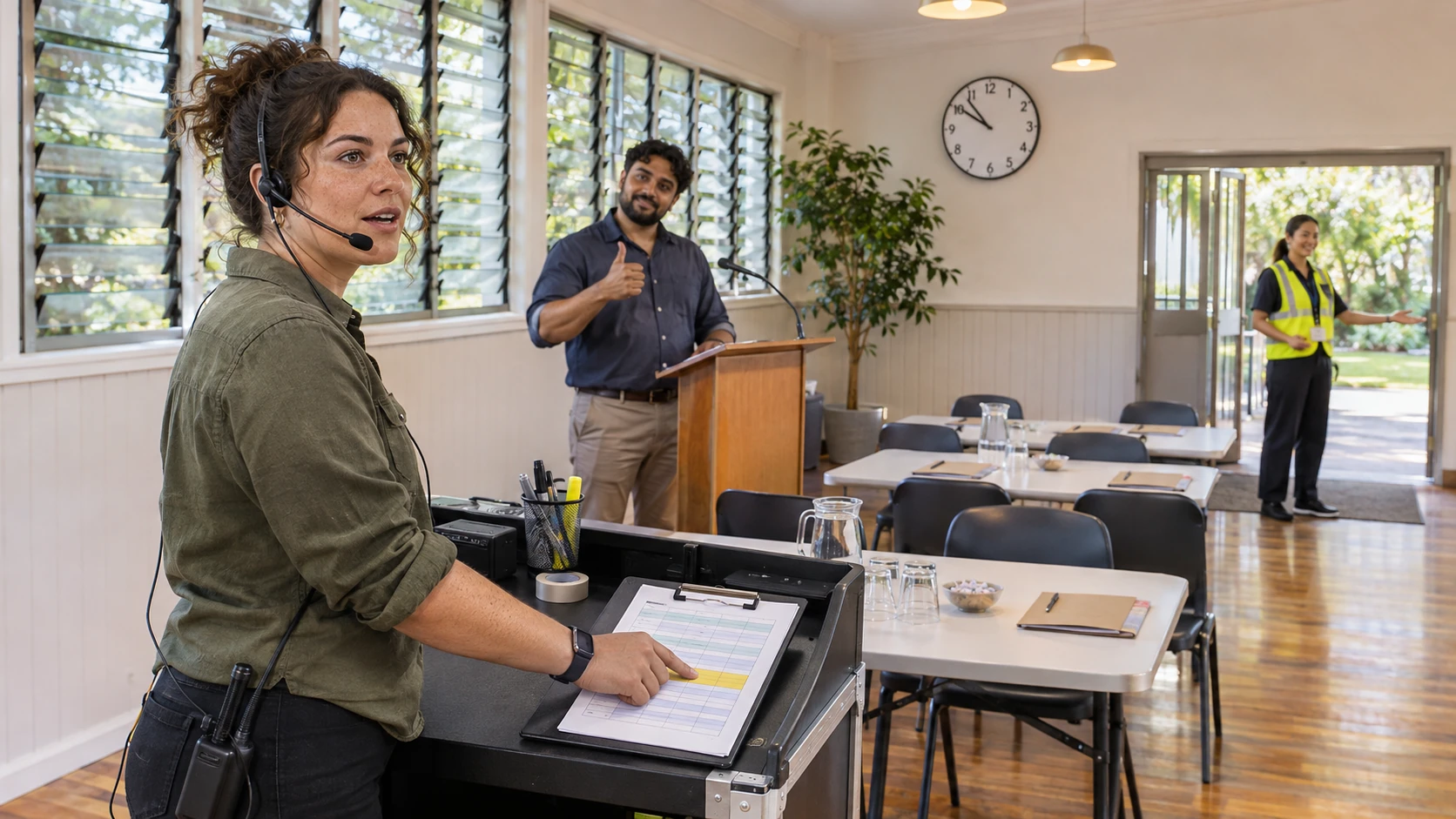
Work backwards from key activities, including setup, required checks, staff briefings, arrivals, program delivery and pack-down. Identify the person or role responsible for each activity.
Redland City Council’s event-planning tools describe run sheets covering operational timings and activities. Use the actual event and venue requirements rather than assuming one generic schedule is sufficient.
Check which activities can run together and which require a completed predecessor. A welcome cannot rely on a room being ready if setup ends at the same moment guests are expected to arrive.
A fictional workshop sequence
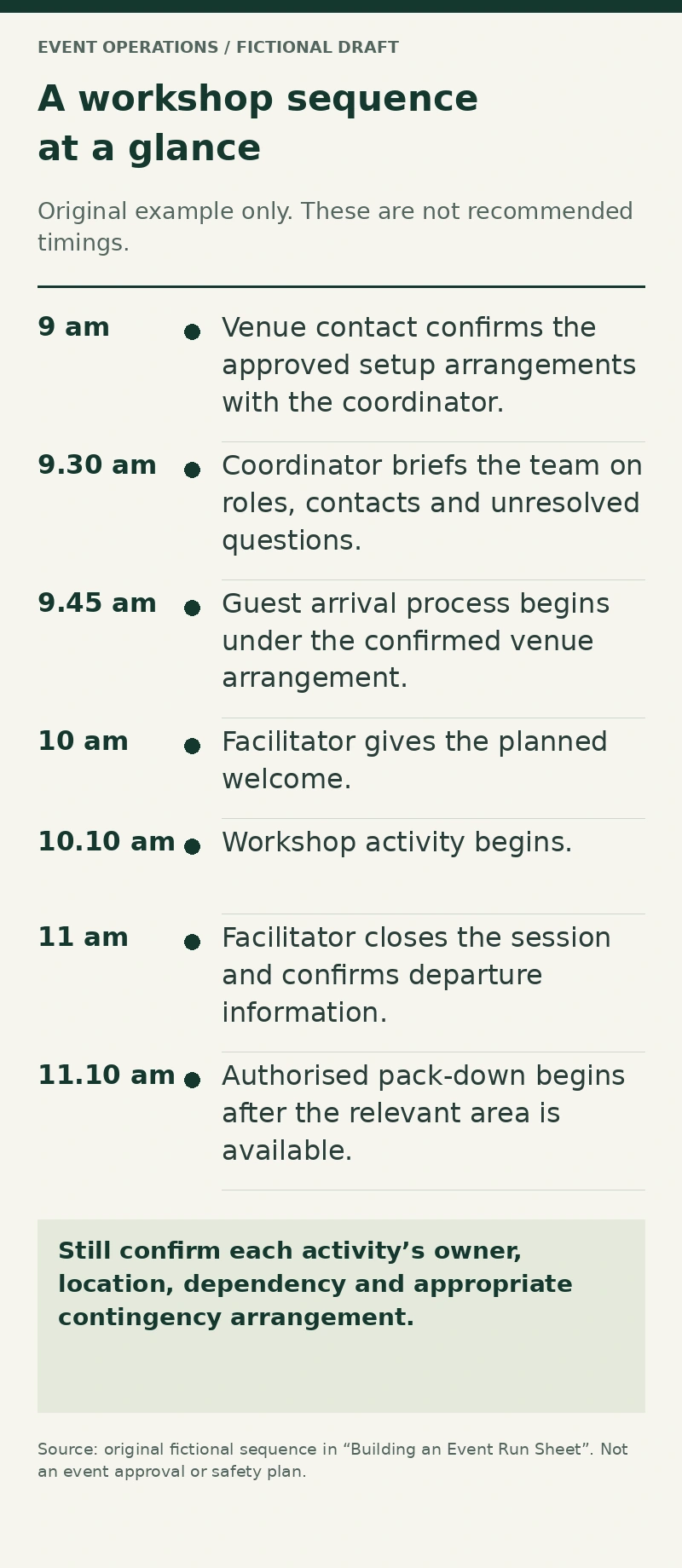
For this invented small indoor community workshop, the draft sequence is:
- 9 am: venue contact confirms the approved setup arrangements with the coordinator; the coordinator checks setup completion and any outstanding readiness requirements before the 9.30 am briefing.
- 9.30 am: coordinator briefs the team on roles, contacts and unresolved questions.
- 9.45 am: guest arrival process begins under the confirmed venue arrangement.
- 10 am: facilitator gives the planned welcome.
- 10.10 am: workshop activity begins.
- 11 am: facilitator closes the session and confirms departure information.
- 11.10 am: authorised pack-down begins after the relevant area is available.
These times are fictional planning examples, not a real event or a recommended timing standard. Each activity still needs a confirmed owner, location, dependency and appropriate contingency arrangement.
Include the information operators need
For each line, record the planned time or trigger, activity, owner, location, dependency and relevant approved instruction. Use references to controlled documents where detail is too extensive for the run sheet.
Identify the event lead and backup decision contact. Do not place a person’s private contact details in a public guest version without appropriate authority.
Keep the document readable during operation. A dense page containing every policy can hide the next activity as effectively as an incomplete schedule.
Control updates and deviations
Set a version and distribution method. Before use, confirm that relevant staff have the current approved sequence and know how changes will be communicated.
If an activity is delayed, the authorised lead should consider the effects on later work and communicate the revised direction. Do not let several staff independently change different copies.
Record relevant actual timings or exceptions through the approved process, particularly information needed for follow-up or review. An emergency or incident still follows its designated response pathway.
Review the run sheet after the event
Compare planned and actual sequences, checking causes and dependencies rather than merely marking a late activity as failure. Use operational feedback to improve the next version.
A useful run sheet connects the program with real responsibilities and decisions. Staff should be able to see the next activity, its conditions and the contact who can resolve uncertainty without treating a printed time as permission to bypass an incomplete check.
For the wider employment context, see event duties, rosters and working conditions and match run-sheet responsibilities to the role actually offered.