A small process-improvement trial tests a defined change against a clear question. Start with the current work, evidence of the problem and an authorised low-risk way to examine whether the proposed approach helps.
Keep required entitlements, safety controls and other obligations in place. A trial is not permission to suspend a requirement or change someone’s authority without the proper process.

Define the problem and baseline
Describe what happens now, how it is recorded and why the issue matters. Use a comparable baseline where possible, identifying missing information or changes in workload.
Avoid starting with a broad ambition such as “make administration faster”. A specific question is easier to test: does a clearer request field reduce the number of enquiries returned for one missing detail?
The Queensland Transport and Main Roads project-management framework provides broader context for planned work, decisions and review. The trial structure here is an original office example, not a prescribed government method.
Use a trial brief
Record:
- Problem: specific observation and supporting evidence.
- Change: the one main alteration proposed.
- Permission: owner, approvals and constraints to confirm.
- Scope: work included and excluded from the trial.
- Baseline: measure, period and source before the change.
- Check: information gathered during the trial and relevant context.
- Safeguard: conditions requiring pause, correction or referral.
- Review: responsible person and decision about the next step.
Check any consultation, privacy or other requirements relevant to the actual change. Keep personal information out of a general trial summary.
A fictional request-form trial
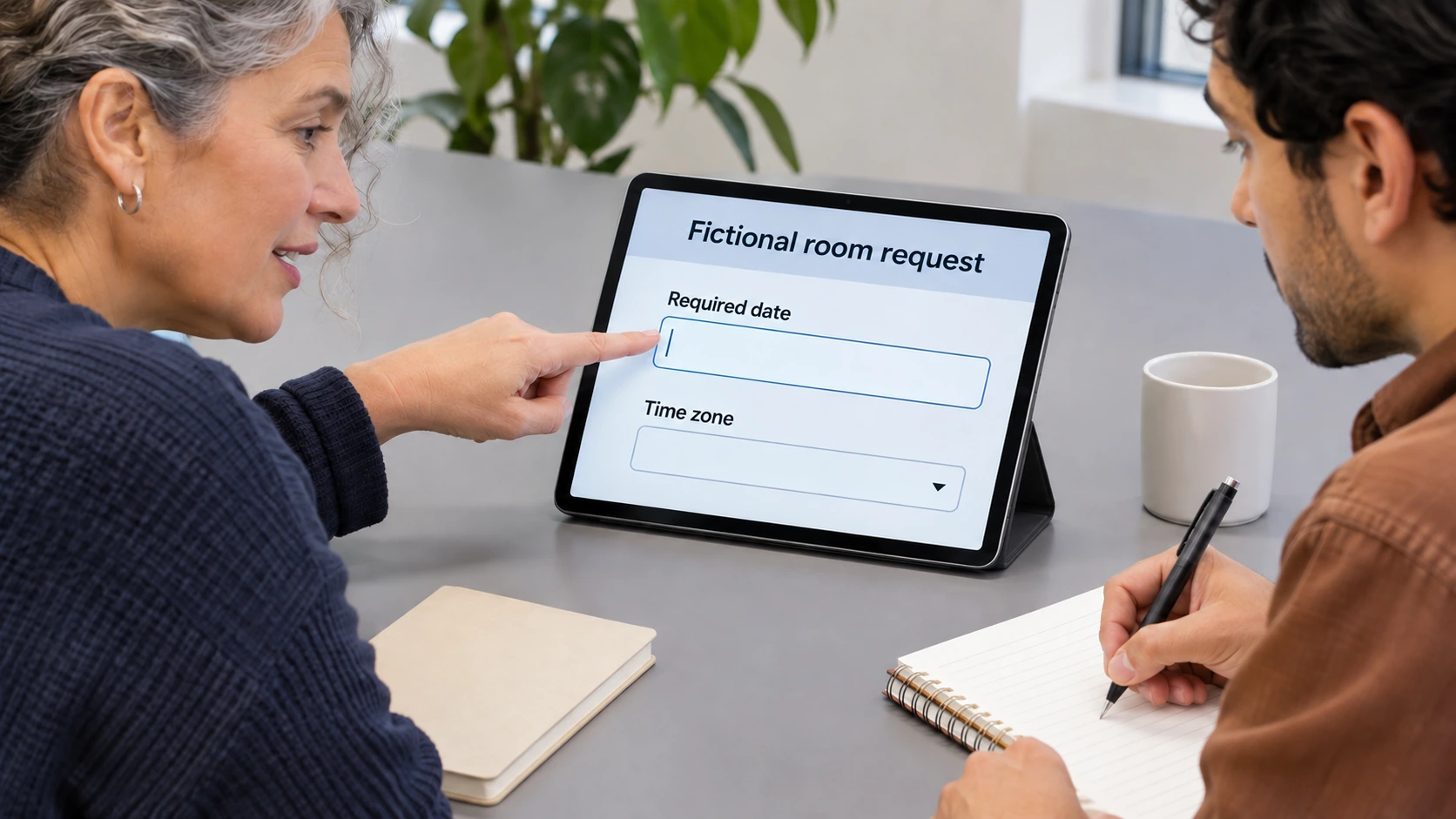
In this invented example, an office finds that room requests often omit the required date. The process owner approves testing clearer wording for that field in a non-production exercise before considering a live change.
Appropriate participants use fictional requests and explain what the field asks. The team records whether the date is supplied correctly and where users are confused.
The trial does not remove the booking-approval step. It tests whether the request wording supports a more complete input, not whether every request should be automatically accepted.
Look for effects beyond the preferred result
Check whether the change creates another problem, such as misunderstanding the time zone or making the form harder to use with an access need. Include feedback that challenges the proposed solution.
If the trial proceeds to an authorised real setting, account for changes in volume, users or other conditions. A better result over one period does not establish that the change caused every difference or will work elsewhere.
Do not turn a small trial into an unsupported percentage claim for marketing or staff performance.
Decide and document the next step
At review, record whether the change should be adopted, revised, tested further or stopped. Explain the evidence and uncertainty, with an owner for any next action. If you discuss the exercise in an interview, our interview-preparation guide can help structure an account of the problem, your contribution, the evidence and its limits, without turning a small trial into an unsupported success claim.
Update the relevant form, instructions and communication only through the approved process. A useful trial provides a proportionate answer to a specific work question and leaves a traceable decision, rather than treating the existence of an experiment as proof that improvement occurred.