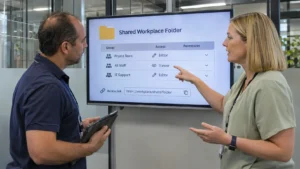

A visitor check-in process should help an organisation confirm the visit, contact the host and provide the approved information needed for access. Prepare the process around the actual premises and responsibilities rather than copying a venue’s rules into an unrelated workplace.
This guide concerns routine reception coordination. It does not create authority to issue accreditation, grant restricted access or replace a site’s safety and security procedures.

Confirm who owns the process
Identify the host, reception contact and person responsible for access decisions. Clarify what reception may verify and what requires another authorised person.
Check the actual arrangements for expected and unexpected visitors, contractors and deliveries. These groups may have different requirements. Do not treat signing a book as evidence that every person has received required induction or permission for every work area.
Prepare a fallback contact if the host is unavailable. A visitor should not gain access to a restricted area simply because no one answers the first call.
Use a practical check-in planning record
Document:
- Visit: purpose, appointment or host confirmation needed.
- Arrival: approved entrance and reception arrangements.
- Verification: information or identification required under the actual policy.
- Host: the person accepting responsibility for the visit.
- Instructions: approved access, induction or emergency information to provide.
- Access decision: authorised person and any area or time limits.
- Departure: the applicable sign-out or pass-return process.
- Exception: who handles an unconfirmed visit or other issue.
Keep operational details proportionate and appropriately restricted. Do not publish a security procedure or staff contact list merely because it was convenient to place it beside a visitor form.
Protect information in the sign-in method
Consider what visitor information is genuinely required and who can see it. A paper book that exposes earlier visitors’ names, phone numbers and visit details may create unnecessary disclosure.
The OAIC’s guide to securing personal information provides relevant privacy-security context where applicable. Follow the organisation’s actual collection, access and retention arrangements rather than inventing a universal visitor-record period.
Use the approved method for any necessary identification checks. Do not routinely photograph identity documents on a personal phone or add extra fields without a defined purpose and authority.
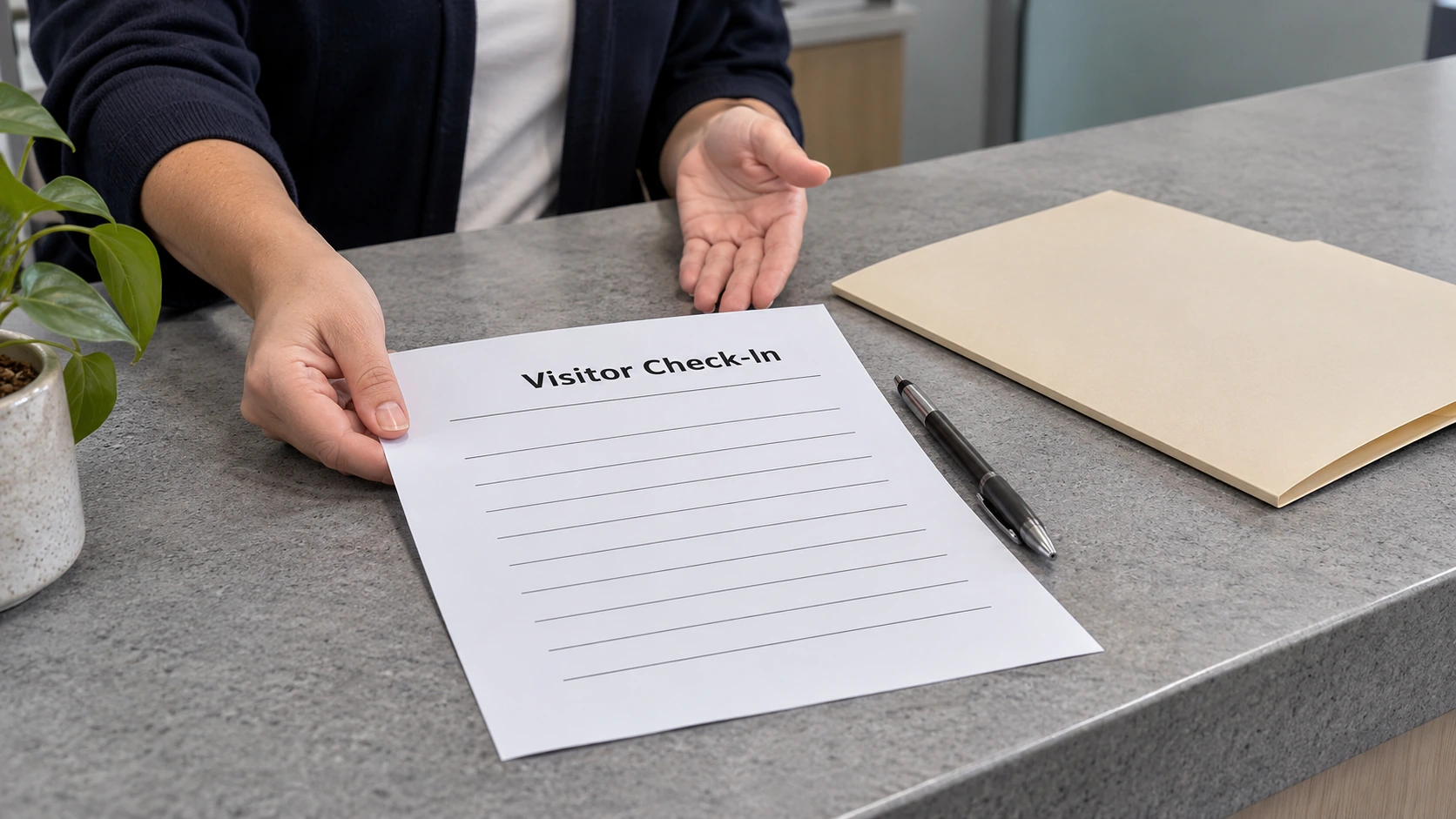
A fictional unconfirmed arrival
In this invented office example, a visitor gives a host’s name but reception cannot confirm the appointment. The receptionist follows the agreed contact route and keeps the visit pending while the authorised person checks.
The record distinguishes “arrived” from “access approved”. The receptionist does not issue a restricted-area pass based only on the visitor knowing an employee’s name.
If the situation raises a safety or security concern, the workplace’s relevant response process applies. This guide does not provide instructions for confrontation or physical intervention.
Check the process from arrival to departure
Test whether visitors can find the entrance, obtain communication or access assistance and identify where to wait under the actual arrangements. Confirm staff know how to handle a missing host or an access question.
Review records, pass handling and unresolved exceptions through the responsible owner. A useful check-in process leaves a clear account of the visit and the access decision while keeping personal information and site instructions appropriately managed.
For the wider role context, see administration jobs in Brisbane and compare reception responsibilities with the authority described in the actual position.