
Checking corrective action means looking for evidence that an approved response addressed the identified cause and reduced the risk of the problem recurring. It is different from confirming that one incorrect output was repaired.
Plan the effectiveness check when the action is agreed. Otherwise the team may close the record because a task was completed without knowing whether the original problem changed.
Separate the immediate fix and cause-based action
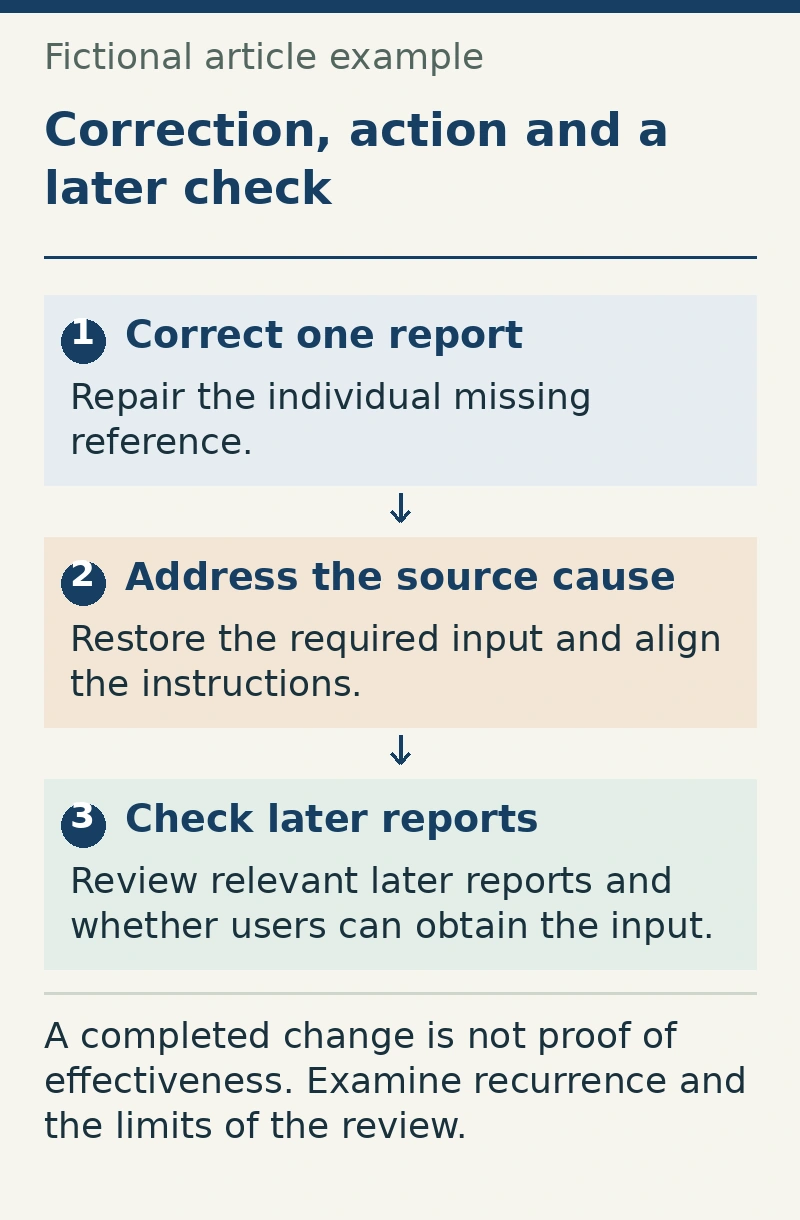
A correction deals with a particular error or output. A corrective response should connect the verified cause with a change intended to prevent recurrence under the actual quality process.
The American Society for Quality’s root-cause analysis guidance provides context for investigating causes and improvement. This article uses an original office example, not a claim that a particular quality certification or sector standard applies.
If the cause remains uncertain, state that clearly. A completed training session is not automatically evidence that insufficient training caused the problem or that the issue is resolved.
Use a effectiveness-check plan
Record:
- Problem: the original defined gap and its evidence.
- Cause: finding supported by the investigation.
- Action: approved change and implementation owner.
- Implementation: evidence the change was actually completed.
- Check: the result or behaviour to examine afterwards.
- Scope: relevant records, period and conditions for the review.
- Criteria: what would support effectiveness and what needs further action.
- Reviewer: authorised person and follow-up decision.
Choose a meaningful opportunity to observe the result. Checking immediately after a change may show implementation but provide little information about recurrence.
A fictional records problem
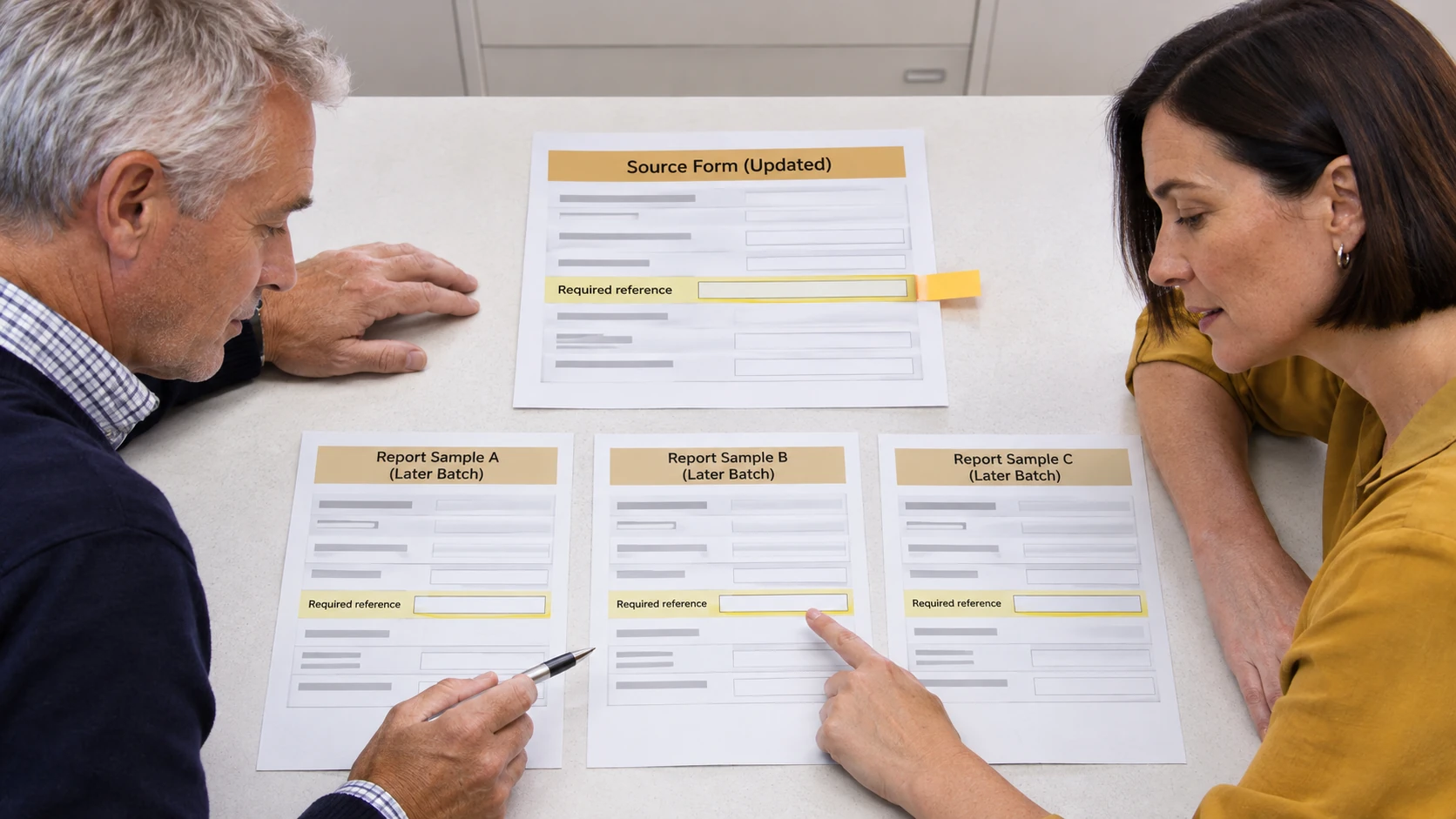
In this invented example, reports repeatedly omitted a required reference because a revised source form no longer collected it. Correcting one report addresses that instance. The approved cause-based action is to restore the required input and align the current instructions.
The effectiveness review checks later relevant reports against the requirement and asks whether users can obtain the input. It also checks whether the revised form created another difficulty.
The reviewer does not claim success solely because the form owner said the update was finished. They examine the result under the planned conditions.
Interpret the evidence carefully
No recurrence during a small review period can be useful information, but it may not prove the problem is permanently eliminated. Check how many relevant opportunities occurred and whether the process was used in comparable conditions. Our interview-preparation guide can help you describe an improvement example with a clear distinction between completing your action and verifying its effect, including the limits of the observation period.
If the action did not help, revisit the cause, implementation and test design. Do not assume employees failed simply because the chosen intervention was expected to work.
Keep safety, regulatory or specialist follow-up under the appropriate competent process. A general office review cannot establish that a technical hazard has been controlled.
Record the decision and remaining work
Document whether the action is supported as effective, needs more observation or requires further response. Link evidence and assign an owner to unresolved work.
Close the quality record only through the actual approval process, preserving the basis of the decision. A useful effectiveness check connects problem, cause, action and observed result, allowing another person to understand what was demonstrated and the limits of that conclusion.