Compare training costs using the full written commitment, not just the advertised tuition figure. Add the required materials, equipment, assessment, travel and other relevant expenses, then identify costs that remain unquoted. Keep confirmed costs separate from estimates and possible support.
A low headline fee may still fit your needs, but it should be compared on the same basis as another offer. Do not assume a missing price means the item is free.

Define the same outcome and delivery requirement
Check that the offers lead to the training outcome you actually need. A short attendance course, assessed unit and full qualification are not equivalent just because their marketing uses similar words.
ASQA’s course-and-provider guidance includes resources, delivery, placements, payment terms and refund policies among the matters to consider. Obtain the actual written offer and agreement before relying on a budget.
Record required attendance and placement arrangements. Time away from work, caring arrangements and travel can affect whether the course is practical, even where tuition is subsidised.
Build a practical cost inventory
Check these categories for each option:
- Tuition: what the quoted amount covers and when it is payable.
- Materials: books, consumables, software or other required resources.
- Equipment: items the learner must supply and any approved alternatives.
- Assessment: included attempts, further assessment and any relevant charges.
- Attendance: required travel, accommodation or placement-related expenses.
- Time: work and personal commitments affected by the schedule.
- Changes: cancellation, withdrawal, deferral and refund conditions.
- Support: confirmed assistance, eligibility still being checked and payment timing.
Keep a source or note beside each amount. Mark unquoted items as unresolved rather than entering zero to make the total complete.
A fictional arithmetic comparison
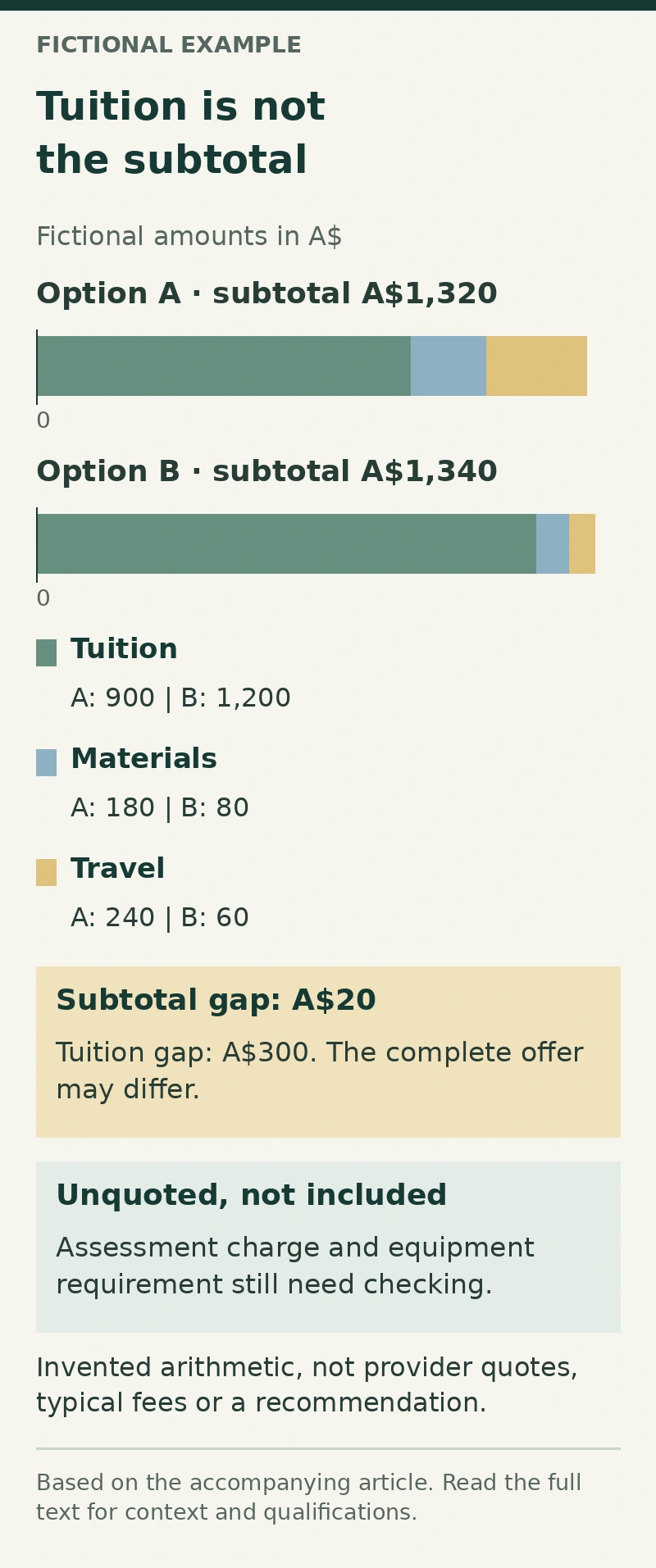
The following figures are invented for illustration. They are not provider quotes, typical fees or a recommendation.
Option A has an illustrative tuition amount of $900, materials of $180 and travel of $240. Those three categories total $1,320.
Option B has illustrative tuition of $1,200, materials of $80 and travel of $60. Those categories total $1,340.
The difference across the stated categories is $20, even though the tuition figures differ by $300. However, neither total includes an unquoted assessment charge or equipment requirement. Those unresolved items must be checked before claiming that one complete offer is cheaper.
The example demonstrates comparison arithmetic. It does not assign a market value to your time or decide whether either course is suitable.
Check payment timing and conditions
A total cost and the cash needed at a particular date are different planning questions. Record deposits, instalments and any support paid only after attendance or a claim. Do not treat an unapproved subsidy or expected reimbursement as money already available.
Read what happens if the course changes or you withdraw. ASQA’s student-rights information explains why clear enrolment information and the appropriate dispute pathway matter.
Finish with a complete decision record
List the verified total categories, important non-price differences and unresolved conditions. Reconfirm the budget if the course dates, delivery location, required resources or funding arrangement changes.
Choose from the actual offer and your requirements. A neat cost comparison helps reveal missing information; it does not turn an incomplete quote, conditional support promise or unsuitable course into a good commitment.
Before comparing costs, use the job-qualification guide to organise the separate check of what evidence the target role actually requires.