When an apprenticeship is not working as expected, identify the specific problem and gather the relevant training and employment records before deciding the next step. Missing training, unsuitable work opportunities, a pay issue and a personal-support need may require different contacts and responses.
You do not need to make an immediate decision to cancel the arrangement simply because a problem exists. Where there is an urgent safety or serious workplace concern, use the appropriate immediate reporting or advice pathway rather than waiting for a routine training meeting.
Define the problem clearly
Compare what is happening with the current training plan and actual employment arrangement. A statement such as “I am not learning anything” becomes easier to address when it identifies missing planned tasks, cancelled provider sessions or a record that has not been reviewed. If uncertainty about your longer-term direction is part of the problem, use our career-development planning guide to prepare separate questions about your goals while the relevant support contact addresses the current apprenticeship issue.
Queensland’s training-problems guidance covers concerns such as falling behind, not being trained, not being released and record-signing difficulties. It identifies steps involving the employer, RTO and apprenticeship support.
Separate a training-delivery issue from a pay or legal question. The same event may raise both, but resolving the training schedule does not automatically correct a payroll record.
Build a practical problem-and-support brief
Use this short structure:
- Problem: the specific issue and when it began.
- Expected arrangement: relevant plan, instruction or employment record.
- Evidence: dates, notices, records and direct observations.
- Effect: the training or work consequence you can identify.
- Attempts: whom you have already contacted and what happened.
- Support needed: clarification, training opportunity, learning assistance or another response.
- Next contact: responsible employer, RTO, Provider or authority.
- Follow-up: agreed action and review point, with unresolved matters labelled.
Keep the brief factual and private. Do not turn a disputed interpretation into an allegation of deliberate misconduct without evidence.
A fictional support conversation
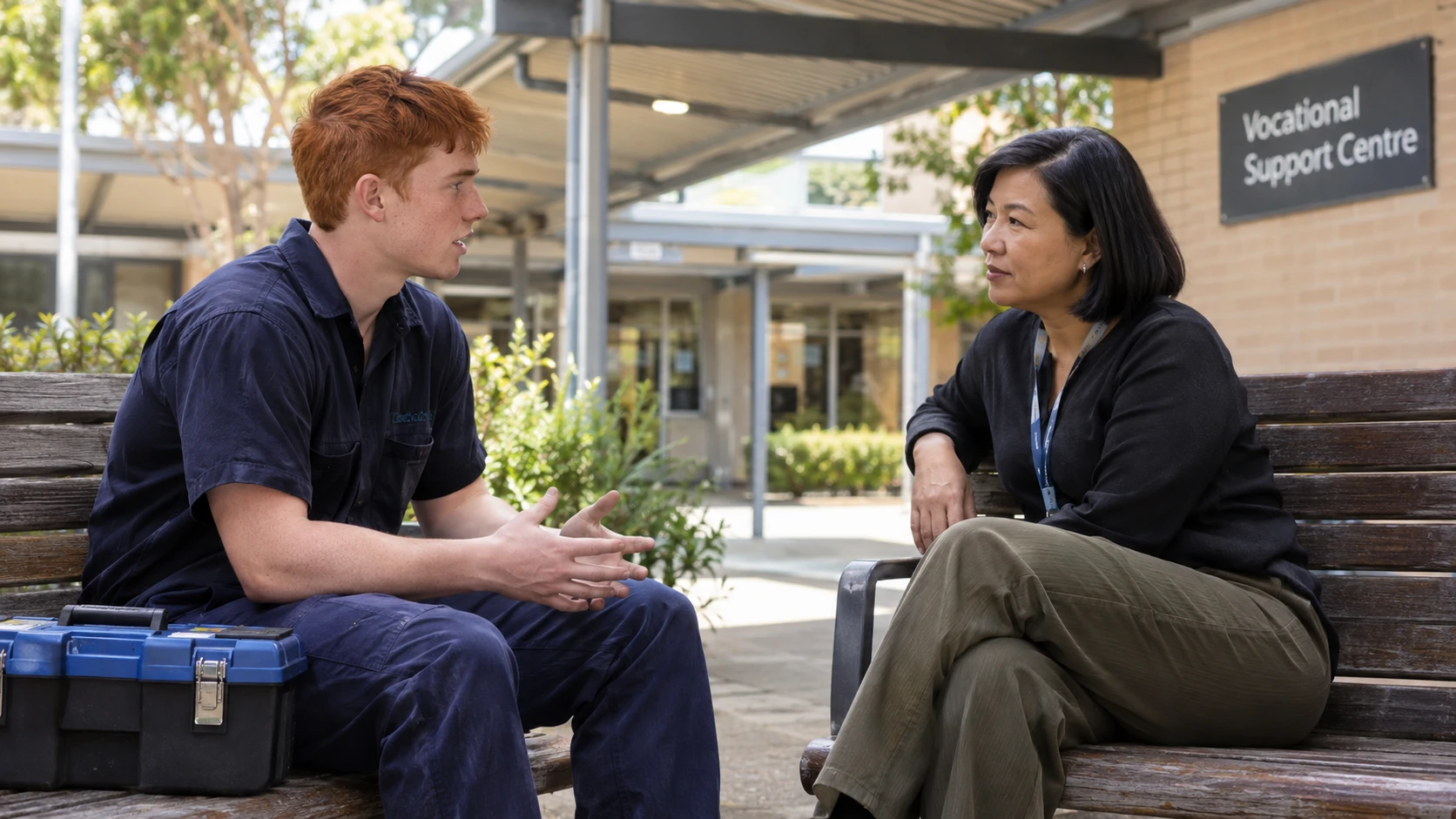
This original scenario is invented. Alex has completed provider learning but lacks the workplace opportunity needed for a planned activity. Alex asks the employer and RTO to review the gap and agree a way to provide suitable supervised experience.
If the issue cannot be resolved, Alex contacts the relevant support service with the plan reference, dates and previous discussion. The enquiry asks for help with the actual gap rather than demanding a preselected contract outcome.
The example does not guarantee that a particular alternative placement, payment or completion date will be available.
Use the appropriate support contact
Queensland’s Apprenticeships Info service provides information and support about apprenticeship and traineeship responsibilities, options and contract matters. Your Apprentice Connect Australia Provider and RTO also have distinct roles.
Ask who can deal with the specific issue and what information is needed. A provider complaint about teaching, an employment pay concern and a safety report may follow different pathways. Seek appropriate outside advice where direct workplace discussion is unsuitable.
Consider formal changes after checking the options
Transfer, delivery changes, extensions, suspension or cancellation may have different processes and consequences. Ask about the available options before treating one as inevitable or stopping participation without the required arrangements.
Keep a written summary of the advice, agreed actions and next review. A useful support enquiry should leave you knowing which person is responsible for the next step and which questions still need a formal decision.