When a manual task seems hazardous, describe the task and the conditions that make it difficult, then raise it through the workplace safety process. The useful question is how the risk can be removed or reduced through the work design, rather than how much discomfort a worker should tolerate.
This guide helps prepare that conversation. It does not prescribe a lifting technique, a safe weight or an individual medical assessment.
Look beyond the weight of an item
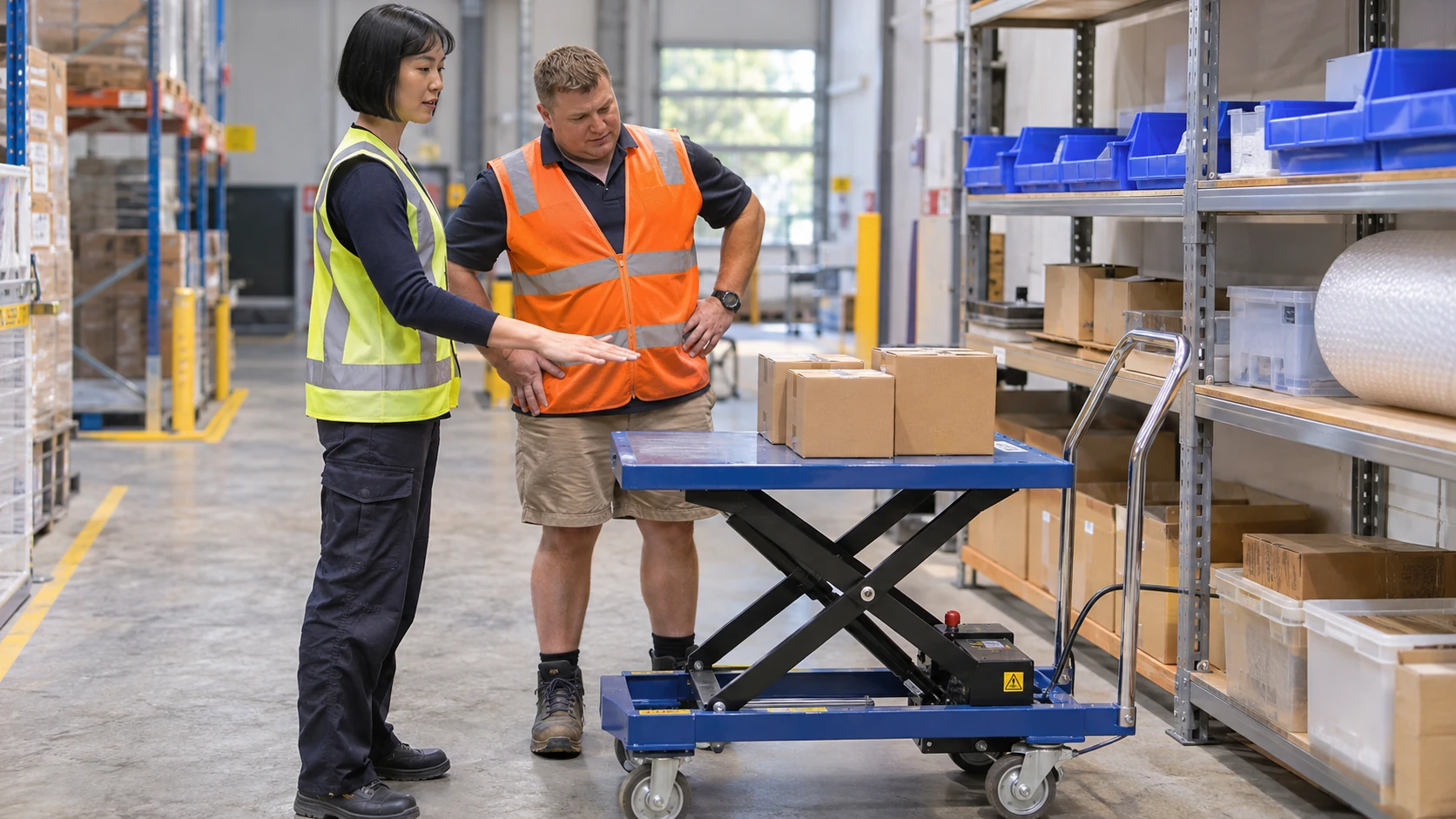
WorkSafe Queensland’s manual-task guidance identifies factors including force, repetition, awkward or sustained posture and vibration. Manual tasks include more than lifting; pushing, pulling, holding and restraining can also be relevant.
A lightweight item handled repeatedly can raise a different issue from a heavier item handled once. Describe the actual frequency, reach, grip, space and work pattern. Do not use a single weight figure as proof that the task is safe.
The guidance emphasises eliminating or redesigning risk and explains that lifting-technique training should not be the sole or primary control. Ask about the work system and available controls, not only a reminder to be careful.
Use an original task-observation record
Capture the information that will help the responsible person assess the work:
- Task: what is being moved, held or operated and for what purpose.
- Pattern: frequency, duration and any sustained position or effort.
- Environment: space, access, floor conditions and relevant storage or workstation layout.
- Equipment: aids available, their condition and whether workers are authorised and trained to use them.
- Change: a new item, workload, location or instruction affecting the task.
- Concern: the observed difficulty, without guessing a diagnosis.
- Response: who was told, the decision made and any review required.
Do not measure a potentially dangerous task by repeatedly performing it to see how much you can manage. Use the workplace’s safe reporting and assessment process.
A fictional redesign conversation
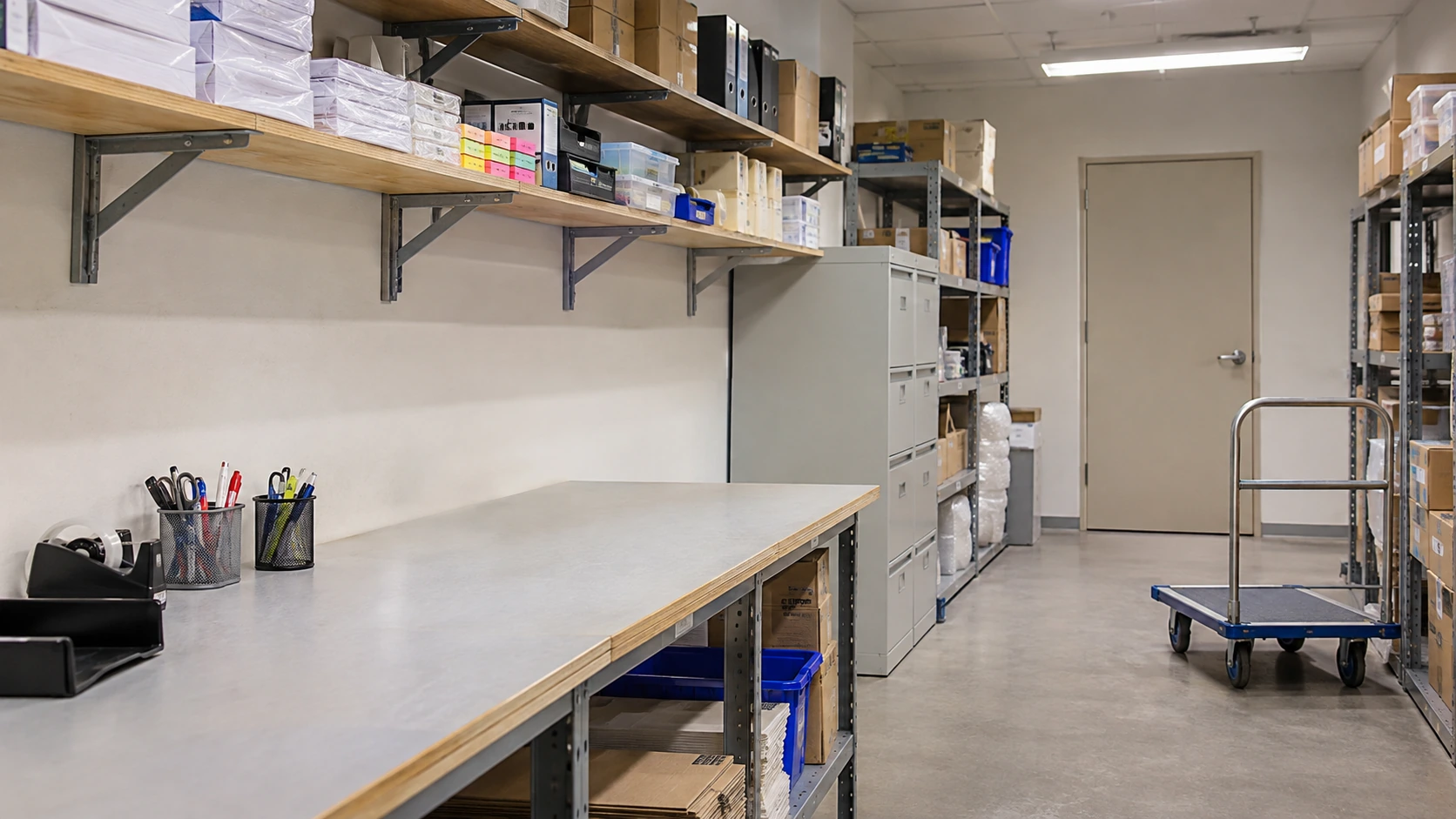
This original scenario is invented and is not a safe-work procedure.
A storeroom worker notices that frequently used supplies require repeated awkward reaching. Instead of asking only for a different lifting technique, the worker describes the repeated reach and asks whether the storage layout and delivery point can be reviewed. The supervisor arranges assessment and consultation before an authorised change is made.
The example identifies a work-design question. It does not direct the worker to move storage racks, operate equipment or improvise a handling method without approval.
Ask about the next safe step
A useful fictional question is: “This task now involves repeated reaching from the same position. Could we review whether the handling can be avoided or the layout changed, and confirm the authorised method until the review is complete?”
If the concern is immediate, use the relevant safety process rather than waiting for a general review meeting. Obtain appropriate assistance where an injury or urgent risk is involved.
Check that the change works in practice
After an authorised change, provide factual feedback about whether the original difficulty remains or another problem has appeared. Keep responsibilities and instructions clear, and ask for the assessment to be revisited if the task changes again.
Our warehouse role guide gives wider job context. The manual-task check concerns the actual work and conditions at the workplace, not a generic claim that everyone in the occupation performs the same tasks safely in the same way.