Prepare an apprentice progress meeting by comparing the current training plan, training record and workplace opportunities. Identify what has been learned, what evidence is ready, where progress is blocked and which person must act next. The meeting should produce clear actions rather than a general instruction to work harder.
This guide is for an apprentice or trainee preparing for an existing training arrangement. It does not replace the RTO’s assessment process or the employer’s training obligations.
Bring the current plan and record
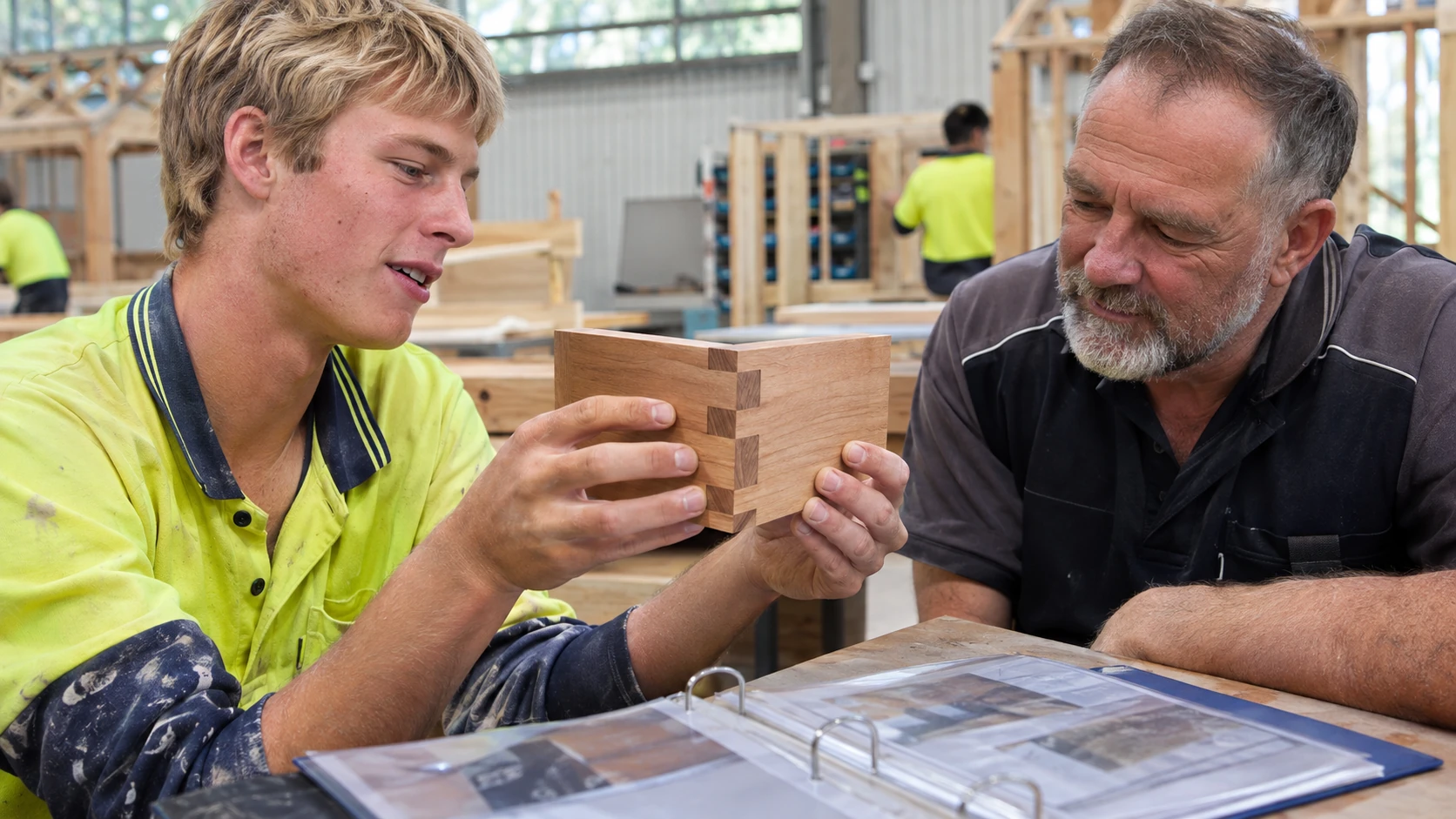
Queensland’s training-plan guidance describes the working document for delivery and assessment. Use the current plan rather than an old course outline or a personal assumption about when a unit should be completed.
Bring the required training record and relevant information about provider sessions, workplace practice and assessment. Keep the difference between attending training, practising a task and being assessed competent clear.
If a document is missing or unclear, record that as an issue to resolve. Do not recreate an official sign-off or fill an evidence gap with an invented date.
Use a practical progress agenda
Organise the meeting around these questions:
- Progress: which planned activities have occurred since the last review?
- Evidence: what can be presented to the appropriate assessor or supervisor?
- Gaps: which tasks, learning or assessment remain incomplete?
- Opportunity: can the workplace provide the relevant range of work and supervision?
- Support: what instruction, resources or learning assistance is needed?
- Coordination: do provider dates, rosters and workplace tasks fit together?
- Actions: who will do what, by when, and how will completion be checked?
Keep the discussion linked to specific parts of the plan. A concern such as “I am behind” becomes more useful when it identifies the activity, reason and support needed.
A fictional progress conversation
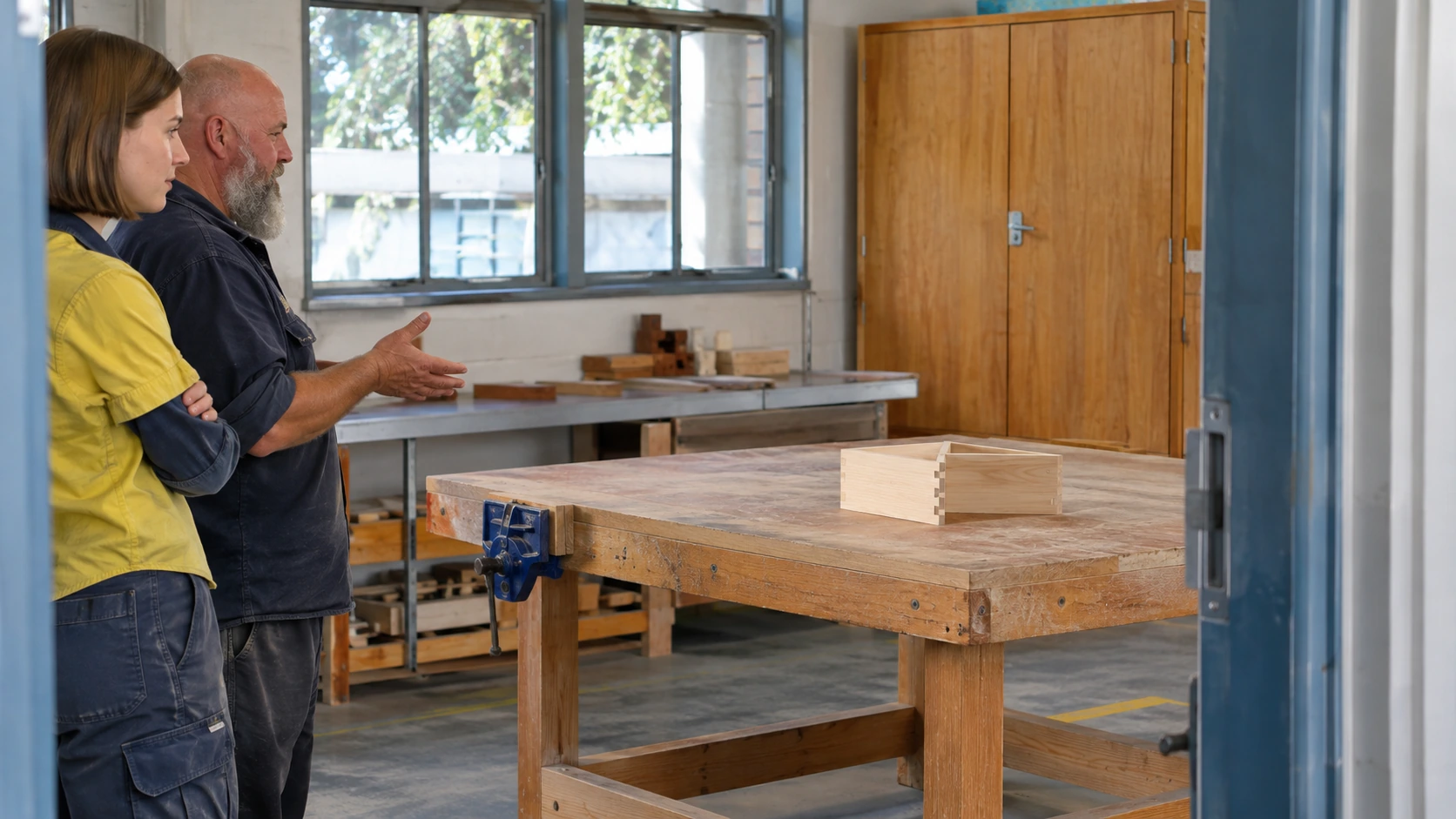
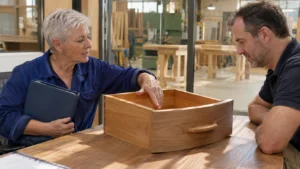
This original scenario is invented. Alex has attended the provider session but has not had the workplace opportunity needed to practise one relevant task. Alex identifies the plan entry and asks the employer and RTO how that experience can be arranged appropriately.
The meeting records a responsible contact, the proposed opportunity and the point when progress will be reviewed. The RTO still determines the assessment requirements; the meeting does not declare competence because the activity has been placed on the calendar.
The example illustrates a coordination gap rather than assuming the apprentice is unwilling or the employer has deliberately failed an obligation.
Discuss difficulties early
Queensland’s training-problems guidance identifies help for issues such as falling behind, missing training or difficulties getting records reviewed. Use the relevant support pathway when the problem cannot be resolved through the usual participants.
If a health, access or personal issue affects learning, raise it through an appropriate private channel. The whole workplace does not need a detailed personal explanation to understand an authorised scheduling or support arrangement.
Leave with a usable action record
Write a short summary naming the agreed actions, responsible people, required evidence and next review. Identify disagreements and unresolved questions explicitly rather than recording them as settled.
Keep the summary with the current training documents and check that any formal plan change follows the proper process. At the next meeting, begin with the earlier actions so that a useful discussion becomes a visible change in training opportunities or support.
Use the agreed next learning actions as part of a wider career-development plan, without treating a progress meeting as a qualification decision.