








Two courses can offer the same qualification but provide very different learning experiences. One may require regular classroom attendance and practical assessments, while another may offer online learning with scheduled workplace activities. Some providers arrange work placements, while others expect students to find their own.
Choosing a registered training organisation (RTO) involves more than comparing course prices or reading promotional material. You need to understand what each provider offers, what the course requires and whether the arrangements fit your work schedule, budget and career goals.
Before choosing a provider, identify the job or skill you want the course to support. Write down the qualification or units you need, then compare providers against the same training outcome. Our guide to job qualifications and requirements can help you distinguish between an employer’s stated requirements and training that may simply be useful.

. Check the Registered Training Organisation Behind the Course
Before comparing prices and study arrangements, confirm that the provider is registered and authorised to deliver the training product you are considering.
Ask for the exact qualification or course code, the RTO’s legal name and its registration number. Then search the National Training Register to check the organisation’s registration status and scope of registration.
An RTO must have the relevant training product on its approved scope to deliver and issue nationally recognised training. However, appearing on the register does not automatically mean the provider is currently offering that course. Contact the organisation to confirm its availability and delivery arrangements.
If a recruitment agency, broker or another business advertises the course, ask which organisation will actually provide the training, conduct assessments and issue your qualification.
Registration is an important starting point, but it does not tell you whether the learning arrangements will suit your needs. You should still compare the course delivery, assessment requirements and student support.
2. Understand What the Course Requires Each Week
A course advertised as flexible or online may still involve practical sessions, scheduled assessments or workplace activities. Before enrolling, ask the provider to explain what a normal study week looks like. A reliable registered training organisation should be able to explain its weekly study expectations, including scheduled lessons, independent learning and assessment deadlines. Ask for a sample timetable so you can understand the commitment before enrolling.
Find out:
How many hours of study are expected each week?
Are lessons delivered online, in person or through a combination of both?
Are there compulsory classroom sessions or practical workshops?
When are assessments scheduled?
Can you study at your own pace, or are there fixed deadlines?
What happens if you miss a class or assessment?
Course duration is another important consideration. Ask how long students typically take to complete the qualification, the maximum time allowed and whether extensions are available.
For Brisbane learners, travel can also affect the decision. An online course may still require visits to an assessment centre or workplace. Calculate the time and cost involved, including transport, parking and possible overnight accommodation.
A convenient timetable can make a significant difference, especially if you are balancing study with employment or family responsibilities.
3. Check Practical Training and Work Placement Requirements
Some qualifications involve practical activities or workplace experience. These requirements can affect how much time you need to set aside and whether you can complete the course while working.
Ask the RTO whether practical assessments take place at its training facility, at your workplace or in another approved setting.
If a work placement is required, clarify:
Who is responsible for arranging the placement?
Does the provider have workplace partners?
What type of workplace is acceptable?
How many placement hours are required?
What happens if you cannot secure a suitable placement?
Are travel or other placement-related costs your responsibility?
Do not assume that enrolling in a course automatically includes a guaranteed placement or paid employment. Get the arrangements confirmed in writing before committing.
You should also ask whether the provider offers guidance during the placement and who you can contact if problems arise at the workplace.
4. Compare Assessment Methods and Completion Requirements
Two providers may offer the same qualification but use different training schedules and assessment arrangements. Understanding these differences can help you decide which course is more manageable.
Depending on the qualification, assessments may include written questions, practical demonstrations, workplace tasks, projects or observations.
Ask each provider how students demonstrate their skills and knowledge. Find out whether assessments are conducted during scheduled sessions or submitted independently.
You should also check how many assessment attempts are included in the course fee and whether additional charges apply when you need to repeat an assessment.
If you already have relevant work experience or previous training, ask whether the provider offers Recognition of Prior Learning (RPL) or credit transfer. These options may allow eligible learners to receive recognition for existing skills or completed units, subject to the provider’s assessment and evidence requirements.
Understanding these arrangements before enrolling can help you avoid unexpected assessment costs and delays in completing your qualification.
5. Compare Course Costs and Student Support
The cheapest advertised course is not necessarily the most affordable option once you consider all the expenses involved.
Ask each registered training organisation for a written breakdown of the total course cost. Check whether the advertised fee includes learning materials, equipment, assessment activities and any required practical sessions.
Depending on the qualification, you may also need to budget for:
Uniforms or protective clothing.
Tools and equipment.
Travel to training or assessment locations.
Workplace placement expenses.
Additional learning resources.
Reassessment or repeat unit fees.
Fees associated with extending your enrolment, where applicable.
Check the payment schedule and whether instalments are available. Also ask what happens if you need to cancel, defer or withdraw from the course.
Student support is equally important. Find out what assistance is available for learning difficulties, language needs, disability adjustments and technical problems. When comparing each registered training organisation, check whether student support is included in the course fees or if certain services require additional payment. Understanding what assistance is available can help you avoid unexpected expenses during your studies.
A statement such as “support is available” does not explain what assistance you can actually receive. Ask who you contact, how support is arranged and whether you can discuss your learning needs before enrolling.
The Australian Skills Quality Authority’s course and provider guidance provides additional questions to consider when selecting a training provider.
Test Your Preferred Option Against a Difficult Week
Before making a decision, consider how the course would fit into a week when your normal schedule changes.
For example, imagine your employer changes your roster during assessment week. Would you still be able to attend the required sessions, complete your assignments and meet the deadlines?
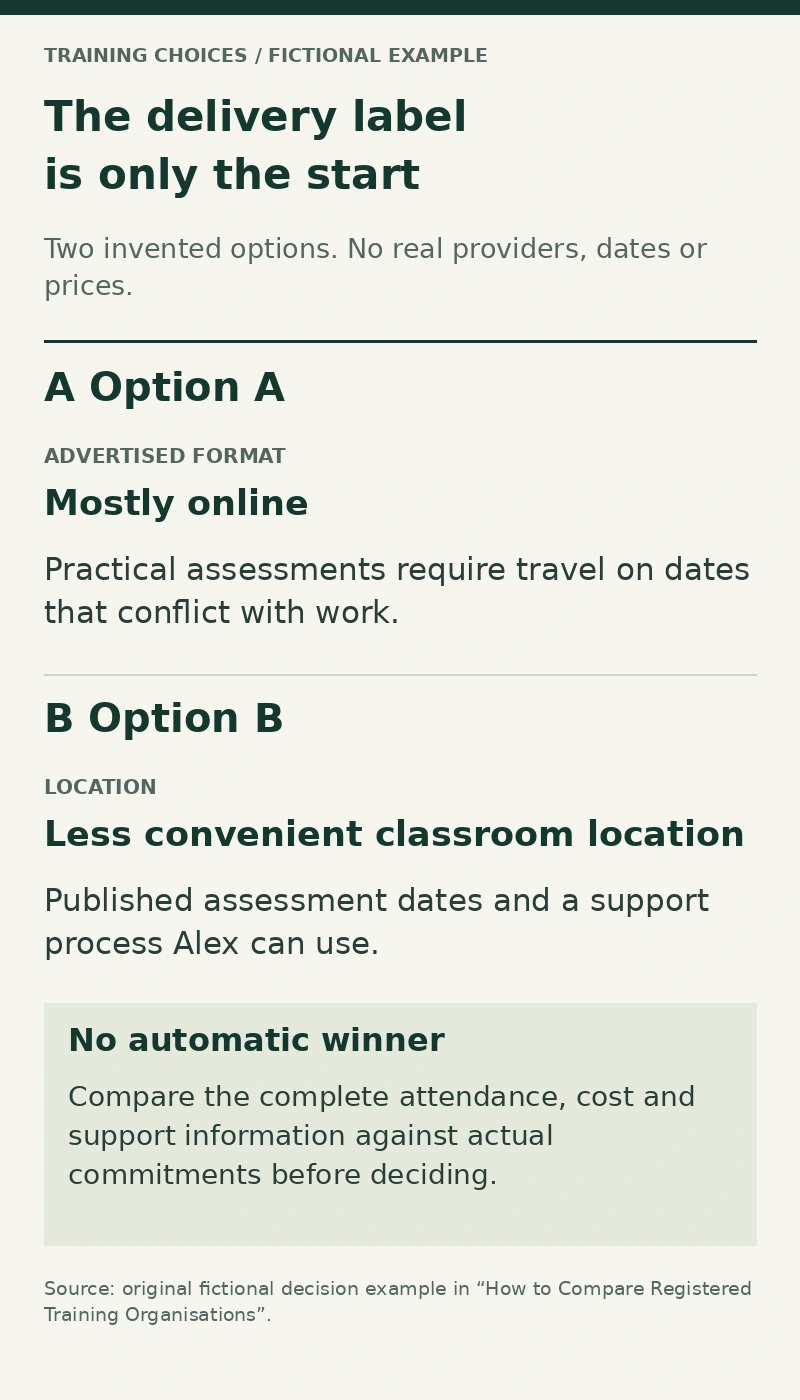
One provider may offer mostly online learning but have limited practical assessment dates. Another may require more travel but provide a timetable that is easier to coordinate with your employer.
Neither option is automatically better. The important question is whether you can realistically meet the course requirements without putting unnecessary pressure on your work and personal commitments.
This is also a good time to review the provider’s communication arrangements. Find out how students receive timetable changes, assessment updates and important course announcements.
Review the Enrolment Agreement Before Paying
Once you have selected a provider, read the enrolment agreement and course information carefully.
Check that the written details match what you were told during the enquiry process. Pay particular attention to:
Course title and training product code.
Delivery location and study arrangements.
Course duration and assessment requirements.
Tuition fees and additional charges.
Cancellation and refund conditions.
Complaints and student support procedures.
Make sure you understand your responsibilities as a student and what happens if the provider changes the course or delivery arrangements.
If anything is unclear, ask for an explanation before signing the agreement or making a payment. Keep copies of the course information, enrolment agreement, payment details and important communication with the provider.
The ASQA student rights and responsibilities guide explains important information learners should understand before and during their training.
Choose the Training Provider That Fits Your Needs
Comparing registered training organisations takes more than looking at course prices or choosing the provider with the most convenient advertisement.
Check the organisation’s registration, confirm the qualification, understand the assessment and placement requirements, and compare the full cost of completing the course.
Most importantly, choose a training arrangement that supports your career goals and fits your available time and resources. If a provider cannot clearly answer questions that could affect your decision, seek clarification before enrolling.
Taking the time to compare your options can help you choose a suitable registered training organisation and prepare for the requirements of your chosen qualification.