

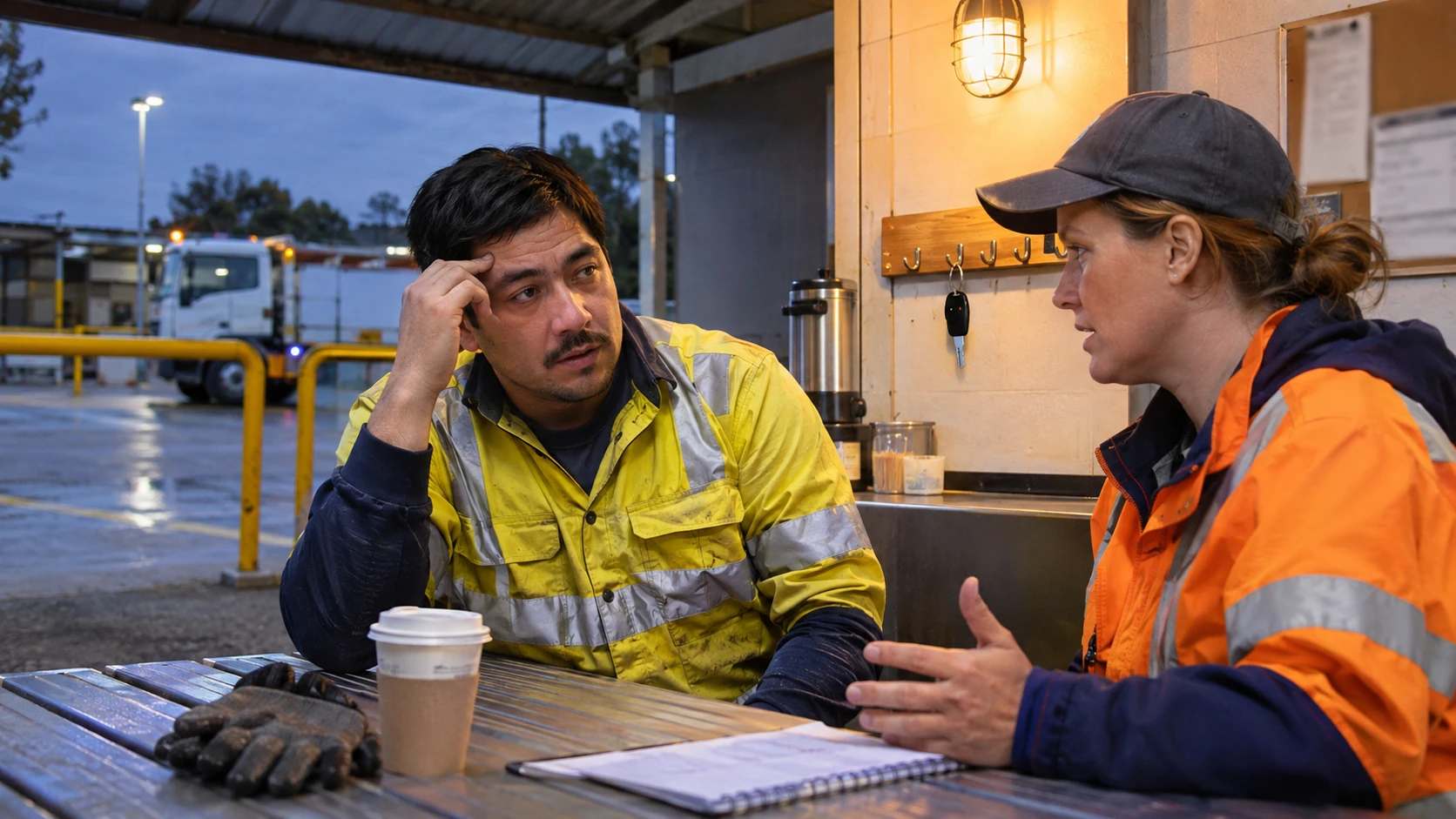
Report a fatigue concern early enough for the responsible person to consider the work safely. Describe the affected task, relevant work pattern and the difficulty you are experiencing, then ask for an authorised decision about the next step. Do not rely on pushing through a safety-critical task to prove commitment. If fatigue creates an immediate serious safety risk, stop the affected task as soon as it is safe, move away from danger and notify the responsible contact rather than waiting for a routine approval.
This guide concerns workplace communication and planning. It does not diagnose fatigue, prescribe treatment or establish a universal safe shift length.
Identify the work risk
WorkSafe Queensland’s fatigue guidance describes fatigue as physical or mental exhaustion affecting safe and effective work. Work schedules, demands, sleep, environmental conditions and non-work factors can interact.
Explain which work is affected: concentration, a repetitive task, operating equipment, driving or another responsibility. A concern about alertness during a critical task needs a practical response, not only a note for the next roster review.
Avoid treating one familiar schedule as safe for everyone. The actual task and circumstances matter, and fatigue risk can change when shifts, workload, travel or conditions change.
Prepare an original fatigue-concern record
Record enough information to support a decision without disclosing unnecessary personal details:
- Current work: task, shift and relevant responsibility.
- Work pattern: actual recent hours, breaks and changes you can confirm.
- Concern: the difficulty affecting safe performance, in your own words.
- Immediate question: what work should pause or be reassigned under the appropriate process?
- Contact: supervisor or other nominated safety contact informed.
- Response: authorised arrangement and any further assessment required.
- Follow-up: review of the contributing work pattern and communication process.
Keep health details in the appropriate private channel. A general roster note does not need a full medical or personal history.
A fictional reporting message
The following original example is invented and is not a fitness assessment:
“I am concerned about my alertness for the task I am due to perform. The shift arrangement changed and I have had less opportunity to rest than planned. Could we use the fatigue process to decide the safe next step and confirm who will review the work allocation?”
The message connects the concern with a work decision. It does not claim that a particular break will automatically restore fitness or that the worker can decide to operate equipment after a short rest.
Address the work system as well as the immediate issue
Once the immediate concern is managed, discuss the contributing conditions. These may include the actual shift pattern, workload, late changes, environmental demands or opportunities for rest. Keep the discussion specific enough to identify a decision-maker and review point.
Do not treat a reminder about personal sleep as the only possible response to a work-design problem. Equally, provide honest information about relevant circumstances through the appropriate process so the decision is based on the actual risk.
Confirm the arrangement and review
Record what has been agreed, who will communicate any work changes and when the situation will be reviewed. Raise a further concern if the conditions or your ability to work safely change. Follow the workplace’s emergency arrangements where immediate assistance is needed.
Our night-work guide covers broader shift and travel considerations. Reporting fatigue is a narrower task: identify a current safety concern and obtain a clear, authorised response before it becomes an incident.