Before booking confined-space training, confirm the actual role, the training evidence required and the workplace systems that will govern the work. A general awareness course, an assessed unit and a site-specific entry arrangement have different purposes. Do not assume that a certificate alone authorises entry.
This guide supports a training decision. It does not provide entry, atmospheric-testing, standby or rescue instructions for a confined space.
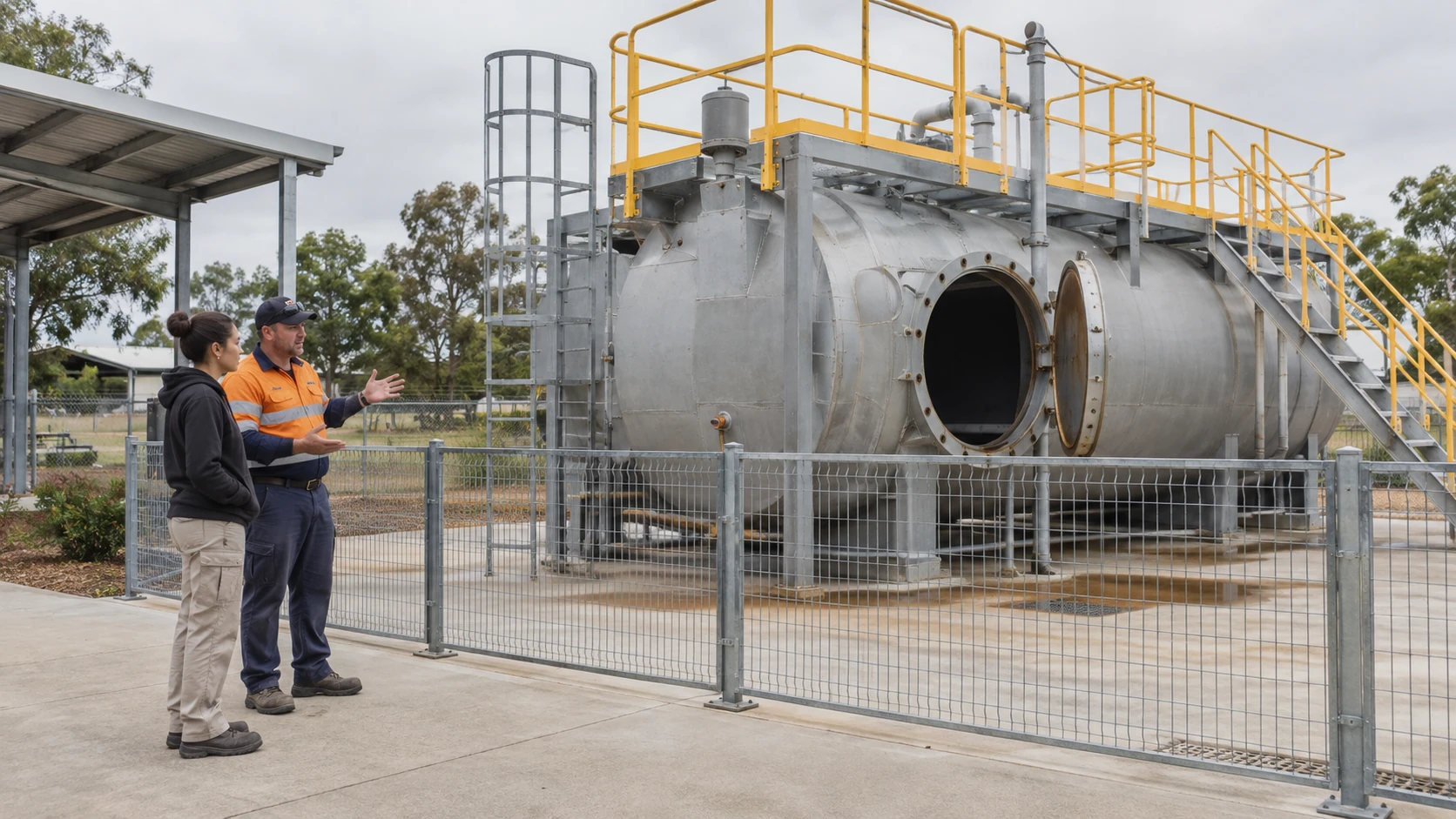
Clarify the task and responsibilities
Ask whether the proposed role involves entry, standby, supervision, testing, rescue or another responsibility. Do not combine those responsibilities into a single assumption that “confined-space training” covers everything.
WorkSafe Queensland’s confined-space guidance describes the relevant definition and systems, including competent assessment and entry-permit requirements. An enclosed-looking area is not classified solely by appearance, and a worker should not decide entry arrangements from a course advertisement.
Have the employer or responsible duty holder identify the work and required evidence. Check which further training, experience, equipment and authorisation apply to the actual responsibility.
Check the exact training product
Ask the provider for the unit or product code and title, current status, issuing RTO and practical assessment arrangements. Verify relevant scope through the official national training register. Also distinguish course completion from a licence, ticket or workplace authorisation using our guide to Queensland work licences and tickets; do not assume those terms describe the same requirement.
Do not rely on an old unit code, a marketing title or a claim of universal acceptance. Training products can be replaced or updated, and the employer’s requirements may extend beyond one unit.
As a current example checked on 5 November 2026, the register lists RIIWHS202 Enter and work in confined spaces in the resources and infrastructure training package. Read its application and assessment information against the actual role; the product listing is not a workplace entry authorisation.
Ask about prerequisites, physical and access requirements, support, duration, assessment, total costs and any additional charges. An appropriate access discussion should happen before payment rather than after you discover a practical assessment cannot be completed as arranged.
An original role-to-course worksheet
Complete this with verified information:
- Role: the actual responsibility the employer has identified.
- Required evidence: training, experience or other documentation requested.
- Product: exact unit or course and its current register status.
- RTO: issuing organisation and relevant scope confirmed.
- Assessment: practical requirements and evidence of competence to be assessed.
- Limits: duties the course does not cover or authorise.
- Workplace systems: induction, permit, supervision and other checks still to be completed.
- Booking: written total cost, support arrangements and cancellation terms.
The worksheet is not an entry permit, risk assessment or rescue plan.
A fictional course-enquiry example
This original scenario is invented. Alex is considering a role where the employer has not yet clarified whether entry or standby duties are required. Alex asks the employer to specify the responsibility before choosing between training advertisements.
Alex then asks the provider to identify the exact assessed unit and issuing RTO. The course is considered against the verified role requirement, rather than selected because its advertisement uses the broadest “ticket” claim.
Keep course completion and task authorisation separate
After training, check the issued evidence and submit it through the verified employer process. Ask what workplace-specific steps remain and how ongoing competence or refresher expectations are assessed. Do not treat an unsupported expiry claim as a universal legal rule.
WorkSafe’s guidance includes current code and regulatory information. Use the actual workplace system and competent direction for any proposed work. If the role changes, check whether the existing evidence remains relevant rather than assuming one certificate covers every later responsibility.