



A lessons-learned review should turn project experience into a change someone can implement and check. Begin with a defined piece of work and evidence about what helped, what caused difficulty and what the team would do differently next time.
This is a general project-learning process. It does not replace a formal incident investigation, complaint response or another required review of a particular event.
Choose a useful review point
Review at a stage where participants can still explain what happened and the findings can influence future work. A final review can be useful, but the team need not wait until every opportunity to improve has passed.
Agree the scope and purpose. Identify the relevant records, outputs and participants, including people who carried out less visible work. Explain how the findings and any sensitive information will be handled.
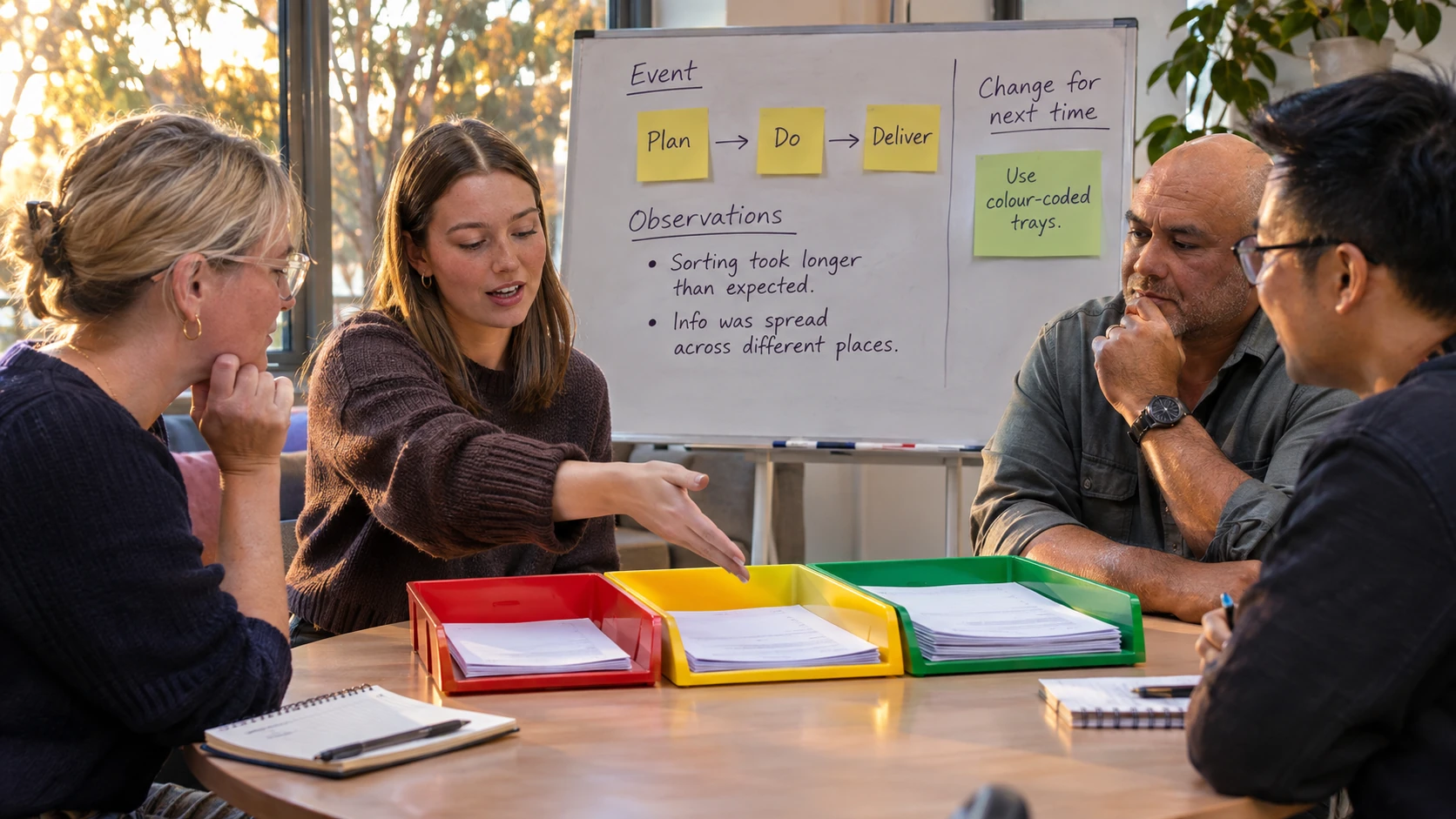
The Digital Transformation Agency’s lessons on scope, planning and scheduling provide broader context for learning from delivery experience. The exercise below is an original fictional office example, not a report about a government or Games project.
Separate observation from explanation
Start with what happened and its evidence. Then explore possible causes, including unclear requirements, missing decisions, dependencies or resources. Avoid deciding that one person’s attitude explains a problem without checking the work system.
Ask what worked as well as what failed. A useful practice may need to be preserved even if another part of the project was difficult.
Record uncertainty openly. If the team cannot establish why an event occurred, identify what further information would help rather than agreeing on the most convenient story.
A practical lesson-to-action record
Capture:
- Context: the work and conditions relevant to the experience.
- Observation: what happened and supporting evidence.
- Effect: the consequence or benefit actually identified.
- Explanation: what has been checked and what remains uncertain.
- Lesson: the principle the team would apply next time.
- Action: a specific change, owner and implementation point.
- Test: how the team will check whether the change helps.
“Communicate earlier” is a theme. An action needs to say who will communicate what, before which dependency and through which agreed method.
A fictional improvement
In this invented project, staff received revised booking instructions before a support contact had been briefed. Questions arrived, but the contact did not have the current information.
The review confirms the sequence from the communication records. The team agrees that the rollout owner will check the current materials and support contact before distribution. At the next rollout, the team will verify whether the contact had the correct information when enquiries began.
The lesson is not that staff should ask fewer questions. It concerns preparing the support arrangement before communication creates demand for it.
Put the lesson into the next process
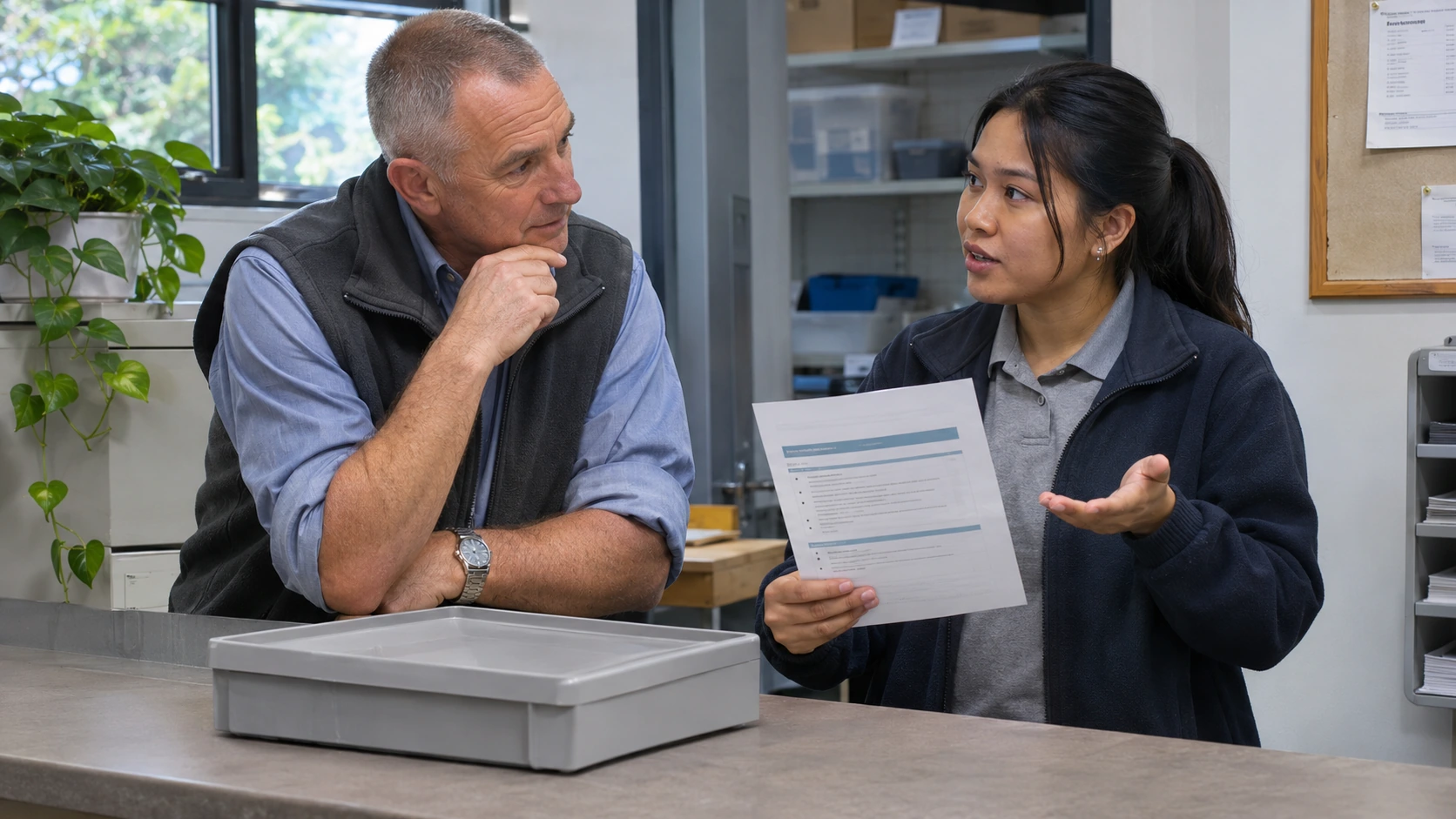
Update the relevant checklist, template or responsibility through the approved process. Assign an owner to implement the change and report back. Storing a lesson in a folder does not itself alter how the next project is run. If you later discuss this work in an interview, use our job-interview preparation guide to explain the evidence, your contribution and the change tested, rather than claiming that holding a review alone improved the project.
Review the action after use and retain the context. A practice that helped one small office project may need adaptation elsewhere. Useful learning preserves enough evidence to explain the change and enough ownership to ensure someone actually tries it.