

Before using AI assistance for a work task, check the employer’s actual rules, approved tools and permitted information. A tool being publicly available or useful at home does not establish permission to use it with workplace data.
Choose a task with a clear human review step. AI assistance should not quietly become authority to make a decision, issue an approval or represent information as verified when it has not been checked.
Confirm the permitted use
Ask what the organisation allows, which account or system should be used and who handles a question about sensitive information. If approval is unclear, resolve it before entering work material into an external service.
The Australian cyber-security guidance on using AI securely in business discusses risks such as sensitive information and inaccurate output. The OAIC’s guidance on commercially available AI products provides further privacy context where applicable.
Do not assume removing a name makes a document safe to upload. Context and other details can still reveal confidential or personal information.
Define the task and review responsibility
Use an original planning record:
- Purpose: the specific output assistance would support.
- Permission: approved tool, account and use under the actual rules.
- Inputs: information permitted for this task.
- Limits: decisions or content the tool must not be relied on to establish.
- Reviewer: person responsible for checking the result.
- Checks: facts, sources, calculations and required approvals.
- Record: any disclosure or documentation the workplace requires.
If the task involves a regulated decision or sensitive case, obtain the relevant advice and follow the actual process. A general checklist cannot authorise the use.
A fictional low-risk practice example
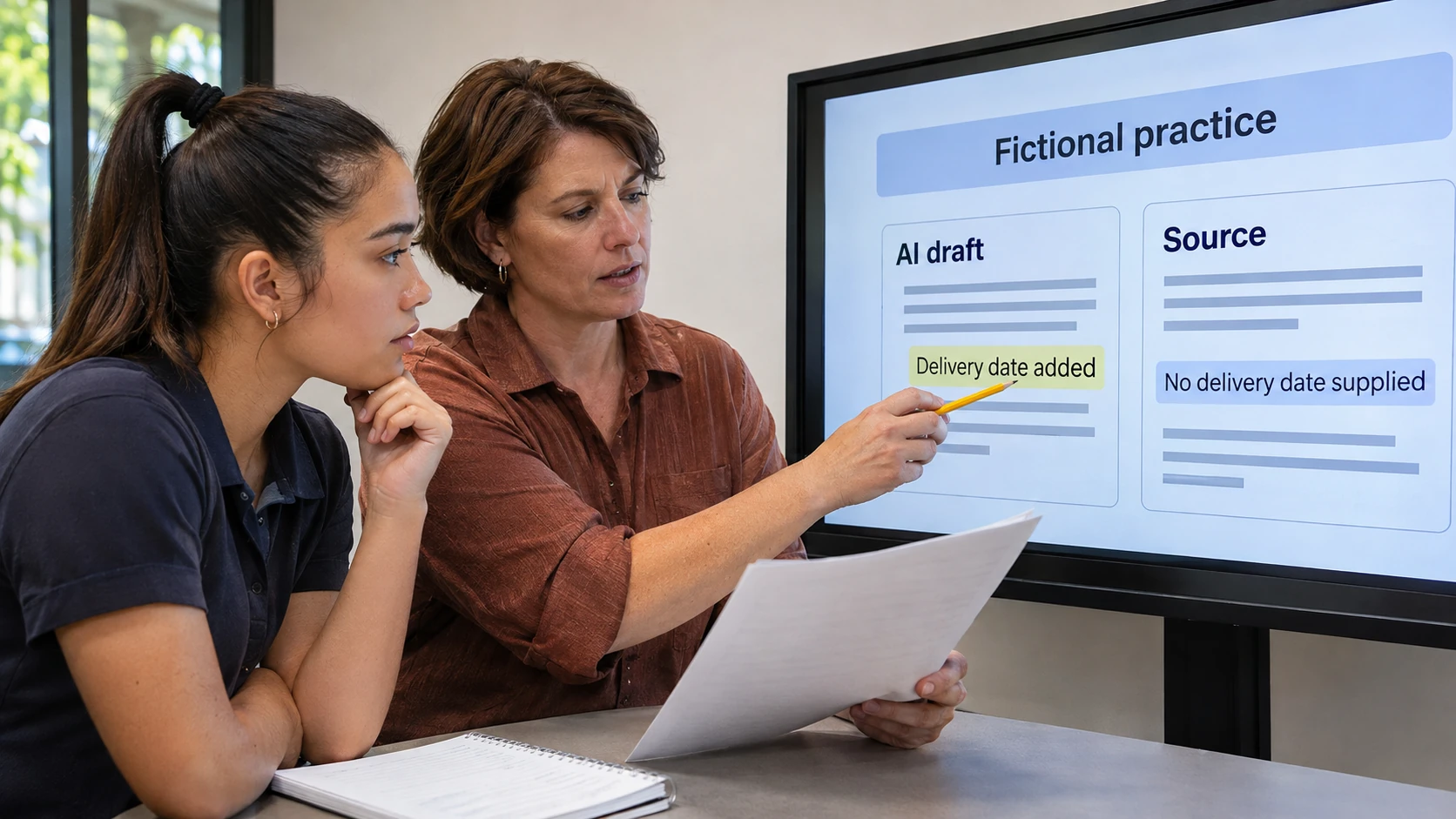
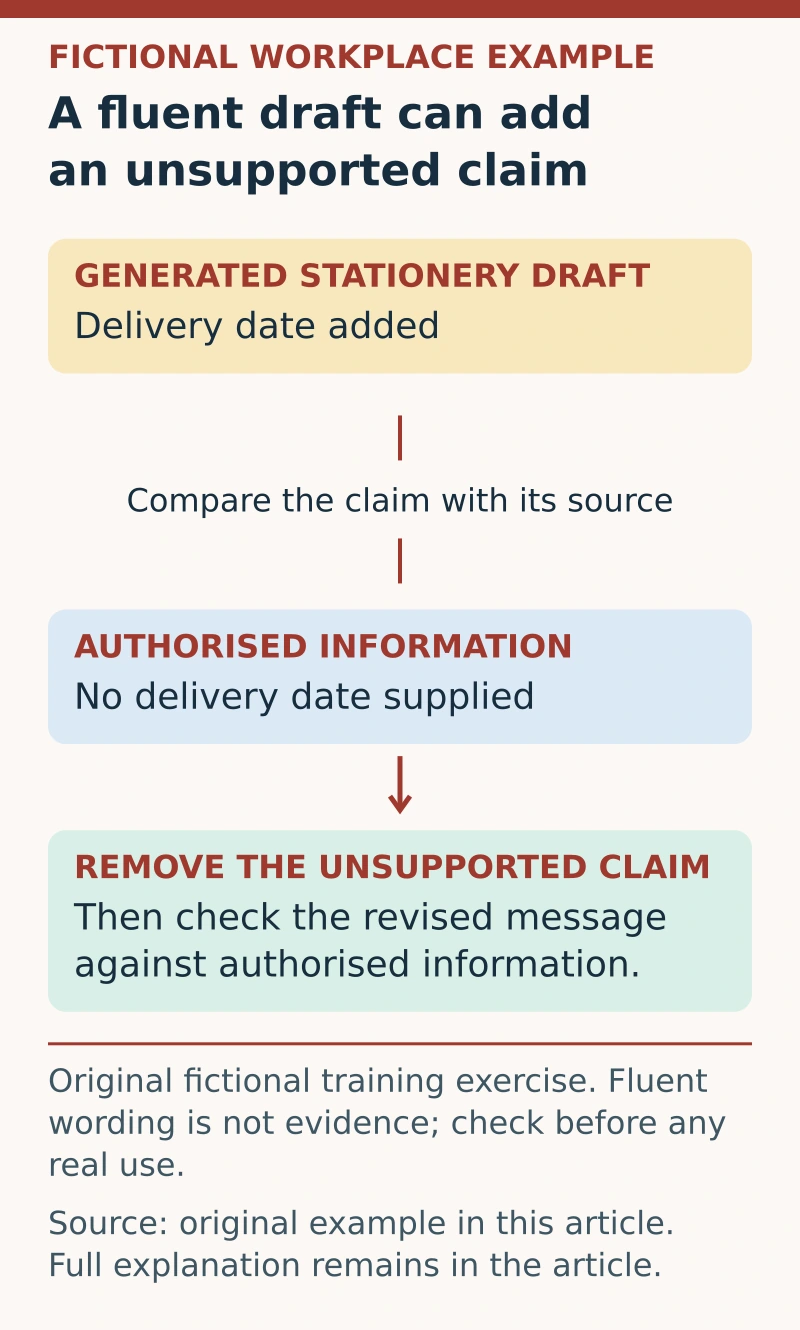
In this invented exercise, an employee practises drafting a clear internal message using entirely fictional details about stationery. The exercise is permitted under the employer’s actual training arrangement.
The generated draft adds a delivery date that was not supplied. The employee removes that claim and checks the message against the authorised information before any real use.
The lesson is that fluent wording is not evidence. Even a harmless-looking administrative draft can introduce a fact, commitment or instruction the reviewer did not intend.
Check the output against trusted information
Verify names, dates, quantities, references and claims independently. Open and assess a cited source where it matters rather than assuming a plausible-looking reference exists or supports the statement.
Check whether the wording implies an approval, relationship or capability that is only proposed. Compare it with the current authorised business information before use.
Treat instructions embedded in untrusted material as content to assess, not automatic authority to change the task or disclose information.
Keep accountability with the work process
Complete the required review and approval before the output is used. Record the assistance or disclose it where the actual workplace process requires it.
If a tool cannot be used within the permitted data and review boundaries, choose another approved way to complete the task. Useful AI assistance has an explicit purpose, permitted inputs and an accountable human check; it should leave the work more accurate, not merely faster to produce.
If responsible AI use is part of a skill you want to develop, connect the practice exercise to a specific work goal using the guide to career development in Brisbane.